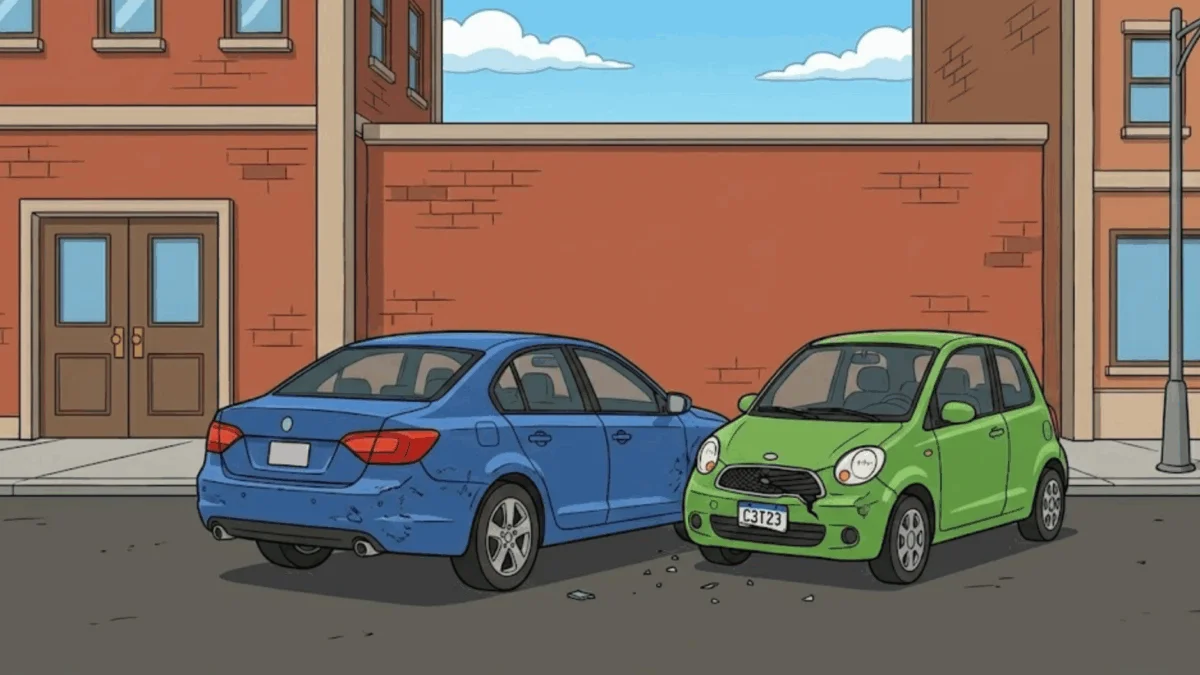
You got into the car expecting a normal ride. Instead, you ended up in an accident — hurt, confused, and unsure what comes next.
Here's what most injured passengers don't realize: Your legal rights are often stronger than the driver's.
You rarely share blame. You can usually recover from more than one insurance policy.
And you may be entitled to more compensation than you think.
Free consultation
Injured as a passenger?
We fight for the compensation you deserve. Free consultation — no fees unless we win.
This guide breaks everything down into clear phases so you know exactly what to do and what to expect.
Your Rights as an Injured Passenger: The Core Rules
1. You Almost Always Have the Right to Compensation
Passengers are rarely at fault. That means you can pursue compensation whether the crash involved:
- The driver of your car
- Another vehicle
- Multiple drivers
- A hit‑and‑run
- An uninsured driver
As long as someone else caused the crash, you have a legal path forward. Texas is a fault-based state, which means the driver who caused the accident — or their insurance company — is responsible for paying your damages. Unlike no-fault states, you are not limited to your own policy. You have the right to pursue a claim directly against the at-fault driver.
2. You Can Sue More Than One Driver
If both drivers made mistakes — one speeding, the other distracted — you may be able to file claims against both insurance policies. This is common in intersection collisions and multi‑vehicle crashes.
3. You Can File a Claim Against the Driver of Your Own Car
This surprises many people, especially when the driver is a friend or family member. But you are not financially harming them. You are filing a claim against their insurance — not their personal bank account. Drivers pay premiums for this exact situation.
4. Household Exclusions May Apply
Some auto insurance policies sold in Texas include household exclusion clauses that limit or bar claims when the injured passenger lives with the at-fault driver. Texas courts have upheld these exclusions in certain circumstances, but they are not absolute. If your policy contains a household exclusion, you may still have options through other coverage — including your own UM/UIM policy or the other driver's insurance. These cases require careful legal strategy to navigate.
5. Texas Has a Two-Year Filing Deadline
Under the Texas Civil Practice and Remedies Code § 16.003, you generally have two years from the date of the accident to file a personal injury lawsuit. If you miss this deadline, the court will almost certainly dismiss your case — regardless of how strong your claim is. The clock starts on the day of the crash, not the day you discover the full extent of your injuries. Acting early gives your attorney time to preserve evidence, gather medical records, and negotiate before filing suit becomes necessary.
Who Pays? Understanding Which Insurance Applies First
Passenger injury cases often involve several insurance policies. Here is how they typically stack in Texas.
The At‑Fault Driver's Insurance Is Primary
Your first claim is usually filed against:
- The at‑fault driver of the other car, or
- The driver of the car you were riding in
This covers medical bills, lost income, pain, emotional harm, and more.
You May Be Covered by Your Own Auto Policy
Your personal policy may provide:
- PIP (Personal Injury Protection) — In Texas, PIP is optional but included by default. You must reject it in writing if you don't want it. Many Texans have PIP coverage without realizing it.
- MedPay
- Uninsured/Underinsured Motorist coverage (UM/UIM) — Learn more about how UM/UIM works in Texas.
This can help when:
- The at‑fault driver has low coverage
- Multiple passengers must share one policy
- The at‑fault driver is uninsured
- Payment is delayed
Your own insurer can still fight you, so treat them like any other insurance company.
Multiple Passengers Must Share Limited Policy Funds
If several passengers were hurt, the policy limits may be divided among everyone. That is why acting quickly matters.
Can a Passenger Ever Be Partially Responsible?
Most Passengers Are Not Considered at Fault
Almost all passengers qualify as innocent victims. But insurers may try to shift blame in rare situations.
Texas Follows Modified Comparative Fault Rules
Under Texas Civil Practice and Remedies Code § 33.001, your compensation is reduced by your percentage of fault. If you are found 51 percent or more at fault, you recover nothing. This is called the 51 percent bar rule.
For passengers, this almost never applies — you were not driving, you were not controlling the vehicle, and you had no duty to navigate traffic. But insurance adjusters know the rule exists, and they will look for any angle to assign you even a small percentage of fault to reduce what they owe.
You Could Face Allegations if You Interfered With the Driver
Examples include:
- Grabbing the steering wheel
- Distracting the driver
- Encouraging reckless behavior
- Knowingly riding with an impaired driver
Insurance companies know these arguments reduce how much they must pay. A lawyer can shut down these tactics fast.
What To Do Immediately After the Crash (To Protect Your Claim)
These steps matter more than people realize. For a printable version you can keep in your car, see our Accident Checklist.
Get Medical Care Right Away
Delays create doubt about your injuries.
Document What You Can
Take photos of:
- The vehicles
- The scene
- Your injuries
Gather names of witnesses if possible.
Avoid Statements to Insurance Companies
Even a simple comment like "I feel fine" can reduce your settlement. Let your lawyer handle communication. Insurance adjusters are trained to extract statements they can use against you — read about the 6 tactics adjusters use after a car wreck so you know what to watch for.
Track All Injury-Related Costs
You can recover money for:
- Lost income
- Medical care
- Therapy
- Transportation to appointments
- Out‑of‑pocket expenses
Keep everything.
3 Tactics Insurance Adjusters Use Specifically Against Passenger Claims
General adjuster tactics apply to every car accident claim. But passenger cases invite three additional strategies that are specific to your situation:
1. The "Just a Passenger" Minimization
Adjusters frame passengers as having less severe injuries because you "weren't bracing for impact" or "weren't under the same stress as the driver." They use this narrative to argue that your pain, anxiety, and soft tissue injuries are exaggerated. In reality, passengers are often more vulnerable to injury because they had no warning, no ability to brace, and no control over the vehicle's position at impact. Your lack of control is a reason your injuries may be worse, not less serious.
2. Splitting Passengers Against Each Other
When multiple passengers are hurt and must share a single policy's limits, adjusters deliberately slow-walk negotiations. The goal is to create urgency and pressure individual passengers into accepting lower offers before the policy runs out. They may tell one passenger that another has already settled for a large portion — whether or not that is true. A lawyer coordinating all claims simultaneously prevents this divide-and-conquer approach.
3. The "You Knew the Risk" Argument
If there is any evidence that the at-fault driver was speeding, texting, or impaired before the crash, the adjuster may argue you assumed the risk by getting in the car. In Texas, voluntary assumption of risk is not a complete defense in negligence cases — but adjusters raise it anyway to create doubt and pressure lower settlements. The fact that you were a passenger does not mean you consented to being in a crash. Courts have consistently rejected this argument when the passenger had no meaningful ability to control the driver's behavior.
What You Can Sue For as a Passenger
Full Personal Injury Damages
Your compensation may include:
- Medical bills
- Lost income
- Pain
- Emotional harm
- Loss of enjoyment of life
- Scarring
- Long‑term treatment
If your loved one died while riding as a passenger, your family may also have grounds for a wrongful death claim.
Claims Against Multiple Parties
You may be able to recover from:
- The at‑fault driver
- Your own PIP or MedPay
- UM/UIM coverage
- Both drivers in multi‑vehicle crashes
- The employer of the at‑fault driver (if they were on the job)
- Car manufacturers (in defect cases)
- Government entities (unsafe road conditions)
Passenger cases often involve more than one source of recovery.
Common Passenger Scenarios (And How Claims Work)
If You Were a Passenger in a Rideshare (Uber or Lyft)
Coverage may include:
- Up to seven‑figure liability limits
- UM/UIM if the other driver was at fault
- PIP or MedPay depending on the state
Rideshare cases follow different rules than regular collisions.
If You Were Riding With a Friend or Family Member
You still have the right to file a claim.
You are not suing them personally, you are using their insurance.
If You Were in a Rental Car
Multiple overlapping policies may apply:
- The rental company's liability coverage
- The driver's personal auto insurance
- Your own policy
Rental accidents are complex and often involve high conflict between insurers.
If the Driver Who Hit You Fled the Scene
UM/UIM coverage becomes critical. You can still recover compensation. See our guide on underinsured and uninsured claims in Texas for details on how this coverage works.
How Much Money Passengers Typically Receive
Your compensation depends on:
- The severity of injuries
- How long you're out of work
- Whether you need surgery
- Whether the crash caused permanent damage
- Policy limits involved
- Number of injured passengers
Passenger cases often resolve for significant amounts because liability is usually clear.
Why Passengers Should Never File Claims Without a Lawyer
Multiple Insurance Companies Will Fight You
When two or more drivers are involved, each insurer blames the other. You get stuck in the middle.
Your Own Insurance Company Is Not Your Friend
They will look for ways to deny or reduce your claim, even though you pay them premiums.
You Need Someone to Coordinate Multiple Claims
You may need to file against:
- Your driver
- The other driver
- Your own UM/UIM
- Your own PIP
- Your health insurance
Your lawyer handles the full puzzle, ensuring you don't leave money behind.
A Lawyer Maximizes Your Settlement
Attorneys gather evidence, prove fault, challenge low offers, and negotiate aggressively. They know the arguments insurers use against passengers — and how to shut them down.
How Bennett Legal Protects Injured Passengers
At Bennett Legal, we guide injured passengers through every step:
- Investigating fault and securing evidence
- Handling all conversations with insurers
- Identifying every available policy
- Managing multi‑claim coordination
- Challenging household exclusions
- Filing lawsuits when insurers refuse to pay fairly
We pursue the full compensation you deserve — without adding stress to your recovery. If you were hurt as a passenger, you have strong rights. We're here to protect them.
Free consultation
Injured as a passenger?
We fight for the compensation you deserve. Free consultation — no fees unless we win.