In arbitration, evidence isn’t just important — it’s everything.
An airtight contract, a single incriminating email, one credible witness — these can turn the tide of a case entirely.
Unlike a casual debate or a spirited negotiation, arbitration is decided by what you can prove, not what you can passionately argue. The arbitrator’s job is to weigh facts, documents, and testimony against the law or contract terms — and then deliver a decision that, in binding cases, will stand without appeal.
Here’s the truth.
Even the smartest legal arguments collapse if the evidence is weak, disorganized, or unreliable. And in arbitration, you don’t get multiple rounds of appeals to fix mistakes — you only get one hearing to make it count.
In arbitration, every exhibit, witness, and expert is an opportunity to tip the scale. And if you use them strategically, they can win it for you.
Understanding Evidence in Arbitration
Arbitration may feel less formal than court, but make no mistake — the evidence rules still matter.
While most arbitration bodies (AAA, JAMS, ICC, etc.) don’t strictly follow courtroom evidence rules like hearsay exclusions or complicated admissibility motions, they still expect evidence to be:
- Relevant – It must connect logically to the issues in dispute.
- Reliable – It must be credible, authentic, and able to withstand scrutiny.
- Persuasive – It must clearly support your position in a way the arbitrator finds convincing.
Arbitrator Discretion
Unlike a judge bound by rigid rules, arbitrators have broad discretion to admit or disregard evidence based on their view of its usefulness. This can be both an opportunity and a risk:
- Opportunity: You can introduce things that wouldn’t make it past strict courtroom rules — like certain business records or informal correspondence — if it helps explain your case.
- Risk: Arbitrators may give little to no weight to evidence they feel is speculative, redundant, or poorly presented.
Differences from Litigation
- Flexibility: You can often present a wider range of proof in arbitration than court.
- Speed: Evidence exchange is streamlined; discovery is shorter, which means less time to correct weak submissions.
- Focus: Arbitrators expect you to cut to the core of the dispute, not flood them with tangential material.
The Quality Over Quantity Rule
More exhibits don’t necessarily mean a stronger case. Arbitrators appreciate well-curated evidence that builds a cohesive story rather than an intimidating binder stuffed with irrelevant material.
Bennett Legal Perspective:
- Your evidence must be clear, credible, and connected — clear so it can be understood, credible so it can be trusted, and connected so the arbitrator sees exactly how it supports your claim or defense.
- Without those three, you’re giving away your advantage before the hearing even begins.
6 Categories of Evidence That Win Arbitration Cases
This guide will walk you through what evidence actually wins arbitration cases — and what you must avoid if you want to persuade the arbitrator. We’ll cover what types of proof carry the most weight, why presentation is as important as substance, and how Bennett Legal builds cases that don’t just speak — they convince.
1. Documentary Evidence
These are your paper trails and permanent records — contracts, purchase orders, invoices, emails, letters, internal memos, photographs, technical schematics, receipts, and even screenshots. In arbitration, documentary evidence forms the backbone of most cases because it creates a written, fixed record of agreements, promises, and events.
Why Arbitrators Value It:
- Documents are tangible proof that doesn’t rely on memory.
- They often speak for themselves: a signed contract showing terms, an email confirming delivery, a photograph capturing product defects.
- Because they can be examined, compared, and authenticated, arbitrators see documents as highly persuasive, especially when they line up logically with other evidence.
Mistakes to Avoid:
- Submitting incomplete or selectively edited records — undermines credibility fast.
- Ignoring proper authentication (date, sender, source) — casting doubt on whether they’re genuine.
- Overloading the arbitrator with trivial or repetitive documents.
Pro Tip 💡:
Organize documents chronologically. The number exhibits clearly. Provide a short, direct explanation of why each piece matters. If you make the arbitrator’s job easier, you increase the likelihood they’ll give your evidence full weight.
2. Witness Testimony
Witness testimony adds a human voice to your evidence. This includes eyewitnesses to events, participants in contract execution, and expert witnesses with specialized knowledge. Testimony can support facts, explain context, and bolster credibility.
Why Arbitrators Value It:
Live testimony gives arbitrators a chance to assess credibility — catching contradictions or confirming reliability in real time. Firsthand accounts can make documentary evidence come alive, while experts can break down technical details that would otherwise be unclear.
Mistakes to Avoid:
- Presenting witnesses who contradict each other or your documentary evidence.
- Poor witness preparation — resulting in rambling, evasive, or defensive responses.
- Using witnesses with obvious bias (family members, close business associates) without supporting independent evidence.
Pro Tip 💡:
Prepare witnesses for arbitration’s unique setting. Answers should be concise, factual, and directly responsive to questions. Rehearse for clarity and confidence — but never coach on dishonesty.
3. Expert Evidence
Expert evidence comes from specialists — accountants, engineers, appraisers, medical professionals — who can analyze complex issues and give professional opinions. Their input can explain technical defects, calculate damages, or interpret industry standards.
Why Arbitrators Value It:
Even seasoned arbitrators lean heavily on qualified experts for matters outside their own professional expertise. An authoritative, well-reasoned expert report or testimony can tip the balance in a highly technical dispute.
Mistakes to Avoid:
- Hiring experts with weak credentials — they’ll crumble under cross-examination.
- Using experts who can’t explain findings clearly to a non-specialist.
- Failing to give experts complete and accurate data.
Pro Tip 💡:
Choose experts who balance strong qualifications with communication skills. A brilliant mind wasted on jargon loses persuasive power.
4. Real / Physical Evidence
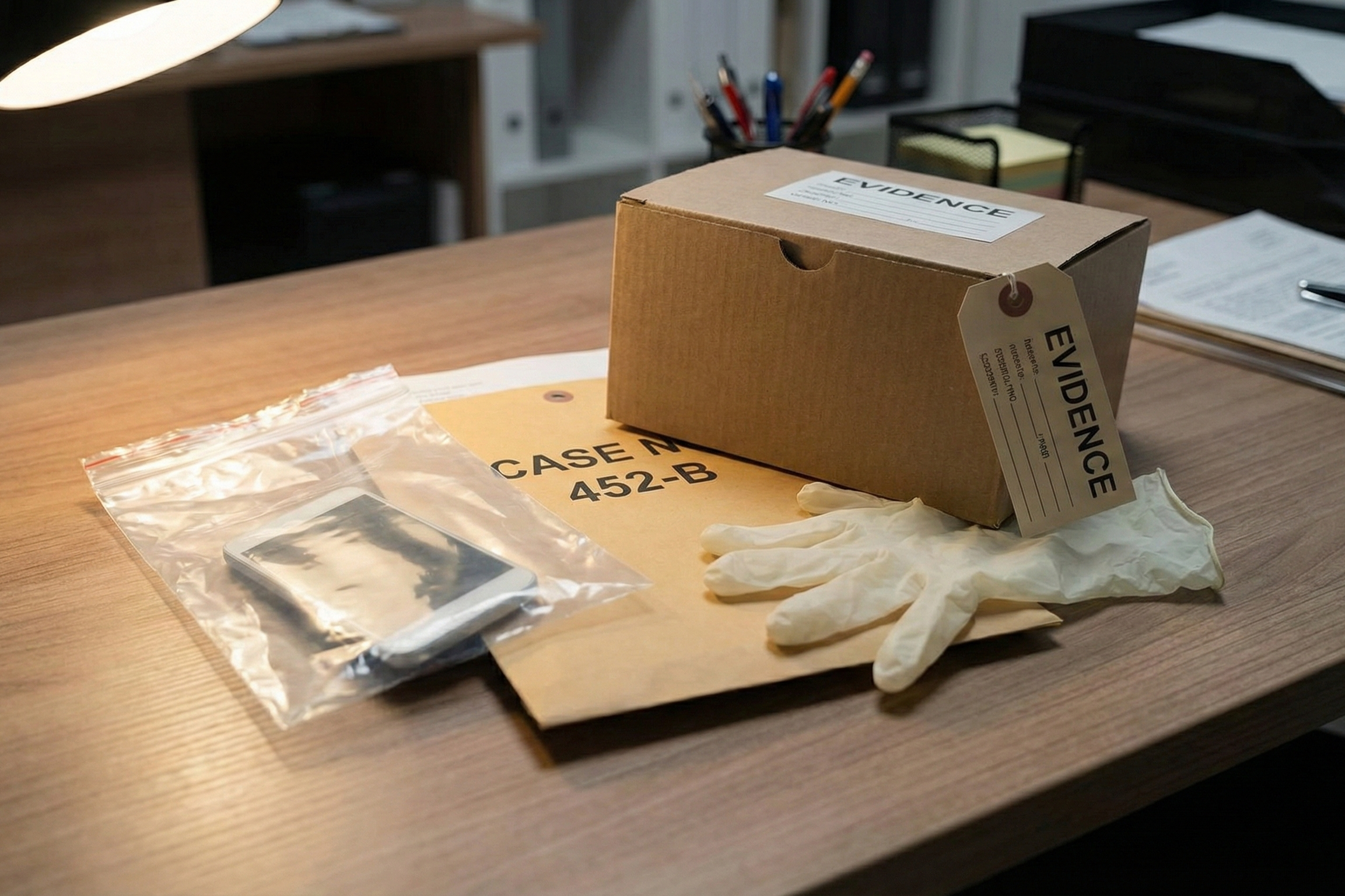
This is tangible proof — the faulty product, damaged materials, a physical asset in dispute. It can be inspected directly during the hearing.
Why Arbitrators Value It:
Physical evidence makes the case concrete. It moves arguments from abstract to undeniable: showing rather than telling. When a defect, damage, or condition can be seen or touched, it’s hard to refute.
Mistakes to Avoid:
- Failing to preserve chain of custody — opening doubt about tampering.
- Presenting physical evidence that’s unlabelled or unexplained.
- Not coordinating logistics (bringing large or fragile items without warning).
Pro Tip 💡:
Accompany physical evidence with photographs or diagrams for the record. Arbitrators may not keep the item after inspection, so visual documentation ensures your proof stays in the case file.
5. Demonstrative Evidence
Visual aids: charts, timelines, diagrams, photos, videos — designed to help the arbitrator understand complex concepts, events, or relationships between facts.
Why Arbitrators Value It:
Demonstratives turn complicated numbers, timelines, or technical relationships into something quick and digestible. They can make events easier to follow and keep the arbitrator engaged.
Mistakes to Avoid:
- Overcomplicating visuals with clutter or text overload.
- Using demonstratives that don’t clearly tie to the claims.
- Allowing errors in data displayed — instant credibility hit.
Pro Tip 💡:
Design visuals for clarity: clean lines, minimal text, and a direct tie to testimony or documents. Arbitrators appreciate efficiency and precision.
6. Admissions & Prior Statements
These are statements — written, verbal, or recorded — made by the opposing party that support your case. They could be emails admitting fault, prior testimony, or meeting minutes reflecting acceptance of obligations.
Why Arbitrators Value It:
Admissions are inherently powerful: they come from your opponent and often require little interpretation. They corroborate your position directly.
Mistakes to Avoid:
- Presenting admissions without context — allowing the other party to dispute meaning.
- Failing to authenticate quotes or recordings.
- Using statements obtained in violation of privacy or law.
Pro Tip 💡:
- Always present admissions alongside supporting documentary or physical evidence.
- Context locks in the credibility of what’s been admitted.
Presentation Matters — How to Make Evidence Persuasive
Having strong evidence is half the battle. The other half? Presenting it in a way that makes the arbitrator want to rely on it.
Clarity Over Quantity
Arbitrators don’t want (or need) binders stuffed with every email you’ve ever exchanged. They want the key pieces that build the case coherently. Select exhibits that directly prove each claim or disprove each defense, and cut the fluff.
Tie Evidence to Your Narrative
Think of arbitration as telling a true story — each piece of evidence is one chapter. The contract shows why there was an obligation; the invoice proves it wasn’t fulfilled; the email reveals the admission of fault. Evidence presented without a clear storyline forces the arbitrator to guess at connections — and guessing is the enemy of persuasion.
Sequence and Flow
Organize your evidence logically. Chronological order often works best, but if the dispute is thematic, grouping exhibits by issue can sharpen focus. Always number your exhibits clearly and include a matching index, so the arbitrator can flip easily to the right page.
Pair Evidence with Credible Witnesses
When possible, have a witness explain the evidence during testimony — why it was created, what it reflects, and why it matters. This adds a human voice to the paper trail.
Bennett Legal Tip: We prepare exhibits side-by-side with witness prep so both the document and the explanation land as one persuasive punch.
5 Common Evidence Mistakes That Sink Cases
Even strong cases can collapse under the weight of avoidable errors.
Mistake 1: Drowning the Arbitrator in Irrelevance
Submitting dozens of minor, tangential exhibits forces the arbitrator to sift for value — which can dilute the impact of your core proof.
Avoidance: Audit every exhibit. If it doesn’t directly advance your argument, it doesn’t belong.
Mistake 2: Poor Witness Preparation
The best evidence can be undermined if the witness explaining it is inconsistent, evasive, or confused.
Avoidance: Conduct mock questioning before the hearing so witnesses are fluent in the facts and confident in delivery.
Mistake 3: Last-Minute Evidence Submission
Late submissions frustrate arbitrators and risk exclusion. Rushed exhibits can appear sloppy or incomplete.
Avoidance: Build your evidence file early and meet all deadlines established in the preliminary conference.
Mistake 4: Ignoring Authenticity
If the opposing party challenges an exhibit’s authenticity and you can’t confirm chain of custody or source, the arbitrator may disregard it entirely.
Avoidance: Prepare authentication — who created it, when, and how — for every key exhibit.
Mistake 5: Letting Evidence Sit Without Context
Evidence tossed in without explanation leaves it open to misinterpretation.
Avoidance: Accompany every key document or item with testimony or statements that connect it directly to your narrative.
Evidence Is Your Case
In arbitration, evidence is the currency of persuasion. Contracts, credible witnesses, clear visuals, and expert insight — all of it works together to build the picture the arbitrator will rely on when making their decision.
But quality beats quantity every time. The exhibits you select, the witnesses you prepare, and the way you connect the dots will determine whether your narrative stands strong or falls apart under scrutiny.
We’ve won arbitration cases by turning a messy pile of facts into a clear, credible, and compelling presentation the arbitrator can’t ignore. Our job isn’t just to collect evidence — it’s to curate proof that persuades and survives scrutiny.
- Evidence Mapping: We map each claim and defense, assigning the specific exhibits and testimony that prove or disprove it. This ensures coverage and avoids gaps.
- Exhibit Indexing: We produce clean, numbered exhibit lists with short summaries so arbitrators can navigate easily.
- Witness + Evidence Integration: Witnesses are rehearsed to reference exhibits naturally: “As you can see in Exhibit 14…” This reinforces connections in the arbitrator’s mind.
- Strategic Experts: We hire experts not just for credibility but for delivery — the ability to explain complex points clearly and confidently.
- Visual Reinforcement: We create visuals — timelines, charts, damage calculations — to keep key evidence in the arbitrator’s memory long after testimony ends.
Whether your hearing is months away or just around the corner, we’ll help you curate your best evidence, tell your most persuasive story, and walk into arbitration ready to win.
FAQs
Can arbitrators ignore evidence?
Yes. Even if evidence is admitted, the arbitrator can give it little or no weight if it’s irrelevant, unreliable, or poorly presented.
Do rules of evidence apply in arbitration?
Formal courtroom rules usually don’t, but relevance, reliability, and credibility still govern what’s effective.
How early should I prepare my exhibits?
Immediately after filing or responding. Early preparation ensures deadline compliance and gives time to address challenges.
Are visuals really important?
For complex or technical disputes, visuals can make or break comprehension — and comprehension drives conviction.
Should I get legal help for evidence preparation?
Absolutely. A lawyer ensures your proof meets procedural requirements, tells a compelling story, and avoids common pitfalls.
Disclaimer: This article is for informational and educational purposes only. It does not constitute legal advice and does not create an attorney-client relationship. The information provided is general in nature and may not apply to your specific legal situation, particularly in personal injury or non-commercial matters. Consult with a qualified attorney regarding your individual case.