Disclaimer: Catastrophic-injury laws, damage caps, fault rules, and deadlines to file a claim all vary by state. This article is general information, not legal advice. Don't rely on this alone to decide what to do after a serious accident. Talk to a qualified catastrophic injury lawyer in your state about your specific situation as soon as possible.
Hey folks, Tall Chuck here.
If you're reading this, something big just hit your family — maybe a terrible crash, a workplace disaster, a medical emergency that shouldn't have happened, or some event that flipped your life upside down. You're juggling pain, bills, and fear while the insurance company keeps calling like they're doing you a favor.
And now you're wondering: "What actually happens in a catastrophic injury claim? What steps do I take? And how long is this going to drag on?"
If you need answers right now — not next week — reach out to Bennett Legal for a free case review. But if you want to understand the full process first, keep reading. I'll walk you through every step.
Free consultation
Dealing with a catastrophic injury?
Get answers from an attorney who\'s recovered millions for Texas families. Free consultation — no fees unless we win.
9 Steps in a Catastrophic Injury Claim
Let's talk about it plainly. Catastrophic injury litigation is not like a regular fender-bender claim. It's longer. It's tougher. And the stakes are sky-high — your future income, your mobility, your independence, your long-term medical care. I get a tall view of how this process really works, so let me break it down step-by-step.
1. Immediate Medical Care & Stabilization
Before anything legal starts, your health comes first. You need:
- ER treatment
- Specialist evaluations
- Imaging (MRIs, CT scans)
- Early documentation
Insurance companies love to argue your injury "must not be that bad" if you don't treat it fast. This first step protects your health — and your claim.
Not sure whether to call insurance or a lawyer first? Read our guide: Your First Call After a Car Wreck: Insurance Company or Lawyer?
Tall Chuck says: "Insurance companies love to argue your injury 'must not be that bad' if you didn't treat it fast. Don't give them that ammunition. Get checked out, get documented, get protected."
2. Hiring a Lawyer Who Handles Catastrophic Cases
Not all personal injury lawyers handle catastrophic injury lawsuits. These cases require:
- Medical experts
- Financial experts
- Life-care planners
- Accident reconstruction
- Advanced litigation strategy
And most importantly: someone who knows how to shut down insurance company tricks before they start. When families hire Bennett Legal, we jump in immediately to secure evidence and stop companies from tampering with records.
3. Securing Evidence (the Clock Is Ticking)
This is where catastrophic injury claims differ the most. Evidence can be:
- Photos and video
- Witness statements
- 911 calls
- Medical records
- Employer or company safety logs
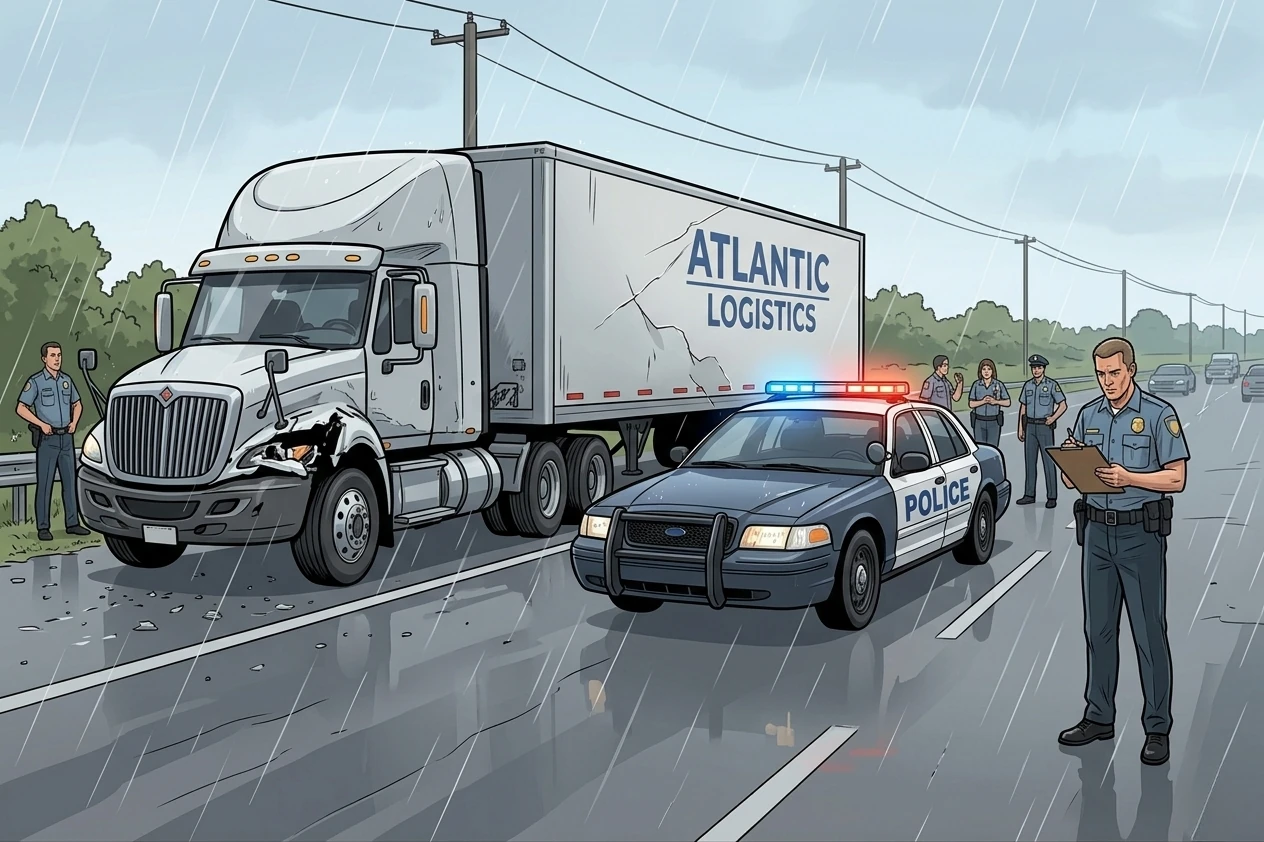
- Black box/ELD data (for trucks)
- Product defect evidence
- Surveillance footage
- Event reports
The problem? Much of this evidence can disappear fast. That's why we immediately send Preservation/Spoliation Letters to force companies to save black box data, safety inspections, dash-cam footage, maintenance records, internal emails, and training logs. Destroying evidence after one of those letters is a legal violation — and it can swing a case in your favor.
Want to know exactly what kinds of proof carry the most weight? Read our deep dive: Proving Injuries: 11 Key Types of Evidence That Make or Break Your Case.
Dealing with a catastrophic injury and not sure where to start? You don't have to figure out the legal process alone. Bennett Legal can step in from Day 1 to secure evidence, handle insurance, and protect your claim. Get your free case review →
4. Investigating the Cause of the Injury
Next, we dig into what actually caused the catastrophic injury. This may include:
- Negligence
- Unsafe equipment
- Failure to maintain machinery
- Distracted driving
- Overworked employees
- Defective products
- Dangerous conditions on a property
Catastrophic injuries rarely happen "out of the blue." They happen because someone cut corners — and we find out who. And it's often more than one party at fault.
5. Building the "Damages Picture" (The Part Most People Don't Know Exists)
This is the heart of catastrophic injury claims. We calculate:
Economic damages (the dollars you can count)
- Lifetime medical care
- Lost future earnings
- Home and vehicle modifications
- Physical therapy
- Surgeries
- Assistive equipment
- Medications
- Caregiving expenses
Non-economic damages (the human losses)
- Pain
- Trauma
- Disability
- Emotional distress
- Loss of independence
- Loss of enjoyment
- Disfigurement
- Reduced quality of life
This is where catastrophic injury settlements go from thousands → to hundreds of thousands → to millions. Most families undercount their damages by tens or even hundreds of thousands of dollars. For the full breakdown: Economic vs. Non-Economic Damages in Catastrophic Injury Cases.
Tall Chuck says: "The biggest damages are often the ones that haven't happened yet — future surgeries, lifetime care, lost earning capacity. If someone's offering you a quick check, they're hoping you don't do the math. We do the math."
6. Filing the Claim or Lawsuit
Once evidence and damages are built, we officially file. Depending on your state, we may file:
- An insurance claim
- A personal injury lawsuit
- A premises liability claim
- A product liability action
- A claim against multiple companies
This part triggers formal deadlines and forces the insurance companies to stop playing "try to stall you out."
7. The Discovery Phase (Where We Get Their Secrets)
Discovery is the legal term for exchanging evidence, gathering documents, conducting depositions, examining company policies, and reviewing safety history. This is where we get the internal documents that companies hope never see daylight.
If a trucking company ignored safety rules… if a rideshare driver had a bad driving record… if a store covered up hazard reports… if a product manufacturer ignored defect warnings — discovery is where we find it. And believe me, juries do not like cover-ups.
Tall Chuck says: "Discovery is where we get the documents companies hope never see daylight. And when the truth comes out, it usually comes out loud."
8. Negotiation, Mediation, and Settlement Talks
Most catastrophic injury claims settle after we uncover the truth. Why? Because:
- Companies don't want their failures on public record
- Depositions reveal negligence
- Experts back up lifelong damages
- Juries tend to award big numbers in catastrophic cases
Settlement is where the insurance company finally stops pretending the injuries are minor and gets serious.
But here's something most people don't realize: settlement talks aren't the only path. In some cases — especially when a contract with an employer, rideshare company, or product manufacturer includes a mandatory arbitration clause — your case may go through arbitration instead of traditional litigation. Arbitration is a private process with its own rules, timeline, and strategies.
At Bennett Legal, arbitration is one of our core strengths. We've taken on major corporations in arbitration and won. One example: our $2.51 million arbitration award against Amazon after a warehouse worker suffered catastrophic injuries on the job. Amazon forced the case into arbitration expecting a quiet outcome — they didn't get one.
Whether your case heads to mediation, arbitration, or settlement talks, the key is the same: don't accept less than your injuries are worth. But if the offer isn't right? We don't blink. We go to Step 9.
9. Trial (If the Company Won't Do Right)
Sometimes corporations and insurers don't get reasonable until you're standing in a courtroom. A catastrophic injury trial involves:
- Expert testimony
- Medical evidence
- Future cost projections
- Safety violations
- Accident reconstruction
Juries understand catastrophic injuries because they see how deeply it changes a family's life. If the defense lowballs you? A trial can turn a weak offer into a life-changing verdict.
Pro Tip from Tall Chuck
Start a daily journal — short, plain, honest. Write down your pain, what you can't do today, missed events, emotional battles, physical struggles. That little notebook becomes big evidence later.
Not sure if you have a case — or what it might be worth? Bennett Legal offers a free, no-pressure case review. We'll tell you where things stand, what your options are, and what to expect. No fees unless we win. Talk to Tall Chuck's team →
How Bennett Legal Takes Control of a Catastrophic Injury Case (From Day 1)
Those 9 steps are the roadmap. But how that roadmap plays out — and how much your case is actually worth at the end — depends on who's driving it. At Bennett Legal, we don't just "handle" catastrophic injury claims. We take control of them early, before insurance companies and corporations can shape the story in their favor.
We Lock Down Evidence Before It Disappears
In catastrophic cases, the most important proof is often in a company's system, on a truck's black box, in internal emails, in maintenance logs, or on surveillance footage that gets overwritten. So we move fast — sending spoliation and preservation letters immediately to trucking companies, employers, property owners, and manufacturers. Because once that evidence is gone, you don't get a second shot at it.
We Build the Case for the Future, Not Just the Past
We work with life-care planners, medical specialists, economists, and vocational experts to answer the real question: what will this injury cost you for the rest of your life? That includes future surgeries, long-term care, lost earning capacity, home modifications, and permanent limitations. In catastrophic injury cases, the biggest damages are often the ones that haven't happened yet.
We Identify Every Party Responsible — Not Just the Obvious One
In serious injury cases, there's rarely just one target. We dig deeper to uncover companies that cut corners, employers who ignored safety rules, contractors or third parties involved, and manufacturers of defective equipment. More responsible parties = more available insurance coverage = a more complete recovery for your family. For the full strategy, see our Complete Guide to Catastrophic Injury Claims.
We Build Pressure Early, Not After It's Too Late
Insurance companies have a strategy: delay, minimize, deny, and wait for you to get tired or desperate. We flip that. From the beginning, we organize evidence like we're going to trial, document damages in full detail, bring in experts early, and control the narrative. So instead of you reacting to them — they start reacting to us.
We Prepare Every Case Like It's Going to Court
Even if it settles — and many do — the outcome depends on one thing: do they believe you're actually ready to take it all the way? We prepare every case as if it's going in front of a jury, with evidence lined up, experts ready, and the story clear and documented. Because when the other side knows you're serious, that's when the real offers start showing up.
Not sure where you stand or what your next move should be? You don't have to figure this out alone. Bennett Legal can review your case, explain your options, and take the pressure off your shoulders. Get your free case review →
We Keep You Grounded While Everything Else Feels Out of Control
Our job isn't just to fight the case. It's to explain what's happening in plain English, give you a clear next step, keep you from getting pushed into bad decisions, and make sure you never feel like you're facing this alone.
This Isn't Just a Case, It's Your Future
Catastrophic injury claims aren't paperwork. They're about how you live, how you work, how your family moves forward. And the truth is: once this process is over, you don't get to go back and fix it. That's why how it's handled — from the very beginning — matters so much.
You're Not Overreacting, You're Surviving
You're not being dramatic. You're not being greedy. You're fighting to protect your future. And that's exactly what the law is here for.
You don't have to know every step. You just need someone tall enough to see the whole road ahead.
READY TO STAND TALL?
If a catastrophic injury has hit your family — whether you're in Dallas, Fort Worth, or anywhere in the DFW metroplex — here's your next step.
Reach out to Bennett Legal for a free case evaluation — no pressure, no obligation, no fee unless we win.
We'll help you understand your legal options in clear, plain English, identify all potential sources of compensation, start building a plan to cover lifetime needs, and decide whether you want Tall Chuck and the team in your corner.
You didn't choose this injury. You don't have to face the legal and financial fallout alone.
bennettlegal.com/contact | Call (972) 972-4969 today
Keep standing tall, folks. Chuck's got your back.
Related Articles from Bennett Legal
- Economic vs. Non-Economic Damages in Catastrophic Injury Cases
- 15 Most Common Causes of Catastrophic Injuries
- Proving Injuries: 11 Key Types of Evidence
- Loss of Enjoyment of Life After a Catastrophic Injury
- Permanent Disability in Catastrophic Injury Claims
- Guide to Filing a Catastrophic Injury Lawsuit
Free consultation
Dealing with a catastrophic injury?
Get answers from an attorney who\'s recovered millions for Texas families. Free consultation — no fees unless we win.