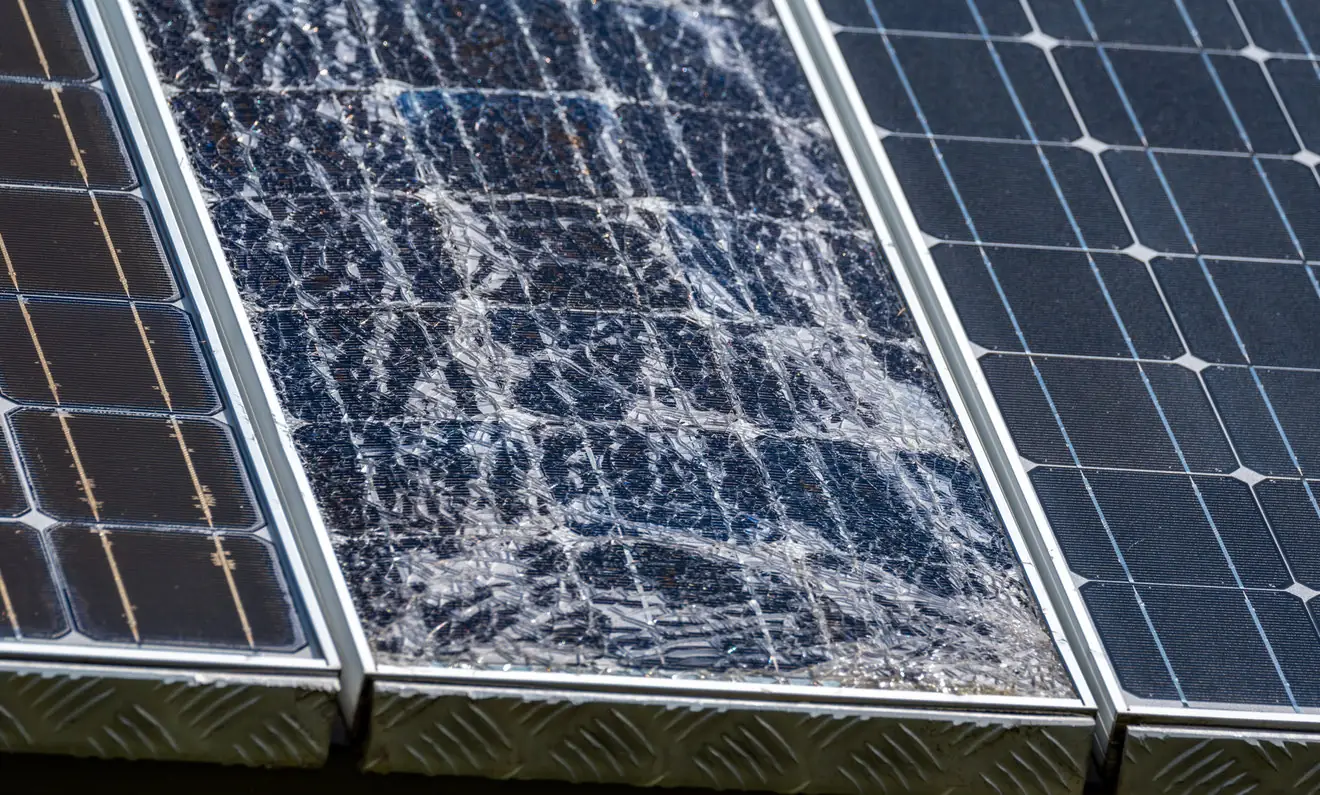
"A severe hailstorm just passed through, I see shattered glass on my roof, and I'm panicking about who is going to pay for this."
Recent case result — Bennett Legal$170,000+ recovery
Against Sunlight Financial · Solar fraud arbitration
- $113,000 loan cancelled
- UCC lien removed
- Credit repaired
- $58,000 cash to client
Past results do not guarantee a similar outcome. Every case is different.
If your solar panels were damaged in a hailstorm, that panic is completely justified — and the question you're already asking, who pays for this?, is exactly the right one. You are likely already paying off a $30,000–$50,000 solar loan or lease. The absolute last thing you need right now is your homeowners insurance company and your solar installer pointing fingers at each other while your system sits broken and useless on your roof.
Here is exactly who is responsible for the damage, where the financial traps are hidden, and what you need to do immediately to protect your home.
Free consultation
Solar panels wrecked by hail?
Don't let your insurer lowball you or your solar company price-gouge the repair. Free consultation — we fight back.
Direct Answer: Who Actually Pays for This?
When solar panels are destroyed by hail, high winds, or falling branches, who pays depends entirely on how you financed the system.
If you bought or financed the system with a loan, your homeowners insurance usually covers the storm damage—not your solar warranty. Because the panels are permanently attached to your home, most insurance policies cover them under your standard dwelling coverage.
If you lease the system or have a Power Purchase Agreement (PPA), the solar company actually owns the panels. Their insurance or their internal warranties are generally responsible for replacing the damaged equipment.
However, homeowners frequently get trapped in a dangerous "coverage gap" where the insurance company lowballs the payout, and the solar installer aggressively price-gouges the repair costs.
The Coverage Gap: Why Your Warranty Usually Won't Help
If you own the system, you might assume your 25-year solar warranty will swoop in and save the day. It almost certainly will not.
Equipment Warranties Only Cover Manufacturer Defects
Solar companies guarantee that your inverter won't fail prematurely or that your panels won't lose efficiency faster than advertised. They do not cover weather events. They classify hailstorms, hurricanes, and tornadoes as "Acts of God" or "Force Majeure," completely voiding their responsibility to replace the broken glass.
Workmanship Warranties Don't Cover Weather
Your installer likely gave you a 10-year workmanship warranty guaranteeing that your roof won't leak where they drilled the mounting holes. But that guarantee does not apply if baseball-sized hail physically smashes the equipment and damages the roof underneath.
4 Red Flags You Shouldn't Ignore After a Storm
In the chaotic aftermath of a major weather event, bad actors try to take advantage of confused homeowners. Watch out for these warning signs:
The Solar Company Claims Your Entire Warranty is Now Void
Some dishonest installers use storm damage as an excuse to unlawfully void your entire 25-year equipment and roof warranty. They do this so they can force you to pay out-of-pocket for future, completely unrelated electrical issues. If your installer has recently rebranded or changed names, warranty claims become even harder to enforce — see: My Solar Company Is Now Under a Different Name — Do My Warranty and Contract Still Apply?
Your Insurance Adjuster Refuses to Cover the System
Shady insurance adjusters sometimes try to categorize your permanent roof-mounted solar panels as "personal property" (like a television or a couch). Personal property coverage has much lower payout limits than your main "dwelling coverage," leaving you thousands of dollars short on the repair bill.
The Installer Demands an Exorbitant "Removal and Reinstall" Fee
If your roof is damaged and needs replacing, the solar panels have to come off first. Predatory solar companies will suddenly demand $8,000 to $15,000 just for the "Removal and Reinstallation" (R&R) process, knowing you have no leverage and no alternatives.
Your Lease Company Keeps Charging You for Power
If you have a PPA, you only agreed to pay for the power the system produces. If the system was destroyed in a storm and is currently producing zero electricity, but the company is still automatically drafting money from your bank account, they are violating your contract.
⚖️ Insurance company dragging its feet? Solar installer demanding inflated repair costs? You don't have to fight this alone. Request a free case evaluation from Bennett Legal.
3 Common Post-Storm Solar Scams
Natural disasters bring out scammers who prey on urgency. Be highly suspicious if you encounter any of the following tactics.
The "Storm Chaser" Roofer Trap
Out-of-state roofing crews will knock on your door promising to replace your roof and handle the solar panel removal themselves to save you money. How to avoid: Never let a standard roofer touch your solar panels. If an unauthorized party uninstalls the system, your solar manufacturer will instantly and legally void your warranty.
The Insurance Check Hostage Situation
The solar company demands that you sign over your entire insurance payout check to them up front before they will even put you on the schedule for repairs. Once they have the money, they ghost you for six months. How to avoid: Never sign over a full insurance check. Agree to standard progress payments.
Double-Dipping on Disasters
A fraudulent installer will bill your insurance company for brand-new replacement panels, but when the crew shows up, they simply patch up and reinstall the partially damaged ones, pocketing the difference. How to avoid: Demand the serial numbers of the new panels and verify them upon delivery.
Why It Matters: Legal & Financial Consequences
Ignoring the damage or hiring the wrong contractor can quickly turn a bad storm into a massive financial crisis.
Massive Out-of-Pocket R&R Costs
If your insurance company refuses to cover the solar R&R fees, or if the solar company's price exceeds your policy limits, you could be forced to pay $3,000 to $8,000 minimum just to get the panels off your roof so the roofer can work.
Double Utility Bills
While your system is broken, you are forced to buy expensive electricity from the standard grid again, all while still paying the $250 monthly loan payment for the broken solar panels on your roof.
Compounding Roof Damage
Shattered panels can expose the lag bolts and mounting holes drilled into your rafters. The next time it rains, severe water intrusion can cause thousands of dollars in interior water damage.
Denied Claims Due to Delay
Insurance policies have strict reporting windows — sometimes you only have 30 days to file a claim. If your solar company delays giving you a repair estimate, you could miss the insurance deadline, resulting in a total denial of your claim.
Homeowner Legal Rights and Protections
You do not have to accept unfair treatment from your insurance adjuster or your solar company. You have specific legal rights.
Contractual Rights (PPA vs. Ownership)
If you have a PPA or lease, the contract explicitly defines the "risk of loss." In most leases, the company retains the risk of loss, meaning they cannot legally force you to pay for weather damage to property they own.
Insurance Bad Faith Laws
If your homeowners insurance company unreasonably delays your claim, intentionally misclassifies your panels to lower your payout, or denies a valid storm claim, they are operating in "bad faith." Many states allow you to sue for damages beyond just the cost of the repair.
Consumer Protection Statutes Against Price Gouging
Many states trigger strict price-gouging laws immediately after a declared state of emergency (like a major hailstorm or hurricane). If a solar company drastically raises their standard R&R fees simply because a storm hit, they are violating state consumer protection laws.
State-by-State Storm Damage & Solar Rules
| State | Hail/Storm Risk Level | Contractor Price Gouging Laws | Common Insurance Hurdles |
|---|---|---|---|
| Texas | Extremely High | Strict (DTPA) after declared disasters | Wind/Hail exclusions, high deductibles |
| Florida | High (Hurricanes) | Strict (AG enforcement) | Separate, massive hurricane deductibles |
| Colorado | Extremely High | Moderate enforcement | Aggressive adjuster depreciation tactics |
| California | Low Hail, High Wind | Strict (CSLB regulations) | Wildfire exclusions, coverage drops |
| New Jersey | Medium | High (Strong CFA protections) | Disputes over dwelling vs. personal property |
| Arizona | Medium (Monsoons) | Moderate | Delays in getting utility PTO after repairs |
Action Steps if Your Panels Were Damaged in a Storm
- Document everything safely. Take photos of the shattered glass and damaged roof from the ground. Do not climb on a roof with broken glass and live electrical wires.
- Review your contract immediately. Check your paperwork to confirm whether you own, finance, or lease the system. This determines who holds the financial liability.
- File a claim with your homeowners insurance. Call your insurance agent before you sign any repair or R&R contracts with the solar company.
- Demand a written quote for Removal & Reinstallation. Force the solar company to provide an itemized quote for R&R so you can submit it to your insurance adjuster.
- Do NOT let a standard roofer touch the panels. Ensure only licensed, manufacturer-approved solar technicians handle the uninstallation to preserve your equipment warranty.
- Consult a legal professional. If the insurance company denies your claim, or if the solar company demands exorbitant R&R fees, you need legal leverage.
💡 Don't wait for the bills to pile up. The sooner you act, the more leverage you have. Contact Bennett Legal for a free case evaluation.
When Storms Hit, The Excuses Start. We Hold Them Accountable.
At Bennett Legal, we've seen what happens when a natural disaster strikes and billion-dollar insurance companies and solar installers decide to play games with your home. Homeowners are left caught in the middle — forced to pay double utility bills while facing exorbitant repair quotes and denied insurance claims.
We don't let that slide. Our team understands the deep financial and legal complexity of post-storm property damage, and we take the pressure off your family so you can focus on getting your home repaired safely.
We help homeowners by:
- Reviewing PPA and lease agreements: We dig into the fine print to shift the financial liability for weather damage back onto the solar company where it belongs.
- Fighting bad-faith insurance denials: We challenge aggressive adjusters who try to misclassify your solar panels or lowball your repair payout.
- Stopping contractor price gouging: We leverage powerful consumer protection laws, like the Texas DTPA and New Jersey CFA, to stop installers from demanding inflated, opportunistic R&R fees.
- Enforcing warranties: We ensure that your solar company cannot unlawfully void your 25-year warranty just because a storm passed through.
- Pursuing maximum compensation: We aggressively pursue claims to recover your out-of-pocket costs, repair your home, and hold dishonest companies accountable.
You have already been through a severe storm. You shouldn't have to fight a grinding legal battle just to get your roof fixed and your power restored.
If you are dealing with a denied insurance claim, a price-gouging solar company, or a lease provider demanding payment for a broken system, Bennett Legal is here. Our team specializes in solar panel financing fraud and consumer protection.
Reach out when you're ready. We'll take it from here.
Contact Bennett Legal today for a free case evaluation.
Frequently Asked Questions
Does homeowners insurance cover solar panels damaged by hail? Yes. If you own or finance your system, solar panels are permanently attached to your roof and are typically covered under your standard homeowners insurance dwelling policy, subject to your deductible.
Will my solar warranty replace panels broken in a storm? No. Solar equipment and workmanship warranties only cover manufacturing defects or installation errors. They explicitly exclude weather damage, "Acts of God," or Force Majeure events.
How much does it cost to remove and reinstall solar panels for roof repair? R&R costs vary widely depending on system size and location. Legitimate quotes typically fall in the $3,000–$8,000 range, but predatory companies will dramatically inflate prices after a storm. A consumer protection attorney can force installers to justify their fees and bring costs in line with market rates.
Can any roofing company remove my solar panels after a storm? No. If a standard roofer removes your solar panels, the manufacturer will almost certainly void your entire 25-year equipment warranty. Only licensed solar technicians should handle the uninstallation.
Do I still have to pay my solar lease if the panels are broken? If you have a Power Purchase Agreement (PPA), you should only pay for the electricity generated. If the system is broken and not generating power, you should not be charged. Review your specific lease terms carefully.
Free consultation
Solar panels wrecked by hail?
Don't let your insurer lowball you or your solar company price-gouge the repair. Free consultation — we fight back.