Disclaimer: This article provides general information and is not legal advice. Laws vary by state. Please consult an attorney about your specific situation.
If you or someone close to you was in a car wreck during pregnancy, you're dealing with two overlapping emergencies at once: the physical danger of the crash and the uncertainty about how it may affect the pregnancy.
Many people walk away from a collision thinking "I'm okay," only to feel cramps, spotting, or reduced movement hours later. Partners and families often feel helpless, wondering how to support someone who is already overwhelmed.
Pregnancy changes the entire medical and legal picture. Suddenly you're dealing with two patients, but only one claim, and you have to protect both the parent and the baby in every decision you make.
This guide walks you through medical steps, legal rights, insurance traps, documentation, jurisdiction differences, and what Bennett Legal can do to protect your family.
Free consultation
Pregnant and hurt in a car accident?
We fight for families in the most vulnerable moments. Free consultation — no fees unless we win.
Why Pregnancy-Related Car Wrecks Carry Unique Risks
Even a low-speed crash can cause injuries that don't show themselves right away. Trauma can disrupt the placenta, trigger early contractions, or affect blood flow and oxygen to the baby. The pregnant person may feel minimal pain while serious complications are developing underneath.
Financial and emotional stakes are also higher. Extra ultrasounds, monitoring, specialist visits, and possible bed rest can affect family income and long-term health.
Partners, parents, and friends often carry their own panic, fearing the worst but trying not to show it.
How Pregnancy Changes How Doctors Treat Crash Injuries
Pregnancy isn't a "layer" on top of a trauma case. It transforms the entire medical approach. Doctors adjust:
- Pain medication options
- Imaging choices (limiting X-rays when possible)
- Duration of monitoring
- Thresholds for admission
- How aggressively they rule out internal bleeding
- Emotional support expectations
- Bed rest recommendations
- Follow-up timelines
This isn't "extra" care. It's essential care. If you're unsure whether your situation warrants legal action, understanding the full roadmap of a car wreck case can help you see what the process looks like from start to finish.
Note: Any extra medical care required BECAUSE the person is pregnant is compensable in a legal claim.
Medical Complications That Can Follow a Car Wreck During Pregnancy
| Complication | What It Is | Symptoms to Watch For | Why It Matters |
|---|---|---|---|
| Placental abruption | Placenta partially or fully detaches due to trauma | Bleeding, pain, tenderness, contractions | Can reduce oxygen to baby; medical emergency |
| Fetal distress | Baby shows signs of stress | Decreased movement, abnormal heart rate | May require immediate medical monitoring |
| Preterm labor | Labor begins early due to trauma | Contractions, pressure, back pain | Can lead to premature birth |
| Uterine rupture (rare) | Tear in uterine wall from trauma | Severe abdominal pain, shock | Life-threatening for parent and baby |
| Miscarriage | Pregnancy loss linked to trauma | Bleeding, cramping | Crash impact can contribute in some cases |
| PTSD and anxiety | Emotional trauma after crash | Panic, nightmares, intrusive thoughts | Impacts daily life and bonding |
Note: Many of these complications appear hours or days after the crash, which is why observation and follow-up matter so much.
7 Things to Do Immediately After a Car Accident While Pregnant
1. Get OB-Level Medical Care Right Away
Emergency rooms sometimes focus on trauma injuries and overlook pregnancy-specific risks. You need fetal monitoring, not just a quick exam. Ask for:
- Ultrasound
- Fetal heart rate monitoring
- Observation for several hours
- Blood tests
- Rh testing (if parent is Rh-negative)
Note: You have the right to request pregnancy-specific care. You're not "bothering" anyone. You're doing what doctors expect.
2. Make Sure Every Provider Documents the Pregnancy and the Crash
Say it at every visit. Documentation is your lifeline. This one sentence protects you: "I am pregnant and was in a car accident. Please include that in my records."
Insurance companies often claim complications were unrelated if they don't see consistent documentation.
3. Track Symptoms Daily
Use a phone notes app or a notebook. Small symptoms matter. Track any:
- Cramping
- Spotting
- Back pain
- Movement changes
- Headaches
- Panic episodes
- Gastrointestinal changes
- Fatigue spikes
- Sleep disruptions
Note: Partners can help by keeping a symptom log too. Two sets of observations are better than one.
4. Save All Pregnancy-Related Medical Documents
Keep copies of:
- Ultrasounds
- Non-stress tests
- Bed rest orders
- High-risk OB referrals
- Medical bills
- After-visit summaries
- New prescriptions
- Work restriction notes
These become the backbone of your legal claim. For a deeper look at the types of proof that carry the most weight, see our guide on 6 types of evidence every car wreck case needs.
5. Document Emotional Impact for Both the Pregnant Person and the Family
Emotional trauma counts legally. Examples include:
- Fear something is wrong with the baby
- Panic while driving
- Crying during fetal monitoring
- Feeling disconnected
- Fear of future complications
- Anxiety before ultrasounds
Partners often experience their own trauma, including guilt or fear of loss.
6. Avoid Giving Recorded Statements to Insurance
Insurance adjusters are trained to:
- Minimize pregnancy injuries
- Suggest complications were pre-existing
- Claim symptoms are "normal pregnancy discomfort"
- Push for quick settlements
Do not describe medical conditions to them. That's for doctors, not adjusters. Not sure whether to call the insurance company or a lawyer first? This guide breaks down why the order matters.
Bottom line: Insurance adjusters are not on your side. They are trained to reduce payouts. Anything you say can and will be used to minimize your claim.
7. Contact a Lawyer Experienced in Pregnancy-Related Collision Cases
These cases require:
- Knowledge of maternal-fetal medicine
- OB-GYN expert testimony
- Documentation of fetal injuries
- Understanding future risks
- Proper valuation of emotional trauma
- Protection against insurance tactics
Bennett Legal has handled complex, emotionally sensitive cases involving pregnancy and injury. Reach out for a free, confidential case evaluation — you don't have to navigate this alone.
Seat Belts, Airbags, and Crash Forces During Pregnancy
How Seat Belts Interact With Pregnancy in a Crash
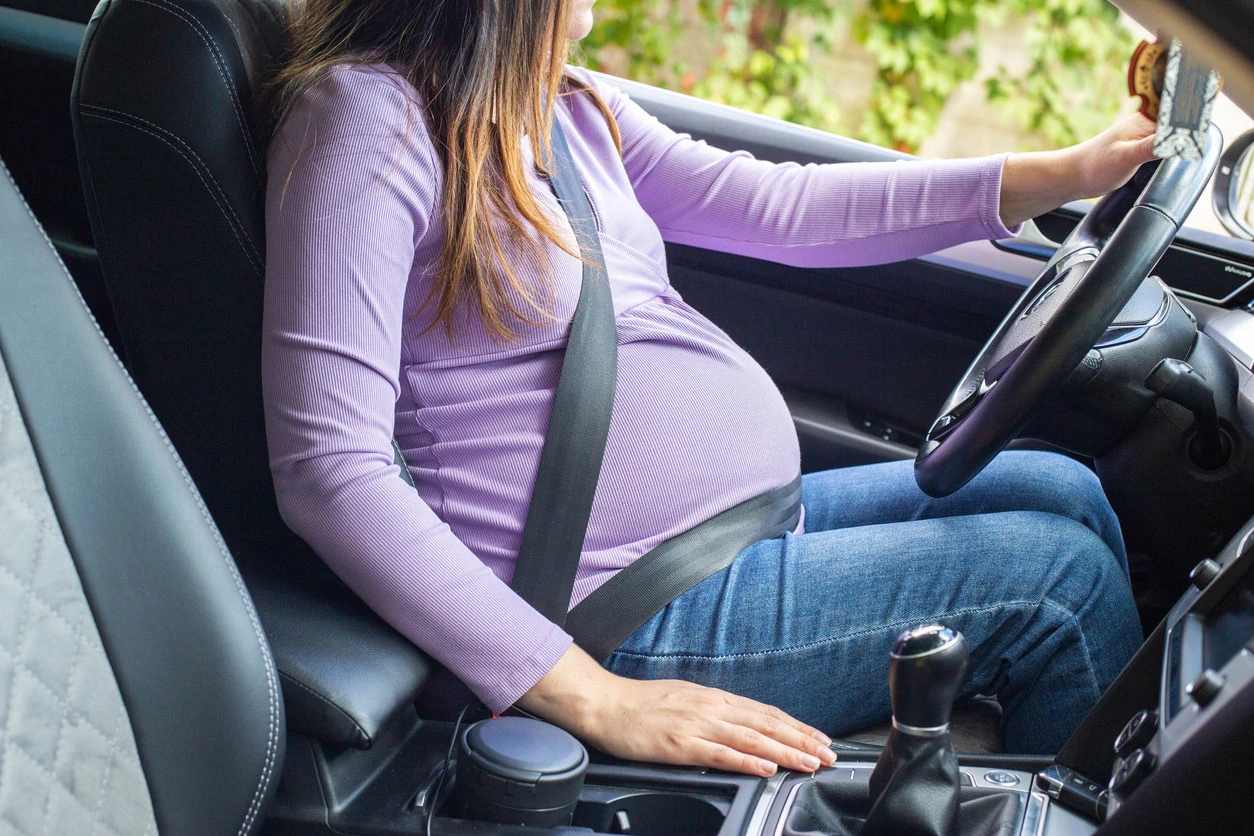
A properly worn seat belt protects both the parent and baby. But even correctly positioned belts can still cause internal injuries during a strong crash. Correct positioning should be:
- The lap belt placed under the belly, low on the hips
- The shoulder belt placed between the breasts and to the side of the belly
- The belt kept snug, not loose
Common Seat-Belt-Related Injuries
Seat belt pressure can contribute to:
- Placental abruption
- Uterine trauma
- Abdominal bruising
- Fetal distress
- Maternal rib injuries
None of this means the parent did anything wrong. It simply reflects how crash forces behave.
What If You Weren't Wearing a Seat Belt?
Not wearing a seat belt does not automatically destroy your claim. Not wearing a seat belt does not mean you caused your own injuries. Not wearing a seat belt does not eliminate fetal injury damages.
Different states handle "seat belt defense" differently. Your attorney can advise based on your jurisdiction.
Do Airbags Hurt the Baby?
Airbags are designed to save lives, including pregnant lives. But they can still contribute to abdominal pressure, blunt-force injury, placental trauma, and chest injuries that increase stress on the abdomen.
Even if airbags deployed "properly," there can still be injury.
Remember: The fact that safety equipment worked as designed does not mean you weren't injured. Airbag deployment and seat belt use are signs of a serious impact — not proof that you're fine.
What Damages Can Be Claimed When a Pregnant Person Is Injured?
Your Claim as the Injured Parent
As the injured parent, you can claim:
| What You Can Claim | Description |
|---|---|
| Medical bills paid | All ER, OB monitoring, specialist, and follow-up costs already paid |
| Future medical costs | Ongoing care, therapy, or treatment you'll need |
| Lost wages | Income lost due to injury, bed rest, or recovery |
| Pain and suffering | Physical pain from the crash |
| Emotional distress | Anxiety, trauma, fear about the baby's health |
Your Baby's Separate Claim
Your baby also has their own independent claim:
| What Your Child Can Claim | Description |
|---|---|
| Fetal injury damages | Injuries suffered in utero that affect the child after birth |
| Future medical costs | Long-term care tied to in-utero trauma |
| Developmental impacts | Delays or disabilities linked to the crash |
The child's claim is separate from and in addition to the parent's claim. Both can be pursued together. For a full breakdown, see our guide on economic vs. non-economic damages in catastrophic injury cases.
Key Jurisdiction Examples and Statutes of Limitations
| State | Personal Injury Statute of Limitations | Notes for Pregnancy Cases |
|---|---|---|
| Texas | 2 years | Claims for the baby may have extended time because the child was not yet born |
| California | 2 years | Emotional distress claims are strong when pregnancy is involved |
| Florida | 2 years | Medical records must be precise to link fetal injury |
| Georgia | 2 years | Minor's claims usually extend until adulthood |
| New York | 3 years | Medical monitoring damages may apply |
| Illinois | 2 years | Discovery rule sometimes extends deadline for hidden pregnancy injuries |
Key notes:
- Minor's statute extension: Many states stop the clock for the baby's claim until the child turns 18.
- Wrongful death (fetal loss) timelines may differ from injury timelines.
- Government vehicles often have significantly shorter deadlines (sometimes 6 months).
If your crash involved a police car, city vehicle, school bus, or public employee, you may have to file a notice of claim very quickly.
What Partners, Spouses, and Family Members Should Do
Help track symptoms and changes. Partners often notice things the pregnant person doesn't — stress levels, sleep interruptions, mood shifts, physical discomfort, and decreased fetal movement.
Attend medical appointments when possible. Two sets of ears reduce misunderstandings and missed details.
Watch for emotional trauma. Partners often witness panic attacks, nightmares, fear of driving, tears before ultrasounds, and anxiety about fetal health. These are real injuries and they matter legally.
Help preserve evidence. Partners can photograph seat belt marks, document damage to the car interior, save clothing or items affected in the crash, and keep track of expenses.
Track your own losses. Partners often don't realize their own claim rights — including loss of companionship, loss of intimacy, emotional distress, missed work, and increased caregiving duties.
Be the calm voice in insurance interactions. This does NOT mean giving statements. Say: "We're not giving a statement right now. We'll follow up in writing."
How Bennett Legal Protects Families After Pregnancy-Related Crashes
Bennett Legal handles the medical, emotional, and legal complexity of these cases so families can focus on health and safety. We help by:
- Coordinating with OB-GYN and maternal-fetal medicine specialists
- Documenting both parental and fetal injuries
- Preserving evidence of emotional trauma
- Building long-term medical projections
- Protecting families from insurance pressure
- Negotiating for full compensation
- Filing claims within strict deadlines
- Preparing for trial if needed
Whether you are the pregnant person, the partner, or the family trying to support someone you love, this situation is overwhelming. Every fear you have is understandable.
If you need clarity, protection, or someone to fight the insurance company for you, contact Bennett Legal for a free, confidential consultation — we'll take it from here.
We work on contingency, which means you pay nothing unless we recover for you. One of the most common mistakes families make after a car wreck is waiting too long to get legal help. Evidence disappears, deadlines pass, and insurance companies gain leverage.
You deserve an advocate who understands what's at stake — for you and for your baby. Don't let the insurance company set the pace. Let your family set the terms.
FAQ
Can a car wreck cause a miscarriage? Yes. A crash can contribute to miscarriage, especially if it triggers placental abruption, oxygen loss, or severe trauma. Even if doctors cannot say the crash was the "only" cause, the law allows recovery if the crash contributed in any meaningful way.
Do I need to go to the hospital even if I feel fine? Yes. Feeling fine does not rule out hidden pregnancy complications. Most OBs recommend at least 4 to 24 hours of monitoring after any significant impact to the abdomen.
What if the crash was low-speed or seemed minor? Even low-speed crashes can cause whiplash-style forces strong enough to injure the placenta. Never assume "minor crash = minor risk."
Can the baby be injured in the womb? Yes. Fetal injuries can include bruising, oxygen reduction, blood flow problems, skull or bone injuries, or trauma to developing organs. Some injuries show up on ultrasound, while others appear only after birth or when developmental milestones are delayed.
What if symptoms don't start until days after the crash? Delayed symptoms are very common in pregnancy trauma. The legal and medical clocks start at the moment of the crash, not when symptoms begin. Get evaluated immediately.
Can I file a claim for the baby's injuries even though they're not born yet? Yes. The law treats fetal injuries as part of your accident claim. In many states, the child's statute of limitations does not begin until they turn 18.
Can my partner or spouse file a claim too? Often yes. Depending on the jurisdiction, partners may be able to claim damages for emotional distress, loss of companionship, lost support or increased caregiving duties, and time taken off work. Understanding who you can hold responsible after a serious injury can help you see the full picture of your family's legal options.
Related Articles from Bennett Legal:
- From Crash Scene to Courtroom: A Car Wreck Lawyer's 6-Phase Roadmap
- Your First Call After a Car Wreck: Insurance Company or Lawyer?
- 6 Types of Evidence Every Car Wreck Case Needs
- 11 Costly Mistakes People Make in Car Wreck Lawsuits
- Your Child Was Hurt in a Car Wreck: A Legal Guide for Parents
- Who You Can Sue After a Catastrophic Injury
Free consultation
Pregnant and hurt in a car accident?
We fight for families in the most vulnerable moments. Free consultation — no fees unless we win.