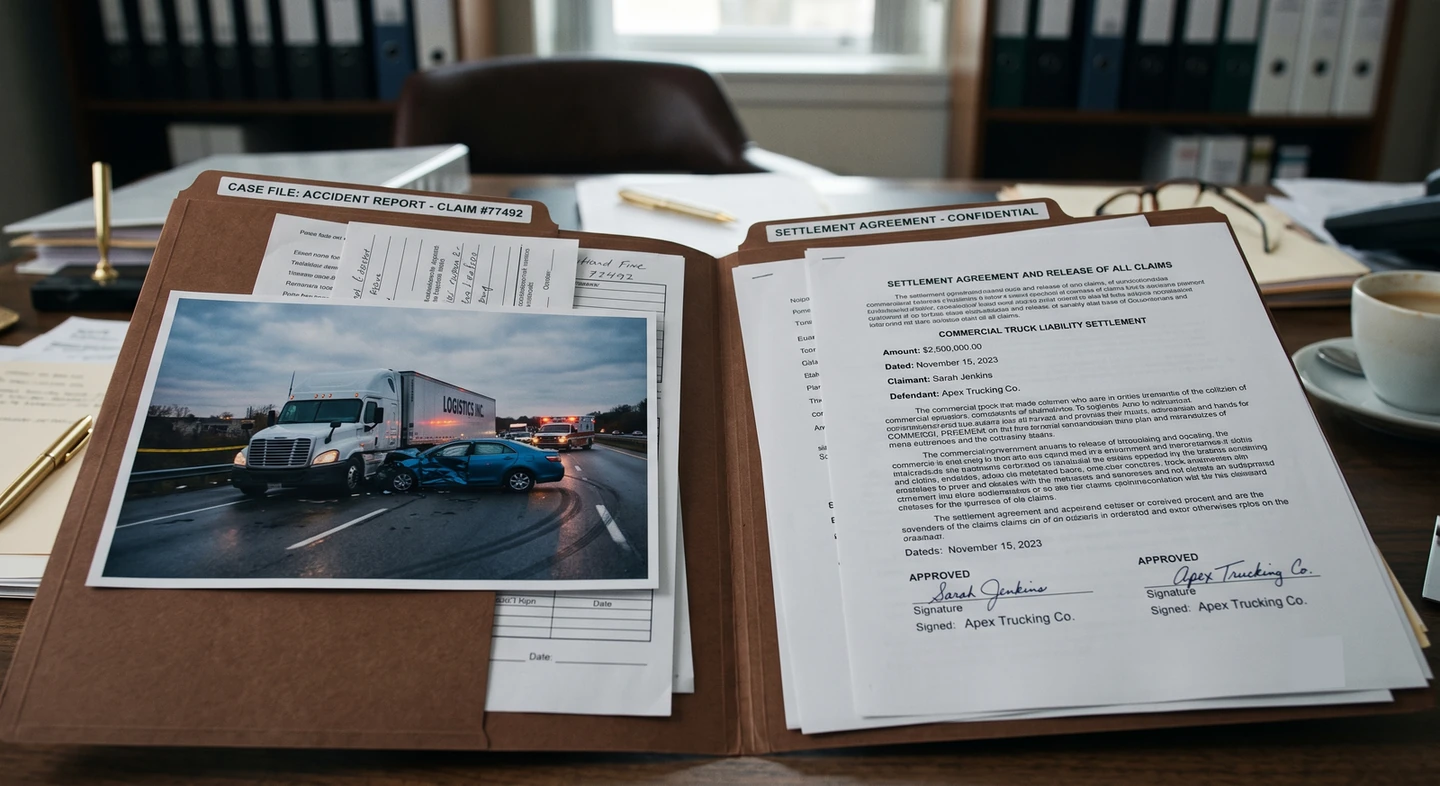
In the chaotic moments and confusing days after a commercial truck accident, it can be impossible to know what to do first. You are dealing with injuries, trauma, and a vehicle that may be totaled. The decisions you make in these first hours will directly determine your ability to successfully file a claim after a commercial truck accident.
Filing a claim after a commercial truck accident is not like a fender-bender with another passenger car. You are going up against a large corporation and its aggressive insurance company. These cases are legally and financially different in ways most people never expect. You must be prepared.
7-Step Guide to Filing a Claim After a Commercial Truck Accident
This guide provides a clear, step-by-step process to ensure you build the strongest possible case from day one.
Step 1: At the Scene of the Accident — Preserve Everything
Your first priority is always safety and medical care. Once you have called 911 and are safe, your focus must shift to preserving evidence.
- Do Not Admit Fault: Never apologize or say anything that could be interpreted as admitting fault.
- Take Photos & Videos: Document everything. Take pictures of the truck's license plate, the company name on the door, the position of the vehicles, the road conditions, and your injuries.
- Get Driver & Witness Information: Get the truck driver's name, license number, and insurance information. Get the names and phone numbers of any witnesses.
- Talk to the Police: Give a clear, factual statement to the responding police officer. Make sure you get a copy of the police report number.
Properly reporting a commercial truck accident is the first official step in your claim. For a complete checklist of what to report and to whom, read: Reporting Requirements After a Commercial Truck Accident: 11 Steps That Protect Your Case.
Step 2: Seek Immediate Medical Attention
Even if you feel "fine," you must see a doctor immediately. Adrenaline can mask serious injuries.
- Why it's Critical: This creates an official medical record that links your injuries directly to the accident. If you wait weeks to see a doctor, the insurance company will argue that your injuries must not have been serious or were caused by something else.
- Follow Doctor's Orders: Follow all treatment plans, attend all physical therapy appointments, and take all prescribed medications.
The true cost of a commercial truck accident goes far beyond the first hospital bill — medical bills, lost wages, and lifetime care can run into the millions. For a full breakdown, see: The Average Cost of a Commercial Truck Accident and Who Really Pays.
Step 3: Notify Your Own Insurance Company
Report the accident to your own car insurance company as soon as possible. Even if you were not at fault, you must notify them. Provide the basic facts of the accident but do not give a recorded statement until you have spoken with an attorney.
Step 4: Do NOT Talk to the Trucking Company's Insurer
Within days, you will get a call from an insurance adjuster representing the trucking company. They will sound friendly and concerned. They are not your friend. Their only job is to get you to say something that hurts your claim.
🚫 The Recorded Statement Trap: They will ask to take a "quick recorded statement." Politely but firmly decline. They are trained to ask leading questions that can be used to deny your claim later.
💰 The Quick Check Trap: They may offer you a fast check for a few thousand dollars to "cover your immediate bills." Do not accept it. Cashing that check may legally settle your entire claim before you know the full extent of your injuries and damages.
Not sure what to say when they call? Talk to Bennett Legal first — it's free.
Step 5: Preserve Evidence & Start a File
Create a dedicated folder for everything related to your accident. This includes:
- The police report
- All medical bills and records
- Receipts for out-of-pocket expenses (prescriptions, rental cars, etc.)
- Pay stubs showing your lost wages
- Any correspondence from the insurance companies
Step 6: Understand Who You Are Filing a Claim Against
The claim is not just against the driver. A thorough investigation will identify all the potential defendants. Liability can be complex and may include:
- The Trucking Company (Motor Carrier): For negligent hiring, training, or maintenance.
- The Driver: For their direct negligence.
- The Shipping Company: If they hired a known-unsafe carrier.
- The Manufacturer: If a defective part was one of the causes of the accident.
If an 18-wheeler was involved, the injuries and number of liable parties are often even more complex. See: 9 Reasons Why 18-Wheeler Accidents Are More Dangerous Than Other Commercial Truck Crashes.
Step 7: Consult with an Experienced Commercial Truck Accident Attorney
This is the most important step you can take. The moment you are dealing with a commercial carrier, you are outmatched. Their insurance companies have teams of lawyers, and you need an expert on your side.
- The Contingency Fee: Personal injury lawyers work on a contingency fee basis, meaning you pay nothing upfront. The attorney only gets paid if they win your case.
- The Investigation: An attorney can immediately send a "spoliation letter" to the trucking company, legally demanding that they preserve critical evidence like the driver's logs and the truck's black box data.
- The Negotiation: Your lawyer will handle all communication with the insurance company, protecting you from their tactics and negotiating for the maximum possible settlement.
You've Taken the First Step. Let Us Handle the Rest.
By reading this guide, you are already taking a crucial step to protect yourself. You understand that filing a claim is a serious legal process that requires a strategic approach from day one.
At Bennett Legal's truck accident team, we live and breathe this process. We know the evidence to look for, the tactics the insurance companies use, and the steps to take to build a case designed for maximum value.
We help families by:
- Immediately taking over all communication with the insurance adjusters.
- Launching a rapid, comprehensive investigation to preserve evidence before it can be "lost" or destroyed.
- Connecting you with top medical specialists to ensure your injuries are properly diagnosed and documented.
- Building a detailed damages model that accounts for every dollar of your past, present, and future losses.
Filing a claim after a commercial truck accident is a marathon, not a sprint. You do not have to run it alone.
Reach out when you're ready. We'll take it from here.
🏆 No Win, No Fee — Guaranteed. We handle commercial truck accident cases on a pure contingency fee basis. You pay nothing upfront, and if we don't recover compensation for you, you owe us nothing. Not a dime.
Contact Bennett Legal today for a free case evaluation.
Frequently Asked Questions
How long after a truck accident can you file a claim? In Texas, you have two years from the date of the accident to file a personal injury lawsuit. However, you should begin the insurance claim process immediately to preserve evidence and document your injuries.
What is the first step in filing a claim? The very first steps are to seek medical attention and report the accident to the police. This creates the official medical and legal records that form the foundation of your claim.
Do I need a lawyer to file a truck accident claim? While you can technically file a claim yourself, it is highly inadvisable. Commercial truck accident claims involve complex federal regulations and multiple liable parties. An experienced attorney can often secure a settlement that is many times higher than what an individual could negotiate on their own.
What if the truck company's insurance says the accident was my fault? Do not argue with them. This is a common tactic. Anything you say can be used against you. Politely end the conversation and speak with a lawyer immediately. Your lawyer will present the evidence to prove the truck driver's negligence.
Free consultation
Hit by a commercial truck?
No Win, No Fee — we handle everything while you recover.