DISCLAIMER: Laws about truck, rideshare, and commercial vehicle wrecks vary by state and are affected by federal regulations and contract terms. This article is general information, not legal advice. Don't rely on this alone to decide what to say or sign after a wreck. Talk to a qualified attorney in your state about your specific situation.
Hey folks — Tall Chuck here.
If you've just been in a wreck, you're probably asking something like:
- "Is this just a normal car wreck, or is it… more?"
- "Does it matter that the other driver was in a semi‑truck, delivery van, Uber/Lyft, or company car?"
- "Do I really need a truck or rideshare car wreck lawyer, or is this just insurance like usual?"
From my seven‑foot‑tall view — and from handling cases like our $2.2 million traumatic brain injury settlement from a commercial crash — I see the same trap over and over:
People treat truck, rideshare, and commercial vehicle wrecks like regular car‑on‑car crashes — while the companies on the other side treat them like high‑stakes legal battles from day one.
That mismatch can cost you:
- Evidence
- Coverage
- And a whole lot of money you and your family might really need.
Let's walk through why these cases are very different from regular car crashes — and what that means for your next move.
Free consultation
Hurt in a truck, rideshare, or commercial vehicle wreck?
Commercial vehicle cases are complex. Let an experienced attorney handle yours. Free consultation — no fees unless we win.
1. Truck Wreck vs Car Wreck: The Damage and the Law Are Bigger
Let's start with the obvious: size and weight.
A fully loaded semi‑truck can weigh 20–40 times more than your car.
That means:
- Harder impacts
- More serious injuries
- Higher medical bills
- Higher lifetime costs if you're left with permanent pain or disability
But it's not just physics. Legally, a truck wreck vs car wreck is different because:
- Truck drivers are held to higher standards of care
- Trucking companies are subject to federal regulations (hours‑of‑service rules, maintenance requirements, driver qualification rules, etc.)
- There's often more than one company in the mix (carrier, owner‑operator, broker, shipper, etc.)
In a simple car wreck:
- It's usually You vs. Other Driver's Insurance
In a truck wreck:
- It might be You vs. Driver + Trucking Company + Trailer Owner + Broker + Insurers — all pointing fingers at each other while you sit there with medical bills.
For a deeper dive into how these legal rules stack up side by side, see: Car vs. Commercial Truck Accidents: 7 Legal Differences Most Folks Don't Expect.
That's why trying to handle a serious truck case like a regular fender‑bender is like bringing a squirt gun to a barn fire.
2. Commercial Vehicle Accident Claims Involve Multiple Insurance Policies
With ordinary car‑on‑car wrecks, it's usually:
- Your auto policy
- Their auto policy
- Maybe some health insurance in the background
Simple doesn't mean easy, but at least it's straightforward.
With a commercial vehicle accident claim, the stack looks more like a tall stack of pancakes:
- The driver's personal auto policy (maybe)
- The company's commercial auto policy
- Umbrella/excess policies for higher coverage
- Maybe a separate policy for the trailer or leased vehicle
- In rideshare cases, a platform policy (Uber/Lyft) plus the driver's own insurance
Each policy:
- Has its own limits
- Has its own exclusions
- Has its own lawyers and adjusters
They'll argue over:
- Who's primary
- Who's excess
- Who's off the hook
- Whether the driver was "on the job" or "off the app" at the moment of the wreck
While they argue, what you care about is simple:
"Who is going to pay for my medical bills, lost wages, and the way this changed my life?"
That's the heart of any commercial vehicle accident claim — cutting through the coverage mess to get to actual money that helps you.
Pro Tip from Tall Chuck: If the other driver says, "Don't worry, my company handles everything," translate that as: "There are more insurance companies and lawyers involved than you think." The more corporate logos you see, the more careful you should be about trying to handle it alone.
3. Company Vehicle Car Wreck Liability: "On the Job" Changes Everything
Here's where folks get surprised.
If you're hit by:
- A company car,
- A delivery driver,
- A sales rep on the road, or
- Any employee driving for work,
You're not just asking, "Is this person at fault?" You're asking:
"Is their employer on the hook too?"
That's called vicarious liability or "respondeat superior," which in plain English means:
When someone is working for a company and causing harm in the course of their job, the company can be held responsible.
Why this matters:
- Companies often carry bigger insurance policies than individual drivers.
- If the driver has low policy limits, the company might be your path to full compensation.
- You may also have direct claims against the company for:
- Negligent hiring (putting unsafe drivers on the road)
- Negligent training or supervision
- Unsafe policies that push rushed or distracted driving
But don't think the company is going to say, "Yep, that was on us."
They'll argue:
- The driver was "off duty"
- The driver was using the vehicle for personal reasons
- The driver was an "independent contractor" instead of an employee
Understanding company vehicle car wreck liability means:
- Tracking down who owned the vehicle
- Digging into employment or contractor status
- Determining what the driver was doing at the time of the crash
That's not something you get from a quick phone call with an adjuster.
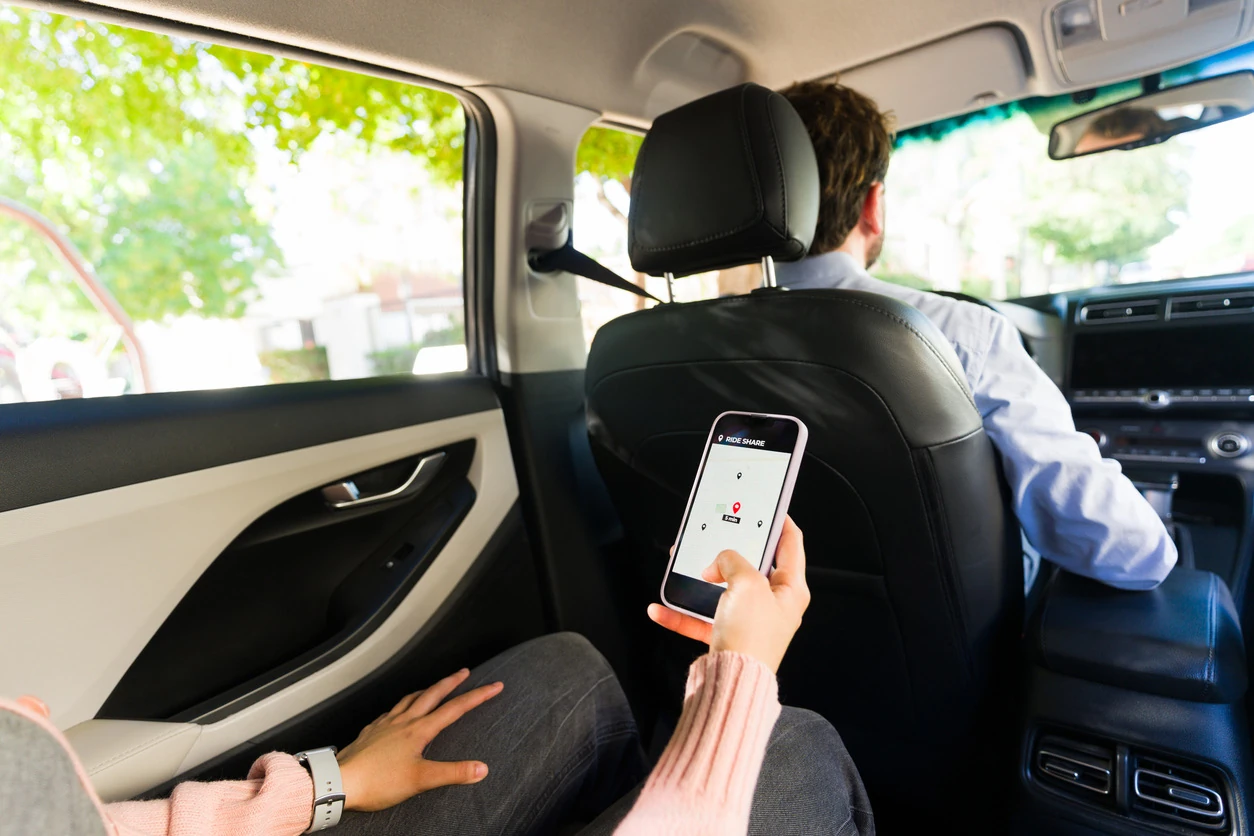
4. Rideshare Wrecks: The App Status Changes the Insurance
Uber and Lyft crashes are their own special beast.
If you're hit by, or riding in, a rideshare vehicle, insurance can look like this:
- App off:
- Only the driver's personal policy applies (no Uber/Lyft coverage).
- App on, waiting for a ride:
- A lower level of Uber/Lyft liability coverage usually applies.
- Driver's personal policy may or may not help, depending on exclusions.
- On the way to pick up a rider or with a rider in the car:
- A much higher Uber/Lyft liability policy usually kicks in.
If you don't know the driver's app status, you don't know:
- Which policy applies
- How much coverage is available
- Who to actually make the claim against
That's where a rideshare car wreck lawyer comes in — someone who knows:
- How to get trip and app records
- How to navigate the Uber Lyft accident insurance maze
- How to coordinate the driver's personal policy with the platform's policy
From my tall view, rideshare cases are where a lot of people leave money on the table, simply because they didn't know more than one policy existed.
If you were in an Uber or Lyft wreck in the Dallas–Fort Worth area, don't try to sort out the coverage puzzle alone. Talk to Bennett Legal — we untangle rideshare insurance every week.
5. Federal Regulations: Trucks Play by a Different Rulebook
Semi‑trucks and many commercial carriers aren't just following basic traffic laws.
They're under federal trucking regulations, including:
- Limits on hours of service (how long they can drive without proper rest)
- Requirements for driver qualification and background checks
- Required drug and alcohol testing
- Rules for inspection, repair, and maintenance
- Minimum insurance coverage levels
This matters because:
- If a truck driver was driving too long, the company might be pushing illegal schedules.
- If maintenance was skipped, a brake or tire failure might be the company's fault — not just "bad luck."
- If they put a dangerous driver on the road, that's on them, not just the driver.
In a regular car wreck, you're usually arguing:
"They were careless in this moment."
In a truck case, you may be arguing:
"The whole operation was unsafe — from hiring to scheduling to maintenance."
That's a big difference.
Texas note: Texas adopts federal FMCSA regulations and enforces them through the Texas Department of Public Safety's Commercial Vehicle Enforcement division. On top of that, a new federal rule finalized in January 2025 will require all heavy-duty trucks (Class 7–8) to have Automatic Emergency Braking (AEB) systems by 2027. If a trucking company is already behind on safety tech or maintenance compliance, that's another angle your truck accident lawyer can use to prove the operation was cutting corners.
6. Evidence Is Different — and Disappears Faster
In a regular car wreck, evidence is usually pretty simple:
- Vehicle damage
- Photos and videos from the scene
- Witness statements
- Your medical records
Important, yes. But with trucks, rideshare, and commercial vehicles, there's a whole extra layer of evidence that can make or break the case:
- Black box / ECM / ELD data (speed, braking, hours on the road)
- GPS and telematics tracking
- Dash‑cam and inward‑facing camera footage
- Electronic trip logs and dispatch messages
- Rideshare app data (on‑duty/off‑duty status, ride history, timestamps)
- Company policies, training records, and safety manuals
This type of evidence can show:
- Speeding or harsh braking
- Fatigue or hours‑of‑service violations
- Distracted driving
- Route deviations
- Whether the driver was truly "off the clock" or actively working
But here's the part most folks don't know:
- Some black boxes overwrite themselves every 12–48 hours
- Dash‑cam footage can be deleted automatically
- GPS logs may only be stored for a few days
- Companies sometimes "misplace" evidence that makes them look bad
And that's exactly why our firm acts immediately.
At Bennett Legal, we send a legal Spoliation/Preservation Letter the moment we're hired!
That letter forces the trucking company, rideshare service, or commercial carrier to stop all deletion, overwriting, or tampering with:
- black box / ECM / ELD data
- dash‑cam and inward‑facing footage
- GPS and telematics
- driver logs and dispatch messages
- safety and training records
Once that letter lands in their inbox, destroying evidence becomes a legal violation — and judges do not take kindly to companies who ignore it.
Without this step, critical proof can vanish forever.
With it, we lock down the evidence before it disappears into thin air.
Evidence is disappearing right now. If you've been in a truck, rideshare, or commercial vehicle wreck, contact Bennett Legal immediately — we'll send preservation letters within hours of your call.
7. The Defense Strategy Is More Aggressive and More Sophisticated
I'm not saying regular car wreck cases are a picnic. But when you're up against:
- A trucking company
- A big employer
- A rideshare platform
- A national delivery service
…you're not just dealing with a single adjuster anymore.
You're dealing with:
- Corporate defense teams who handle these claims all day, every day
- Investigators who may be at the scene before your car is even towed
- Playbooks designed to:
- Minimize payouts
- Shift blame
- Make you look at fault
They might:
- Suggest you slammed on the brakes or "darted out"
- Try to pin partial blame on you (comparative fault)
- Dig hard into your medical history to blame injuries on anything but this wreck
- Push quick, low settlements before you know the full extent of your injuries
With a garden‑variety car wreck, that's bad enough.
With a truck, rideshare, or commercial vehicle case, the gap between their resources and yours gets even taller. Taller than me — and I'm saying something.
Texas note: Under Texas's modified comparative fault rule, you can only recover damages if you're less than 51% at fault. Defense teams in commercial vehicle cases know this — and their entire playbook is built around pushing your fault percentage as high as possible. Even getting you from 20% to 51% means they pay zero. That's why having a truck accident lawyer who understands Texas comparative fault strategy isn't optional in these cases — it's survival.
Pro Tip from Tall Chuck: If the other side's first move after your wreck is to send "their investigator" or "their field adjuster" out to talk to you in person, that's not customer service. That's damage control. You don't owe them a detailed interview on your front porch.
Don't let a corporate defense team outmaneuver you. Get Bennett Legal in your corner before you say another word to their adjusters.
The Bottom Line: The Stakes Are Higher Than a Regular Car Wreck
Truck, rideshare, and commercial vehicle wrecks tend to involve:
- More severe injuries
- Higher medical bills
- Longer time off work
- Bigger impacts on your long‑term health and earnings
That means:
- There's more at stake if you accept a low offer.
- A mistake in how you handle the claim can cost you six figures or more over time.
And once you sign a release, that's it.
You can't come back years later and say:
"Actually, I ended up needing two more surgeries."
The law usually allows one bite at the apple.
When you add up big injuries, big medical bills, big future impact, and big corporate defendants — you're in a different league than a small parking lot fender‑bender.
Truck, Rideshare & Commercial Wrecks in a Nutshell
| Factor | Regular Car Wreck | Truck / Rideshare / Commercial |
|---|---|---|
| Who's liable? | Usually one other driver | Driver + employer + carrier + platform — all pointing fingers at each other |
| Insurance policies | Your policy vs. theirs | Multiple stacked policies (personal, commercial, umbrella, platform) |
| Employer liability | Rarely applies | Vicarious liability, negligent hiring, unsafe policies — company may owe you too |
| Rideshare coverage | N/A | Changes based on app status (off, waiting, en route) — miss this and you miss money |
| Regulations | State traffic laws | Federal trucking regs (hours of service, maintenance, drug testing, insurance minimums) |
| Evidence | Photos, police report, medical records | Black box data, dash cams, GPS, dispatch logs, app records — can vanish in 24–48 hours |
| Defense strategy | One adjuster | Corporate defense teams, on-scene investigators, aggressive blame-shifting playbooks |
So What Should You Do If You're Hit by a Truck, Rideshare, or Commercial Vehicle?
Here's the short version:
- Get medical care — don't wait and don't downplay your injuries.
- Call the police and make sure the report notes:
- That it was a commercial vehicle, rideshare, company car, or truck
- Take photos of:
- Logos
- License plates
- DOT numbers
- App screenshots (for rideshare)
- Don't assume it's "just like a regular wreck."
- Talk to a lawyer who understands:
- Truck wreck vs car wreck differences
- Rideshare coverage rules
- Company vehicle car wreck liability
- How to build a strong commercial vehicle accident claim
You're not being dramatic by doing that. You're being smart.
Not sure whether to call your insurance first or a lawyer? Your First Call After a Car Wreck: Insurance Company or Lawyer? Why the Order Matters
For a full walkthrough of what the legal process looks like: From Crash Scene to Courtroom: A Car Wreck Lawyer's 6-Phase Roadmap for Injured Drivers
How Bennett Legal (and Tall Chuck) Handle These Cases
When someone calls me and says:
"I got hit by a truck / Uber / company vehicle. The adjusters are calling nonstop. I don't even know where to start."
Here's what my team and I do:
1. Figure Out What Kind of Case You Actually Have
- Regular car vs car
- Semi‑truck / 18‑wheeler
- Delivery or work truck
- Rideshare (Uber, Lyft)
- Company car or fleet vehicle
Each one has its own rules and angles.
2. Track Down All the Players and Policies
- Driver
- Employer or carrier
- Vehicle owner and trailer owner (for trucks)
- Rideshare platform
- All applicable insurance policies (personal, commercial, excess)
3. Move Fast on Evidence That Disappears
- Black‑box / telematics data
- Dash‑cam or surveillance footage
- Dispatch, trip, and app records
- Maintenance and safety logs
4. Build a Case That Matches the Real Damage
We look at:
- Your medical treatment and future needs
- Lost wages and loss of earning capacity
- Pain, disability, and daily life impact
- The long‑term burden on you and your family
And we explain it in plain English to you — and in legal language the insurance companies understand.
You're Not Asking for a Favor — You're Demanding Responsibility
You didn't choose to share the road with:
- An overworked truck driver on a tight delivery schedule
- A distracted rideshare driver staring at the app
- A company car whose owner cut corners on safety
All you did was drive where you were supposed to.
You're not greedy for wanting:
- Your medical bills covered
- Your lost wages replaced
- Fair compensation for the way this changes your life
You're asking these companies to live up to the responsibility that comes with putting commercial vehicles on public roads.
That's exactly the kind of fight Bennett Legal shows up for:
- Protecting families after serious wrecks — including a $2.2M commercial crash TBI settlement
- Fighting corporate and insurance games
- Turning confusion into a clear, step‑by‑step legal plan
If You've Been Hit by a Truck, Rideshare, or Commercial Vehicle, Here's Your Next Step
If you're dealing with:
- A truck wreck vs car wreck situation and you're not sure what that means
- A wreck involving Uber, Lyft, or another rideshare and you're confused about coverage
- A crash with a company vehicle and questions about employer liability
- A complex commercial vehicle accident claim with multiple insurers pointing at each other
Reach out to Bennett Legal in Dallas, Texas for a free case evaluation.
We serve clients across Dallas, Fort Worth, and throughout the DFW metroplex. Tell us:
- What kind of vehicle hit you
- What you know about their employer or platform
- What the police, doctors, and insurance companies have said so far
We'll help you:
- Understand what kind of case you really have
- Identify all the companies and policies that may owe you money
- Avoid mistakes that regular car‑wreck advice doesn't cover
- Decide whether you want Tall Chuck and the team standing between you and the folks on the other side
You focus on healing and taking care of your people.
Let us focus on the regs, the fine print, and the fight.
bennettlegal.com/contact | Call us today
Keep standing tall, folks. Chuck's got your back.
Related Articles from Bennett Legal:
- Your First Call After a Car Wreck: Insurance Company or Lawyer?
- From Crash Scene to Courtroom: A Car Wreck Lawyer's 6-Phase Roadmap
- How to Prove Injuries After a Car Wreck: 11 Key Types of Evidence
- Are You Partly at Fault? How Comparative Negligence Really Works
- Car vs. Commercial Truck Accidents: 7 Legal Differences Most Folks Don't Expect
- 11 Costly Mistakes People Make in Car Wreck Lawsuits
Free consultation
Hurt in a truck, rideshare, or commercial vehicle wreck?
Commercial vehicle cases are complex. Let an experienced attorney handle yours. Free consultation — no fees unless we win.