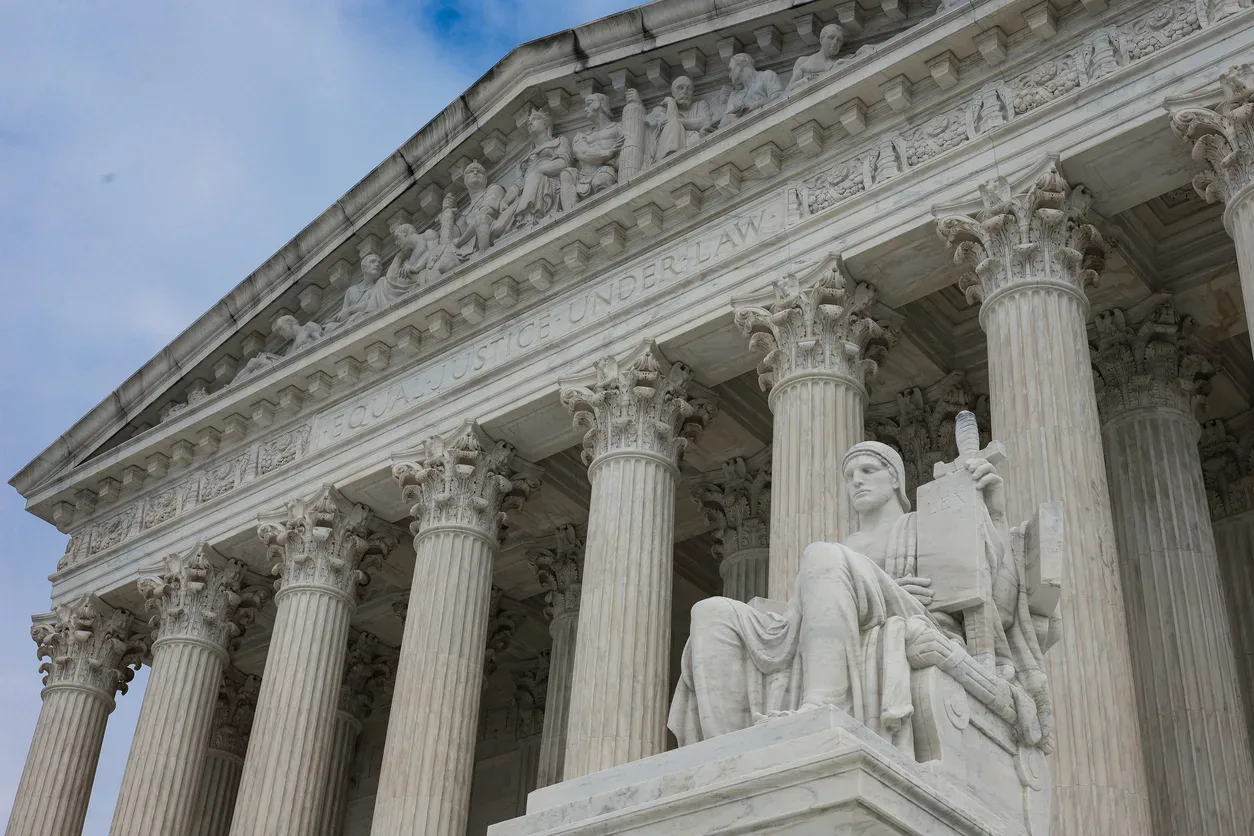
Bennett Legal has filed a brief in the Texas Supreme Court in a case about an employer arbitration plan. The case number is 25-0983. We filed it for a Texas worker who was hurt on the job in 2015. More than ten years later, he is still waiting for a decision on his claim.
Free consultation
Hurt at work, and your employer has an arbitration plan?
Bennett Legal helps hurt workers in arbitration and on appeal. Free case evaluation.
What Is This Employer Arbitration Plan Case About?
Texas lets private employers choose not to carry workers' compensation insurance. These employers are called "non-subscribers." Many of them make hurt workers use a private arbitration plan instead. Arbitration is a private way to settle a claim. The employer writes the plan. A person called an arbitrator decides the claim, not a judge.
Read this graphic as text: Employer arbitration vs. court litigation infographic
Our client's employer was one of these employers. Here is what happened.
- He was hurt on the job in 2015. His employer did not have workers' comp insurance.
- He followed his employer's arbitration plan. He went through arbitration two times. Then he filed the appeal the plan allowed.
- The arbitration company said the employer had to pay the appeal fee. The public record shows the fee was not paid. In September 2021, the arbitration company closed the case. It later said it would not reopen the case on its own.
- He then filed a lawsuit in Dallas County. The employer asked the judge to send the case back to arbitration. The judge held hearings. She never signed an order saying yes or no.
- The court mailed a routine notice that set the case for trial. The employer appealed. It said the notice meant the judge had said no to arbitration.
- The Dallas Court of Appeals dismissed the appeal. It said there was no order to appeal. The employer then asked the Texas Supreme Court to look at that decision.
Read this graphic as text: Timeline of an injured worker's path through arbitration
What Does Our Brief Say?
We filed our brief in October 2026. It asks the Court to leave the court of appeals' decision in place. It makes three main points.
Read this graphic as text: Three key arguments in Bennett Legal's Texas Supreme Court brief
No signed order, no appeal. A notice that sets a trial date is not an order about arbitration. Earlier this year, in Paxton v. City of Austin, the Texas Supreme Court held that when a trial court has not signed an order, there is nothing to appeal, even when the court moves the case toward trial.
There is a right way to ask a judge to rule. If a judge is taking too long, a party can ask a higher court to tell the judge to decide. Our client does not oppose that. What he opposes is skipping the trial judge.
The arbitration already ended. If the Court looks at this question, our brief explains that federal law treats the arbitration as "had" when the arbitration company ends the case because a fee was not paid. The employer should not be able to make him start over.
The case is still pending. The Court has not ruled. You can read the brief yourself. It is a public court filing under case number 25-0983 on the Texas Supreme Court's website.
What This Means If You Were Hurt at Work
Every case is different. But if your employer does not carry workers' comp and has an arbitration plan, these steps can help:
- Ask for a copy of the plan in writing.
- Keep every letter, email, and fee notice from the arbitration company.
- Write down every deadline in the plan.
- Talk to a lawyer early, before you decide what to do next. Here is what to expect at your first meeting with a lawyer.
Talk to Us
Bennett Legal helps hurt workers in arbitration and in court, including on appeal. If you were hurt at work and your employer has an arbitration plan, we can talk about your options. Learn more about our Dallas workplace injury work, or contact us for a free case evaluation. You can also read about another arbitration case we handled for a hurt worker.
Talk to Bennett Legal about your arbitration plan ->
Attorney advertising. Responsible attorney: Charles A. Bennett, Bennett Legal, Dallas, Texas. This article describes a pending case and public court filings. It is not legal advice. Past results do not guarantee future outcomes.
Free consultation
Hurt at work, and your employer has an arbitration plan?
Bennett Legal helps hurt workers in arbitration and on appeal. Free case evaluation.