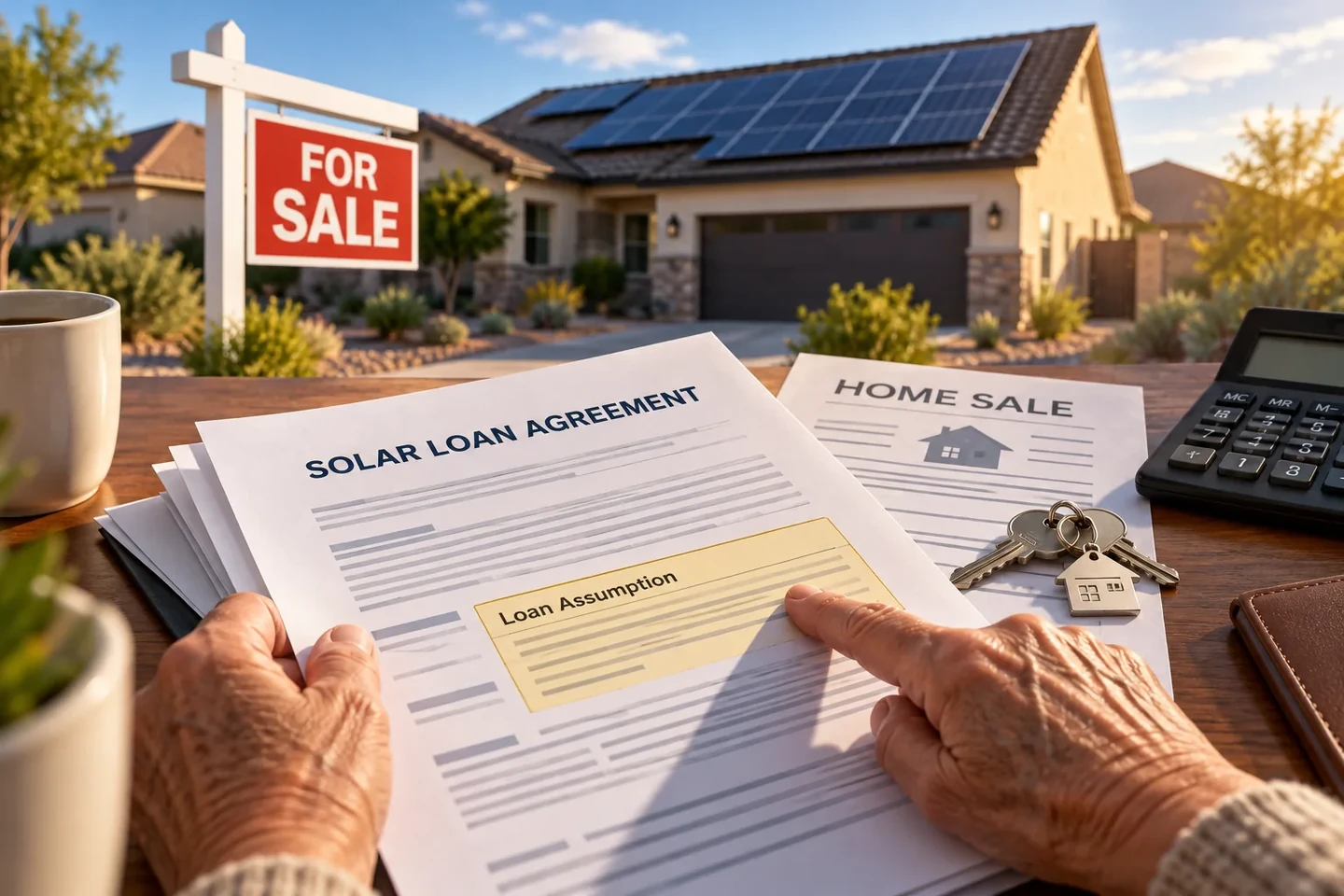
You've accepted an offer, packed the boxes, and are ready to close. Then, your realtor calls: the buyer's lender won't approve the mortgage because of your solar loan. Or worse, the buyer is demanding you pay off the $40,000 balance yourself. You assumed the loan would just transfer with the house. You assumed wrong.
$170,000+ recovery
Against Sunlight Financial · Solar fraud arbitration
- $113,000 loan cancelled
- UCC lien removed
- Credit repaired
- $58,000 cash to client
Past results do not guarantee a similar outcome. Every case is different.
You are now officially stuck. The great interest rate you were about to lock in is at risk, and your entire financial plan is about to be derailed by the solar panels you thought were a smart investment.
If this is happening to you, you are not alone. This is a manufactured crisis created by solar lenders who use your mortgage refinance as a leverage point to protect their own interests. But you are not powerless.
This guide will break down the seven ways a solar contract can kill your refinance and give you a step-by-step playbook on how to fight back.
Free consultation
Solar loan blocking your home sale?
Solar cases take time. If you hire us, plan not to sell your home for at least 6 to 12 months.
The Villain of the Story: What Is a Solar UCC-1 Lien?
Before we dive in, you need to understand the weapon the solar lender is using against you. When you financed your system, the solar lender filed something called a UCC-1 Fixture Filing.
A solar UCC filing commonly concerns the equipment; the actual filing and loan documents need review. A title company or mortgage lender may require a payoff, release, subordination or other written resolution before closing. The filing does not, by itself, establish that the solar lender has a mortgage lien on the entire home or priority over every other creditor. This is the central reason why a UCC lien can kill a home sale or refinance.
Keep the filing and the title company’s written requirements with your solar agreement for review.
The 7 Traps That Derail Your Refinance
1. Buyer Refusal: They Don't Want Your Debt
The Problem: Most buyers are looking for a clean, simple mortgage. They don't want to inherit a separate 20-year debt from a solar company they didn't choose, especially if the panels are older or the loan balance is high.
Financial Impact: You either lose the buyer, or they demand a massive reduction in your sale price.
2. Lender Refusal: The Mortgage Company Says No
The Problem: Even if the buyer is willing to assume the loan, their mortgage lender (FHA, VA, conventional) will often refuse. The mortgage lender may require documentation or resolution of the solar financing and filing before approving the transaction. Priority depends on the documents and applicable law; it is not established by the existence of a solar UCC filing alone.
Financial Impact: The buyer's financing falls through, forcing you back to square one.
3. The Inflated Payoff Demand
The Problem: Your loan is non-assumable, so you must pay it off at closing. But when you get the payoff quote, it's thousands more than you expected due to hidden dealer fees and an artificially inflated principal.
Financial Impact: A huge chunk of your home equity is vaporized, eating into your profits from the sale.
4. Appraisal Issues: The Panels Don't Add Value (or Are a Liability)
The Problem: An appraiser might assign zero (or even negative) value to an older solar system, especially if it's a PPA or a lease. If your loan balance is higher than the system's appraised value, it creates "negative equity."
Financial Impact: The home appraisal comes in too low, meaning the buyer's mortgage won't be large enough to cover the purchase price + the solar loan payoff.
5. Delays, Delays, Delays: Subordination & Payoff
The Problem: Even if the loan is being paid off, the solar lender is notoriously slow in providing payoff statements or subordination agreements. This can delay your closing for weeks or months.
Financial Impact: Buyers can walk away, you can lose your dream home, and you might incur late fees or extension charges on your mortgage.
6. The PPA / Lease Transfer Nightmare
The Problem: These contracts are notoriously difficult to transfer. The leasing/PPA company often requires invasive credit checks for the buyer and charges huge transfer fees, which can be a major trap for sellers.
Financial Impact: Buyers hate inheriting these contracts, often leading them to demand significant price reductions or pull out of the deal.
7. Buyer's Remorse & "Solar Fatigue"
The Problem: Even if the numbers work, the sheer complexity and uncertainty of dealing with a solar loan or contract can give a buyer cold feet.
Financial Impact: The deal collapses, and you have to relist your home, potentially losing market momentum.
Bottom line: any one of these seven traps can single-handedly stall or kill your closing. The earlier you catch the problem, the more leverage you have to fix it.
Your Action Plan: How to Sell Your Home with Solar
Don't wait until closing day to discover your solar loan is a problem. Proactive steps are critical.
- Read Your Solar Contract Today. Find the sections on "Assignment," "Transfer," or "Sale of Property." This will tell you if your loan is assumable (rare) or if it must be paid off.
- Get a Formal Payoff Quote. Request a written payoff quote from your solar lender, valid for at least 30 days. This gives you a clear number to work with. If it's inflated by hidden dealer fees, you'll need to address that.
- Request a Subordination Agreement (If Needed). If your loan is assumable, or if your buyer's lender demands it, immediately request this from your solar lender. Be prepared for delays.
- Disclose Early and Honestly to Buyers. Work with your realtor to disclose the solar loan or contract upfront. Trying to hide it will kill the deal later. Position it as an asset, but be transparent about the terms.
- Be Prepared to Buy Out Leases/PPAs. If you have a lease or PPA, be prepared to pay the buyout fee yourself if the buyer refuses the transfer. This allows you to present a "lien-free" property.
- Price Your Home Accordingly. If your solar loan is not easily assumable, or if it adds little appraised value, factor that into your asking price.
- Consult a Solar Contract Attorney. If the solar lender is stalling, demanding an inflated payoff, or refusing a subordination agreement, a lawyer can intervene to clear the path for your home sale.
Planning a Home Sale While Reviewing a Solar Dispute
Solar cases take time. If you hire us, plan not to sell your home for at least 6 to 12 months.
Bennett Legal reviews GoodLeap, Sunlight Financial, EverBright and BrightOak solar financing involving any installer. EverBright matters are limited to loans and retail installment contracts (RICs), including EverOwn; EverBright leases and PPAs are excluded. BrightOak PPAs require documented proof of a filed UCC-1. The agreement, state and facts determine whether we can help. A planned sale does not automatically exclude you from a case review.
Bring your agreement, payment history, any UCC filing, and the title company's or mortgage lender's written requirements. We review the documents and explain which options may apply. Hiring us does not guarantee a release, a settlement or a particular closing date.
Contact Bennett Legal for a free case evaluation.
Frequently Asked Questions
What does "assumable solar loan" mean?
An assumable solar loan means a new homebuyer can take over your existing loan, including the remaining balance and interest rate, without having to apply for a brand-new loan themselves. This is very rare for solar.
Can a solar loan stop me from selling my house?
It can complicate a sale. The title company or mortgage lender may require a payoff, release, subordination or other written resolution. What is needed depends on the filing, agreement and transaction. Solar cases take time. If you hire us, plan not to sell your home for at least 6 to 12 months.
Will a solar PPA or lease transfer automatically to a new homebuyer?
No. PPA and lease agreements require the new buyer to undergo a credit check and formally assume the contract. If they don't qualify or refuse, you typically have to buy out the system yourself.
How do I get a solar lender to provide a subordination agreement?
You must formally request it in writing from the solar lender. Be prepared for delays and potential pushback. If they stall, consulting a solar contract attorney can often speed up the process.
Free consultation
Solar loan blocking your home sale?
Solar cases take time. If you hire us, plan not to sell your home for at least 6 to 12 months.