This guide focuses on a sales promise that you could cancel at any time: whether it was true, and what you can do if it was not. Save the advertisement or message containing that promise and compare it with the signed agreement. A promise and a statutory cancellation window are different issues. For the cancellation steps themselves, use the contract exit guide, including cancelling before installation, or the unauthorized-loan guide if you dispute agreeing to financing.
$170,000+ recovery
Against Sunlight Financial · Solar fraud arbitration
- $113,000 loan cancelled
- UCC lien removed
- Credit repaired
- $58,000 cash to client
Past results do not guarantee a similar outcome. Every case is different.
The FTC cooling-off guidance applies only to covered transactions, while Texas's residential solar statute has its own scope and notice period. Neither source creates a general right to cancel any solar contract at any time.
“Can I really cancel my solar panel contract anytime?” If you’re asking this question, you are not alone.
Solar energy contracts often come with promises that seem too good to be true. One common assurance given by salespeople is the ability to cancel the contract anytime.
But is this really the case?
You remember the smile. The handshake. The easy reassurance: ‘Of course, you can cancel anytime.‘ It’s the promise that made you sign. Now, buried in the fine print of a contract you can’t escape, you’ve discovered the truth: that promise was a lie, and the contract is a cage. This isn’t just a misunderstanding; it’s a calculated sales tactic used by predatory solar companies to trap homeowners. You are right to be angry, and you are right to fight back. This is where the fight begins. Learn more about leasing vs. buying solar panels.
For vulnerable homeowners, the impact of misleading cancellation promises can be particularly damaging. It’s vital to be informed and proactive in safeguarding your financial stability. By educating yourself about contract rights and knowing what to look for, you can take steps to protect your home and ensure that your solar investment aligns with your expectations. Learn more about the difference between solar leases and loans.
Remember, being informed is your best defense against scams and unexpected financial burdens.
Recognize the Lie? Red Flags from a High-Pressure Sales Pitch
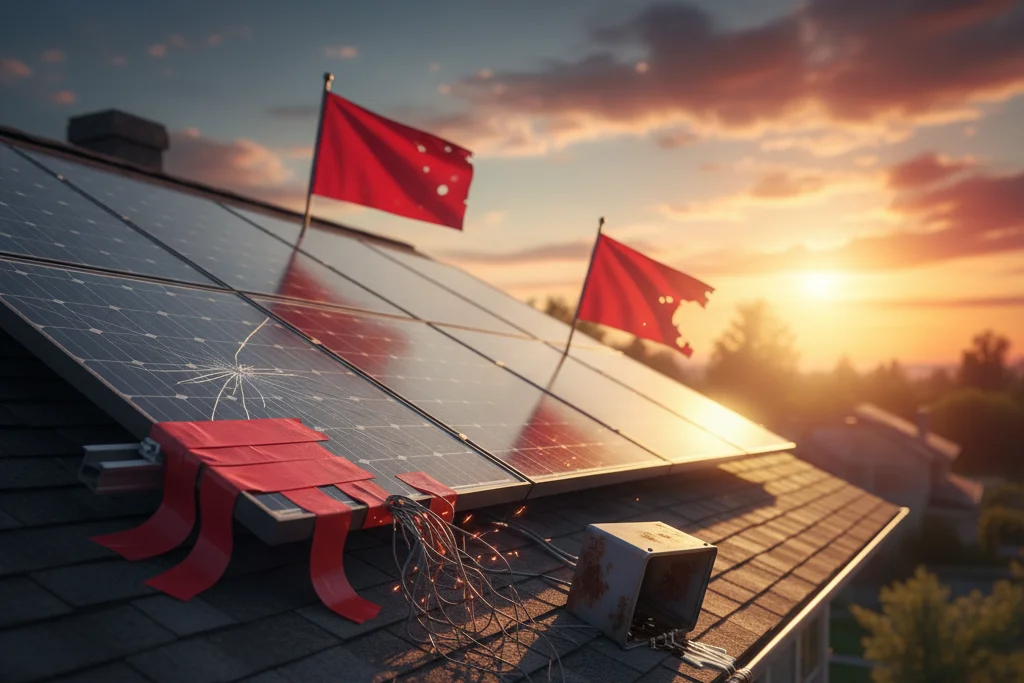
While some contracts may offer legitimate cancellation options, certain red flags may indicate misleading promises:
Vague or Non-Existent Cancellation Clauses
If your contract lacks clear cancellation terms or the clauses are vague, it could be a sign of potential issues. Always ensure that cancellation terms are explicitly stated in the contract.
Pressure to Sign Quickly
High-pressure sales tactics that urge you to sign a contract immediately without giving you time to review the details are a major red flag. A reputable company will allow you time to consider your options.
Lack of Written Confirmation
Verbal promises of easy cancellation should always be backed by written confirmation in the contract. Without written terms, verbal assurances may not be legally binding.
By being aware of these red flags, you can take proactive steps to address potential issues and ensure your solar contract aligns with your expectations. If you encounter any of these warning signs, consider asking a lawyer to review the contract. Learn more about HOA issues with solar panel installation.
Free consultation
Solar panel contract problems?
We help homeowners fight back against solar fraud. Free consultation.
Common Solar Contract Cancellation Scams and How to Avoid Them
By being aware of these common scams, you can better protect yourself and ensure that your investment in solar energy truly benefits your household.
False Promises of Easy Cancellation
Some companies may falsely promise easy cancellation to secure a sale, only to reveal hidden terms later.
How to Avoid: Always ask for written confirmation of cancellation terms and verify them with independent sources.
Hidden Fees for Cancellation
Scammers may include hidden fees in the contract that make cancellation costly and difficult.
How to Avoid: Thoroughly read and understand the contract before signing. Consider having a lawyer review the terms for hidden fees.
Misleading Contract Terms
Some companies may include misleading terms in the contract that result in unexpected penalties for cancellation.
How to Avoid: Ensure that all terms are clearly outlined in the contract and seek clarification on any ambiguous clauses.
By being aware of these scams, you can take steps to protect yourself and ensure that your solar investment aligns with your expectations. If you suspect any fraudulent activity, consider seeking legal advice to explore your options and protect your interests.
Can a Salesperson's "Cancel Anytime" Promise Be True?
Not as a legal right. No federal or Texas law lets you cancel a solar contract at any time. The cancellation rights the law does give are short, and they start the day you sign:
- Texas: a covered residential solar agreement signed on or after September 1, 2025 can be cancelled without penalty or further obligation by written notice on or before the fifth business day after you signed (Texas Occupations Code § 1806.156). The agreement must state that last date and where to send the notice.
- Federal: the FTC Cooling-Off Rule gives three business days for certain door-to-door and temporary-location sales.
A longer right exists only if your written agreement grants one, so compare the promise with the contract's cancellation clause. If the contract says what the salesperson said, it is a term you can use. If it does not, the promise matters as evidence of misrepresentation, covered below.
Still inside the window? Follow the cancellation steps in the contract exit guide now, including getting an affiliated lender's loan cancelled. The cooling-off window is only one part of SB 1036; see what else changed and whether it reaches a contract you already signed.
Other Grounds That Can End a Contract
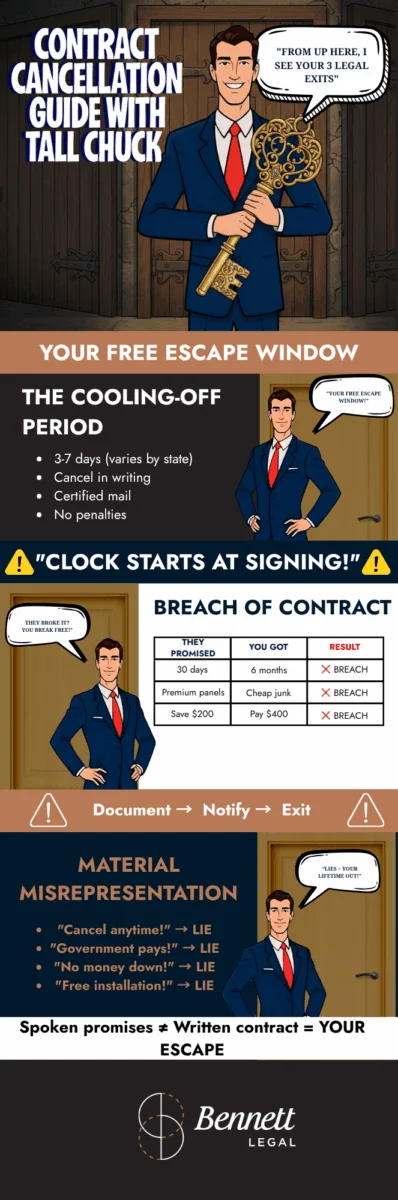
Breach of Contract
If the solar provider fails to meet their contractual obligations, such as not delivering the promised services or products, you may have grounds to cancel the contract. Breach of contract can include issues like faulty installations, failure to meet performance guarantees, or not adhering to agreed timelines. In such cases, you may be entitled to cancel the contract without incurring penalties.
Material Misrepresentation
If the salesperson made false claims or misrepresented key aspects of the contract, you might have the right to cancel. This includes promises of easy cancellation that are not reflected in the written agreement. Material misrepresentation can be a valid reason for contract termination, as it undermines the basis of the agreement.
Common Misleading Promises
Unfortunately, some salespeople may make misleading promises to secure a sale, leaving homeowners with unexpected commitments. Here are some common misleading promises to watch out for:
Anytime Cancellation
Salespeople may assure you that you can cancel the contract anytime without penalty. However, this promise is often not reflected in the contract terms. Always verify cancellation policies in writing and ensure they are clearly outlined in the contract.
No Penalty Cancellation
Promises of no penalty cancellation can be misleading if the contract includes hidden fees or penalties for early termination. Carefully review the contract for any clauses that specify cancellation fees or conditions that must be met to avoid penalties.
Guaranteed Savings
Some salespeople may promise guaranteed savings on your energy bills, suggesting that the solar system will pay for itself quickly. These claims can be misleading if they are not backed by detailed calculations or if they fail to account for variables like energy consumption changes or utility rate increases.
Exclusive Offers or Limited-Time Deals
High-pressure tactics that promote exclusive offers or limited-time deals can be a red flag. These promises may be used to rush you into signing a contract without fully understanding the terms. Take your time to review the contract and compare offers from multiple providers.
When a False "Anytime" Promise Becomes a Legal Claim
A salesperson telling you that you can cancel at any time, when the contract says otherwise, can be more than a broken promise:
- Texas Deceptive Trade Practices Act. Representing that an agreement gives rights it does not have is a listed deceptive practice (Business & Commerce Code § 17.46(b)(12)). If you relied on the statement to your detriment, you may be able to sue for the resulting damages (§ 17.50). Claims must generally be filed within two years of the statement, or of when you discovered or reasonably should have discovered it (§ 17.565), and a suit for damages usually requires 60 days' written notice first (§ 17.505).
- Texas's solar sales law. Chapter 1806 prohibits false, misleading or deceptive oral or written statements in residential solar sales (§ 1806.201). The Texas Department of Licensing and Regulation (TDLR) can take administrative action for that conduct since September 1, 2026, and after a hearing the commission that oversees TDLR may order the agreement cancelled and payments refunded, up to the amount paid (§ 1806.207).
- Contract and fraud law. A false statement that led you to sign can support a misrepresentation or fraud claim, depending on the evidence.
Which of these fits depends on what was said, when, and what you can prove. That is why the first step below matters most.
What to Do If You Were Told You Could Cancel Anytime
Write Down the Promise Now
Note who made the promise, when and where, the words used as closely as you remember them, and anyone else who heard it. Save texts, emails, ads, brochures and recordings. Under the Deceptive Trade Practices Act the two-year clock can start when the statement was made, so do this before memories fade.
Compare It With Your Contract
Find the cancellation clause, any early-termination fee and the cancellation notice. Mark every place where the written terms differ from what you were told.
Put Your Questions to the Company in Writing
Ask the solar company to confirm its cancellation terms in writing, and keep copies of everything you send and receive. Do not rely on a phone call.
Talk to a Lawyer Before You Stop Paying
Stopping payments or refusing access to your home can create new problems under the contract and the loan. A lawyer can tell you which claim fits your facts, handle the required notices and deal with the company and lender for you.
Report the Issue
You can file a complaint with the Texas Attorney General's Consumer Protection Division. TDLR also accepts complaints against solar retailers, solar salespeople and the electrical contractors who install systems. Complaints create a record and can help other homeowners, but they do not cancel your contract on their own.
Conclusion
If you find yourself facing misleading cancellation promises, remember that legal remedies are available. Consumer protection laws and options for restitution can help you address fraudulent activities. Seeking professional legal and financial advice empowers you to take control of the situation and work towards a resolution.
At Bennett Legal, we understand the complexities and challenges that come with solar panel contracts. We are here to support you in navigating these agreements and protecting your family’s financial future. Our team handles solar panel financing fraud and related matters, offering personalized guidance to help you manage contract implications with confidence. Whether you’re dealing with unexpected charges, misleading terms, or other contractual concerns, we are committed to giving your case careful attention.
Let us assist you in ensuring that your solar investment aligns with your goals and safeguards your financial well-being. Whether it’s unexpected billing issues, escalating payments, or hidden fees, we know how to stop the damage before it spreads. Reach out now to secure your home, your credit, and your peace of mind.
Don’t let predatory solar contracts put your home or credit at risk.
Related Reading
Free consultation
Solar panel contract problems?
We help homeowners fight back against solar fraud. Free consultation.