If you need help, learn more about our Solar Panel Financing Fraud.
$170,000+ recovery
Against Sunlight Financial · Solar fraud arbitration
- $113,000 loan cancelled
- UCC lien removed
- Credit repaired
- $58,000 cash to client
Past results do not guarantee a similar outcome. Every case is different.
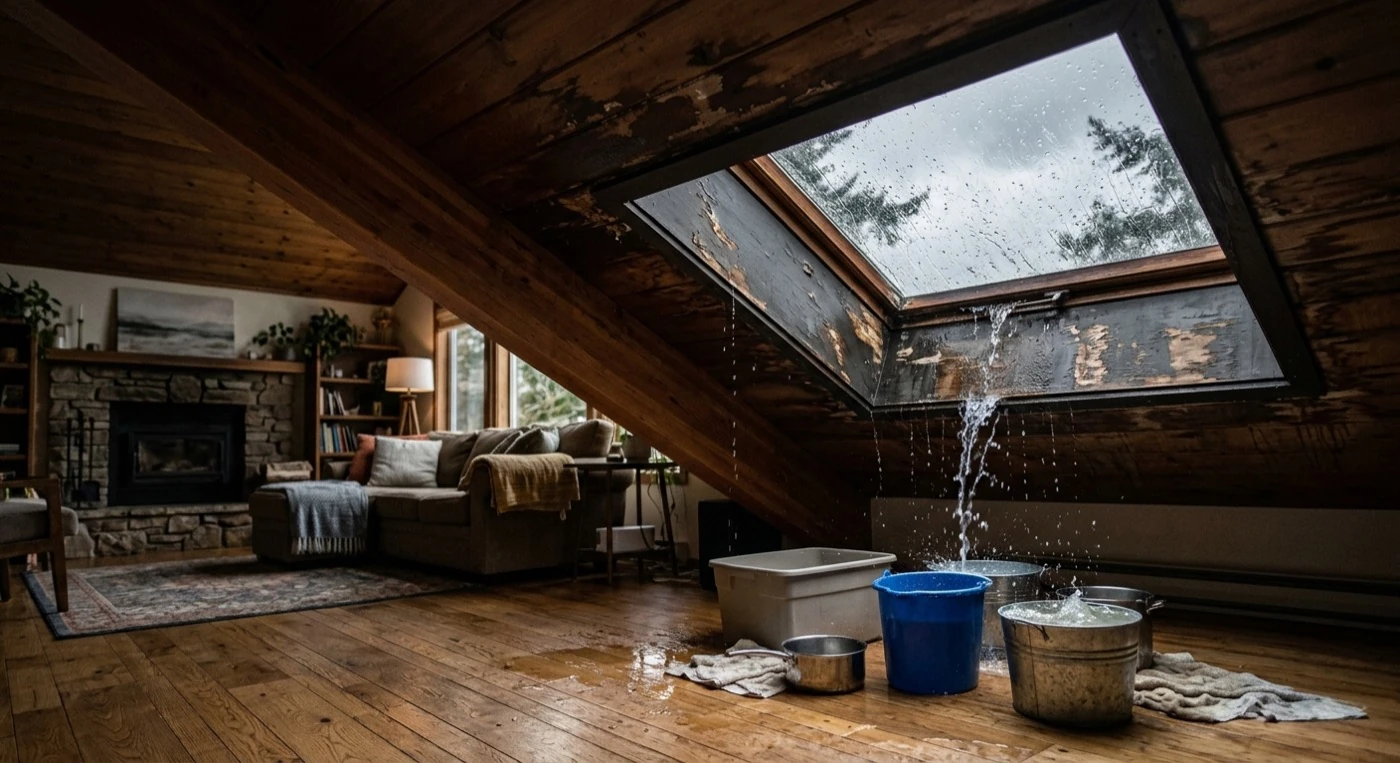
“My skylight was perfectly fine before my solar installation. Now, every time it rains, water drips down the inside frame. Did the solar crew cause this?”
You’re not overreacting - skylights are one of the most vulnerable parts of your roof when nearby work is performed. They rely on carefully sealed flashing systems to divert water away, and even small disturbances can break that seal.
Solar installers often work directly around skylights, anchoring panels racking into the roof deck, shifting roof tiles or shingles, or carrying heavy equipment across the area. If flashing is loosened, sealant cracked, or curb mounts damaged, leaks are almost inevitable.
Roofing standards and the manufacturer’s installation guidelines require contractors to take extra precautions when working within a few feet of a skylight.
If they fail to follow those guidelines, the result is exactly what you’re seeing - water intrusion, interior staining, and potentially costly structural repairs. Learn more about unwanted collection calls for solar loans.
Today, let’s go through what to do if you find yourself in this unfortunate situation- don’t worry, our help and legal support is by your side.
Direct Answer – Is It Normal or a Red Flag?
No. This is not normal.
Skylights should not start leaking just because nearby roof work was done - especially by professionals who claim to follow industry standards. If the skylight was watertight before installation, a post-install leak almost always points to careless handling or a failure to re-inspect and reseal flashing.
In plain terms:
- A trained installer should know that disturbing shingles, racking hardware, or sealant near a skylight without properly resealing is a recipe for water damage.
- If your skylight begins leaking immediately after solar installation, that’s contractor negligence - and in many states, it’s a direct violation of their duty to prevent property damage during the job.
Manufacturers design skylight flashing to withstand heavy rain, wind, and roof movement, but not poor installation practices. Any competent crew would have checked and resealed it before leaving. The fact that they didn’t - and left you with a leak - isn’t routine wear and tear. It’s a preventable error, and you have the right to demand repairs or reimbursement.
Free consultation
Solar panel contract problems?
We help homeowners fight back against solar fraud. Free consultation.
Common Contractor Missteps Leading to Skylight Leaks
If your skylight started leaking after a solar installation, it’s rarely just bad luck. Most leaks occur because the crew overlooked or bypassed essential protective steps. Skylights require special handling, and industry guidelines - like those from the National Roofing Contractors Association (NRCA) and skylight manufacturers - warn against exactly the kinds of shortcuts that cause these problems.
Failing to Inspect and Protect Skylight Flashing Before Work
Before mounting panels near a skylight, installers should inspect the metal flashing and ensure it’s in good condition. Experienced crews will also use temporary protective coverings to prevent damage while they work nearby. When flashing is ignored or left exposed to heavy foot traffic, ladders, or tools, it’s easy to bend or loosen joints - opening up the path for water intrusion.
Skipping Resealing After Disturbing the Area
Solar panel racking often requires working around shingles close to skylights. Even if shingles are put back in place, the underlying sealant may be disturbed. If installers skip reapplying high‑quality roof sealant compatible with flashing materials, the watertight bond breaks down. This is one of the fastest ways to turn a stable skylight into a leak point.
Placing Heavy Tools or Equipment on the Skylight Frame
Skylight frames (curbs) are designed to support glass panels and flashing - not the weight of tools, panels, or installers themselves. When a crew uses the skylight frame as a temporary holding spot for racking rails or toolboxes, even for a few minutes, the pressure can crack the frame or shift it out of square. That misalignment creates gaps in the flashing and sealant.
Mounting Solar Hardware Too Close to the Skylight
Racking rails and anchor points need clearance from integrated roof features. When brackets or fasteners are installed too close to the skylight curb, they can disrupt water diversion channels in the flashing system. Proper spacing is outlined in manufacturer installation guides, and ignoring those clearances can void warranties and cause leaks.
Failing to Conduct a Post‑Install Water Test
After any significant roof work near a skylight, it’s best practice to test for leaks before leaving. Professionals will spray water around the area in controlled conditions to ensure flashing and sealant still perform. When crews skip this step, leaks can go unnoticed until the next rainstorm - leaving homeowners to face water damage with no immediate help.
To give the panel installers the benefit of the doubt, let’s go through some legitimate instances when this can be coincidental and not necessarily lapses from the solar company.
Legitimate Explanations for Skylight Leaks After Solar Installation
While a skylight leak after solar installation is often a red flag for poor workmanship, there are a few situations where the cause isn’t necessarily negligence. Knowing these possible explanations can help you determine whether you’re dealing with an honest accident or a contractor cutting corners.
1. Pre‑Existing Wear or Aging Flashing
If your skylight is more than 10–15 years old, the flashing and sealants around it may already have been nearing the end of their service life. Even careful roof work nearby can shake loose brittle materials. The foot traffic from solar installers and the vibration of power tools can accelerate what’s already a developing leak. While this still requires repair, it might not mean blatant negligence - unless the contractor failed to alert you about the risk.
2. Sealant Vibration and Cracking
Skylight sealant sits between the flashing and roof decking, forming the watertight barrier. When heavy tools, ladders, or solar panel rails are anchored nearby, vibrations can create micro‑fractures in dried sealant. Over time - or immediately during the next storm - those cracks allow water to seep in. This is especially common with older sealants that have lost elasticity, and it can happen even with crews trying to be careful.
3. Disturbed Roofing Materials from Nearby Work
Solar installers often need to adjust shingles or tiles near skylights to secure mounting brackets. Even if they replace them afterward, if the fit isn’t exact, water can find its way under the newly disturbed area and toward the skylight flashing. In rare cases, installers may leave behind small gaps unintentionally, especially if the roof material is irregular or weather‑worn.
4. Weather Between Install and Sealing
Sometimes a leak develops because sealing or flashing checks weren’t completed before an unexpected storm arrived. If installers finished the main work but planned to return for final waterproofing, a heavy rain in the meantime could exploit small gaps and create water intrusion before the crew had a chance to finish. Though this isn’t ideal, it can happen - but responsible contractors will return quickly to make it right.
5. Skylight Designed Without Sufficient Clearance
Some skylights sit unusually close to roof edges or other features, leaving less space for installers to stage solar panels without touching flashing. If your skylight’s placement complicates safe installation, even minor contact can cause leaks. In those cases, preventive measures like temporary protective coverings are vital, and not every crew employs them.
Bottom line
While leaks are often tied to installation errors, natural aging, unavoidable vibration, or unusual skylight placement can also be to blame. The key distinction is whether your contractor warned you, addressed the issue, and repaired it promptly. If you’re met with silence or denial, it’s no longer just a “normal” outcome - it’s a failure in their duty to protect your property.
Red Flags Your Skylight Leak Was Caused by Solar Installer Negligence
Even with older skylights, a properly trained solar crew should leave flashing, sealants, and roof materials around your skylight intact and watertight. If you’ve noticed any of these signs immediately after installation, there’s a strong chance poor workmanship is to blame.
1. Leaks Begin Immediately After Installation
Water intrusion starts at the very next rainfall after the solar crew’s work.
Possible Causes:
- Flashing around the skylight was loosened or improperly reinstalled.
- Sealant was cracked or displaced during panel rail mounting.
- Shingles or tiles moved out of alignment around the skylight curb.
2. Visible Gaps in Flashing or Sealant
Standing on the roof or viewing from above, you see open seams, missing sealant, or uneven flashing around the skylight.
Possible Causes:
- Installer skipped resealing after disturbing the area.
- Wrong sealant type applied - unable to bond or weather‑seal properly.
- Flashing bent or damaged by foot traffic or tool placement.
3. Water Stains on Interior Drywall Near Skylight
Brown or discolored patches start forming on ceiling or wall surfaces near the skylight frame.
Possible Causes:
- Panel racks or equipment anchored too close, directing water toward skylight flashing.
- Improper water diversion due to disturbed roof underlayment.
- Heavy vibrations loosened the skylight’s watertight seal.
4. Dampness or Condensation Inside Skylight Frame
Glass edges and inner frame show beads of water or dampness after rain.
Possible Causes:
- Improper flashing overlap after shingle replacement.
- Sealant compromised at curb‑to‑flashing junction.
- Installer stood or placed weight directly on skylight frame.
5. Skylight Curb Damage
The raised perimeter frame around your skylight looks dented, cracked, or bent.
Possible Causes:
- Heavy tools or panels rested directly on the curb.
- Crew used the skylight curb as ladder or scaffold support.
- Fasteners mistakenly drilled too close to the skylight perimeter.
Bottom line
When leaks begin the moment your solar panels go up - and the signs point to disturbed flashing, cracked sealant, or physical curb damage - it’s rarely coincidence. It’s often a direct result of installer negligence, and in most states, that’s grounds for repair or reimbursement under contractor law.
Suspecting These Red Flags? Here Are Your Next Steps
If your skylight starts leaking right after a solar installation and you’ve noticed one or more of the red flags we discussed, act quickly. Water intrusion can cause far more than cosmetic damage - it can lead to mold, wood rot, and structural weakening. Here’s your plan:
You may also want to read about solar panels improperly mounted on chimneys.
1. Document Immediately
Take clear, date‑stamped photos and videos of the leak, including interior water stains, exterior flashing gaps, and any visible damage to the frame or curb. Capture wide shots and close‑ups so the full extent is visible. Learn more about mold growth after solar panel installation.
2. Review Pre‑Installation Evidence
Look at your own “before” photos or inspection reports showing the skylight’s condition prior to the solar work. If the contractor performed a pre‑install inspection, request copies - they can stop the “it was already leaking” excuse.
3. Check the Contract for Damage Clauses
Even if skylights aren’t named specifically, most contracts require contractors to avoid damaging existing structures and fix any harm caused during installation.
4. Notify the Installer in Writing
Send an email and certified letter describing the leak, attaching proof, and requesting repairs or reimbursement. Keep copies of all correspondence.
5. Request Insurance and Warranty Information
Licensed installers typically carry general liability insurance. Ask for policy details so you can submit a claim if repairs aren’t offered.
6. Escalate if Ignored
File a complaint with your state contractor licensing board and consumer protection agency. Many states can suspend or penalize licenses for failing to address property damage.
7. Get an Independent Inspection
A licensed roofer or skylight technician’s report tying the leak to the installation strengthens your legal and insurance claims.
Your Legal Rights & Protections
A leaking skylight that was watertight before solar installation is almost always considered contractor-caused damage when it’s linked to improper work practices. You have several layers of protection:
Contractual Rights
Most home improvement contracts - even without specific skylight language - carry an implied duty of “reasonable care.” This means the contractor must avoid harming existing structures and repair any incidental damage caused. If they disturbed flashing or sealant without fixing it, they’ve likely breached that duty.
State Contractor Licensing Laws
Every licensed contractor must comply with state laws requiring safe work practices and restoration of property.
- California: The Contractors State License Board investigates property damage complaints and can compel repairs.
- Texas: The Deceptive Trade Practices Act allows homeowners to recover damages if a contractor misrepresented work quality or skipped required precautions.
- New Jersey: The Consumer Fraud Act offers treble damages and attorney fees for negligent or deceptive work.
Failing to follow manufacturer guidelines or skipping leak testing can be considered negligence under these laws.
Insurance and Bond Claims
Licensed contractors generally carry liability insurance; you can file a claim directly if they refuse to repair the skylight. In some states, contractors post surety bonds that can be tapped for compensation when damage occurs.
Consumer Protection Laws
Broad consumer protection statutes prohibit deceptive or negligent work. Denying responsibility without adequate inspection, ignoring damage, or failing to disclose risks to integrated roof features can trigger legal claims beyond repair costs - including additional damages and legal fees.
When a Watertight Skylight Turns Into a Contractor’s Liability
Most homeowners whose skylight starts leaking after solar installation didn’t neglect their roof - they trusted professionals to respect every part of it. We’ve seen the same negligence repeat across dozens of cases: crews disturb flashing, misapply sealant, or mount hardware too close to skylight curbs, leaving homeowners with costly water intrusion.
At Bennett Legal, we step in when installers shrug off their responsibility. Our team helps homeowners:
- Investigate whether poor work near the skylight violated manufacturer or industry standards.
- Review contracts, photos, and installer logs to establish negligence.
- Demand full repairs or reimbursement under state contractor laws and insurance policies.
- Recover additional damages when water intrusion causes secondary harm like mold, wood rot, or interior drywall damage.
Many installers dismiss skylight leaks as “coincidental” - but if your skylight was dry for years and started leaking the moment they finished, that’s not coincidence. It’s the result of preventable, substandard work, and in states like California, Texas, and New Jersey, that’s actionable negligence.
At Bennett Legal, we hold solar companies to the same precision they claim in every advertisement. If their shortcuts let water into your home, we make sure they pay for every fix needed to restore your property, protect your investment, and prevent future damage.
Don’t let the next rainstorm make the damage worse. Contact Bennett Legal today for a free skylight damage case review and let us prove your leak isn’t “just how roofs age” - it’s a bill your contractor is legally required to pay.
Related Reading
Free consultation
Solar panel contract problems?
We help homeowners fight back against solar fraud. Free consultation.