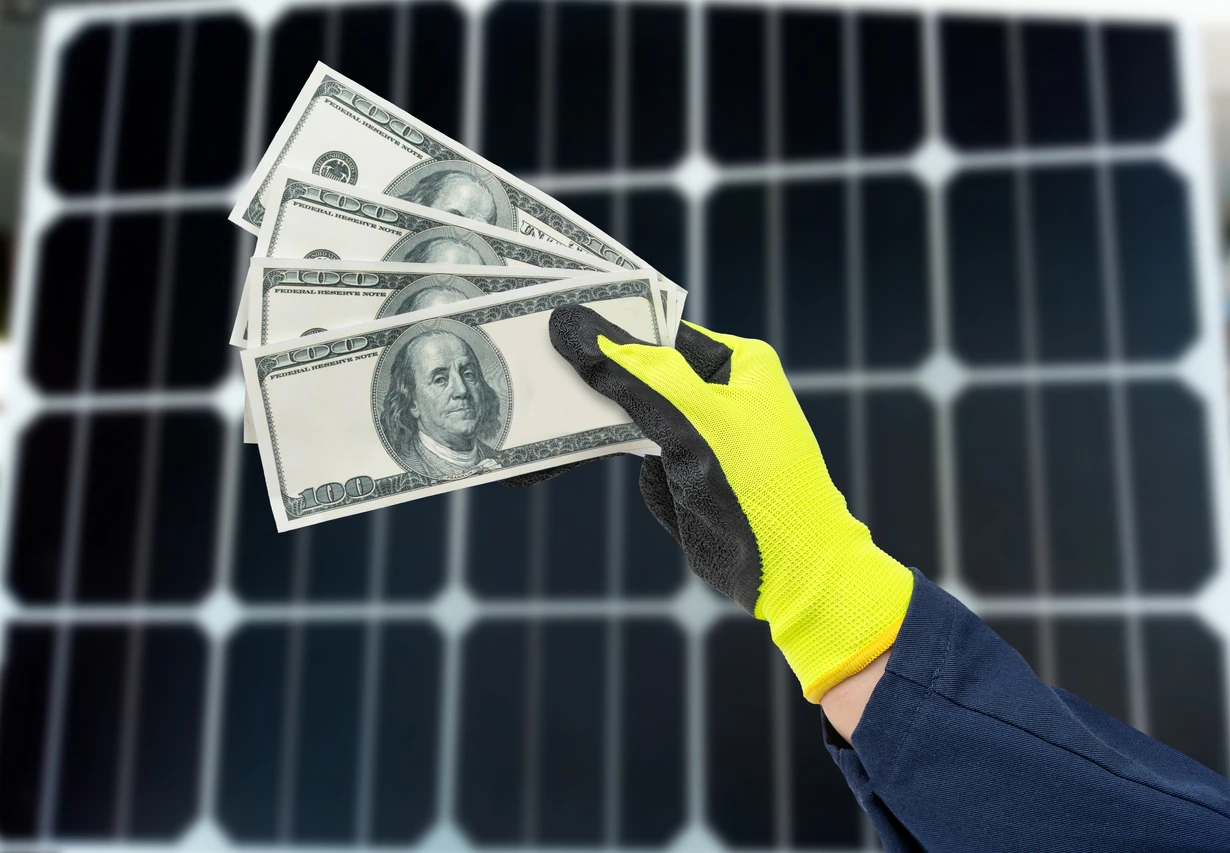
$15,000. That's the number your solar company hits you with when you try to exit your solar panel contract — after you discover the salesperson lied, the system never worked, or you simply need to sell your home.
$170,000+ recovery
Against Sunlight Financial · Solar fraud arbitration
- $113,000 loan cancelled
- UCC lien removed
- Credit repaired
- $58,000 cash to client
Past results do not guarantee a similar outcome. Every case is different.
You search the 40-page document you signed and find it buried in dense legal jargon: a solar early termination fee that can run into the tens of thousands. Here's what they don't tell you: this fee is often an illegal penalty clause — and you may not owe a single dollar of it.
This page focuses on the fee itself. If you are trying to leave the agreement for a different reason, start with the broader solar contract exit guide, which routes you to the path that matches your contract and dispute.
Free consultation
Solar panel contract problems?
We help homeowners fight back against solar fraud. Free consultation.
Direct Answer: Is a Solar Early Termination Fee Even Legal?
Often, no. The core issue comes down to two legal concepts:
- Liquidated Damages (Usually Legal): A reasonable, good-faith estimate of the actual money the company would lose if you cancel. Meant to make the company whole, not to punish you.
- A Penalty Clause (Usually Illegal): A fee so excessively high that it effectively punishes you for leaving. Its purpose is to deter cancellation — not compensate for a real loss.
A $15,000 ETF on a system that's been on your roof for ten years is almost always an illegal penalty. The company has already recouped much of its cost.
Not sure if your ETF is legal? We review solar contracts for free. Tell us what you're facing. Start Your Free Case Evaluation →
Red Flags: How to Know Your ETF Is an Illegal Penalty
- The Fee Doesn't Decrease Over Time: A legitimate damages clause shrinks each year as the company recoups its investment. If the ETF is a flat $15,000 whether you cancel in year 2 or year 20, it's a penalty.
- It's Massively Disproportionate to Actual Damage: The company's real "damage" is the loss of future monthly payments. A massive upfront fee rarely bears any reasonable relationship to that loss.
- The Salesperson Lied About It: If you have written proof — a text, an email, a contract amendment — that the salesperson promised "no cancellation fees," you have a strong case for fraudulent misrepresentation.
- The Company Is Also in Breach: If your system was never properly installed, never turned on, or has chronically underperformed, the solar company cannot demand a termination fee — because they breached first. Under the legal doctrine of "material breach," a party that failed to deliver on its core obligation forfeits its right to enforce penalty clauses against the other party. Document every service call, complaint email, and month of underproduction. This is often the strongest argument in the entire case.
We Canceled a $170,000 Solar Loan — Including the Lender's Lien. Our client's solar company said she owed tens of thousands in fees and monthly payments. The panels were on her roof. The system never worked. Sunlight Financial kept billing her anyway. We fought back. Total recovery: $170,000. $113,000 loan cancelled · Lien removed · Credit repaired · $58,000 in her pocket. Read the Tellez case →
The Financial Fallout: How ETFs Trap Homeowners
- Killing a Home Sale: A title company discovers the solar contract. Your buyer refuses to assume it. The solar company demands a $20,000 ETF to release the UCC lien — forcing you to pay the ransom or lose the deal.
- Destroying Your Credit: If you refuse to pay the unjust fee, the company reports it to credit bureaus as a defaulted debt.
- Forcing You to Keep a Broken System: Many families are trapped paying monthly for a system that underperforms because the cost of leaving seems impossibly high.
An ETF shouldn't cost you your home sale. Talk to a solar attorney before you sign anything at closing. Get a Free Case Evaluation →
Your Legal Rights: The "Unenforceable Penalty" Doctrine
- The Burden of Proof Is on Them: In most states, it is the company's job to prove their termination fee is a reasonable estimate of actual damages — not yours to disprove it.
- Demand a Full Accounting: You can legally demand the solar company provide a detailed breakdown of how they calculated the fee. Most can't justify the number.
- State Consumer Protection Laws: Charging an unconscionable or illegal fee is a direct violation of your state's consumer protection laws. State attorneys general in Minnesota, New York, and Virginia have already opened enforcement actions against solar lenders using these exact tactics.
State-by-State: How Courts View Penalty Clauses
| State | Enforceability of ETFs | Key Legal Standard |
|---|---|---|
| California | Very Strict Scrutiny | Civil Code §1671: Liquidated damages clauses are presumed invalid in most consumer contracts. |
| Texas | Strict Scrutiny | The fee must be a "reasonable forecast" of damages and not disproportionate. |
| Florida | Strict Scrutiny | Must not be "grossly disproportionate" to actual damages. |
| Arizona | Strict Scrutiny | A single flat fee for any and all types of breaches is often deemed a penalty. |
| New Jersey | Strict Scrutiny | Must be a "reasonable" estimate and not an "in terrorem" (terror-inducing) penalty. |
Your Action Plan: How to Fight a Solar ETF
- Do Not Pay It. Paying the fee can be seen as legally accepting it as valid. Hold the line.
- Audit Your Contract. Find the exact ETF clause and any evidence that contradicts it — texts, emails, verbal promises from the salesperson.
- Send a Formal Dispute Letter. Put it in writing: "I am formally disputing this Early Termination Fee as it constitutes an illegal and unenforceable penalty clause under my state's laws."
- Demand an Accounting. Force the company to show you the math. Most can't justify the number.
- File Complaints. Submit to the Better Business Bureau, your State Attorney General's office, and the CFPB.
- Get a Solar Fraud Attorney in Your Corner. Solar companies and their lenders — including major financiers like GoodLeap — have in-house legal teams whose entire job is making homeowners pay. Challenging an ETF requires specific knowledge of liquidated damages law, your state's consumer protection statutes, and solar financing contracts. The longer you wait, the more leverage you lose. Start your free case evaluation →
When Your Contract Becomes a Cage, We Find the Key
Solar companies count on you not knowing your rights. An ETF that looks like an insurmountable wall is often a bluff — and we know exactly how to call it.
At Bennett Legal, we:
- Challenge ETFs as illegal penalty clauses under state law
- Build breach-of-contract arguments when the system was never delivered as promised
- Leverage lender liability when the financing company is complicit in the fraud
- Negotiate the fee down — or eliminate it completely
Ready to Fight Back? Don't pay a fee that may be completely illegal. Talk to a solar fraud attorney before you do anything. Get Your Free Case Evaluation →
Frequently Asked Questions
Can a solar company ruin my credit over an early termination fee?
Yes. If you refuse to pay, they can report the amount as a defaulted debt to credit bureaus. This is exactly why you need to formally dispute the fee in writing before it escalates — a written dispute creates a legal record and can stop them from reporting it without pushback.
Can I be sued for not paying a solar contract cancellation fee?
Yes, but if the fee is an illegal penalty, you have a very strong defense. In many states, you can also countersue for damages and attorney's fees. A solar company threatening litigation over an unenforceable clause is often bluffing — call their bluff with legal representation.
What if my solar system never worked properly — do I still owe the ETF?
No — and this is one of the strongest defenses in these cases. If the solar company failed to deliver a functioning system, they are in material breach of their own contract. A party in breach cannot enforce penalty clauses against the other party. Document all underperformance, failed inspections, and service calls. This evidence alone can eliminate the fee entirely.
Can the lender charge me an ETF even if my installer has gone out of business?
This is a critical question. If your installer is gone but you're still paying a lender like GoodLeap or Sunlight Financial, the lender may be just as liable as the installer under the FTC Holder Rule. Learn more about lender liability when your solar installer disappears →
If a solar company is trying to collect an illegal early termination fee, you don't have to navigate it alone. Read our full solar panel fraud guide for homeowners, or contact Bennett Legal for a free case review.
Free consultation
Solar panel contract problems?
We help homeowners fight back against solar fraud. Free consultation.