"My monthly payment was exactly what they told me. What I didn't know was that my loan was almost 25% more than what I actually paid for the solar panels."
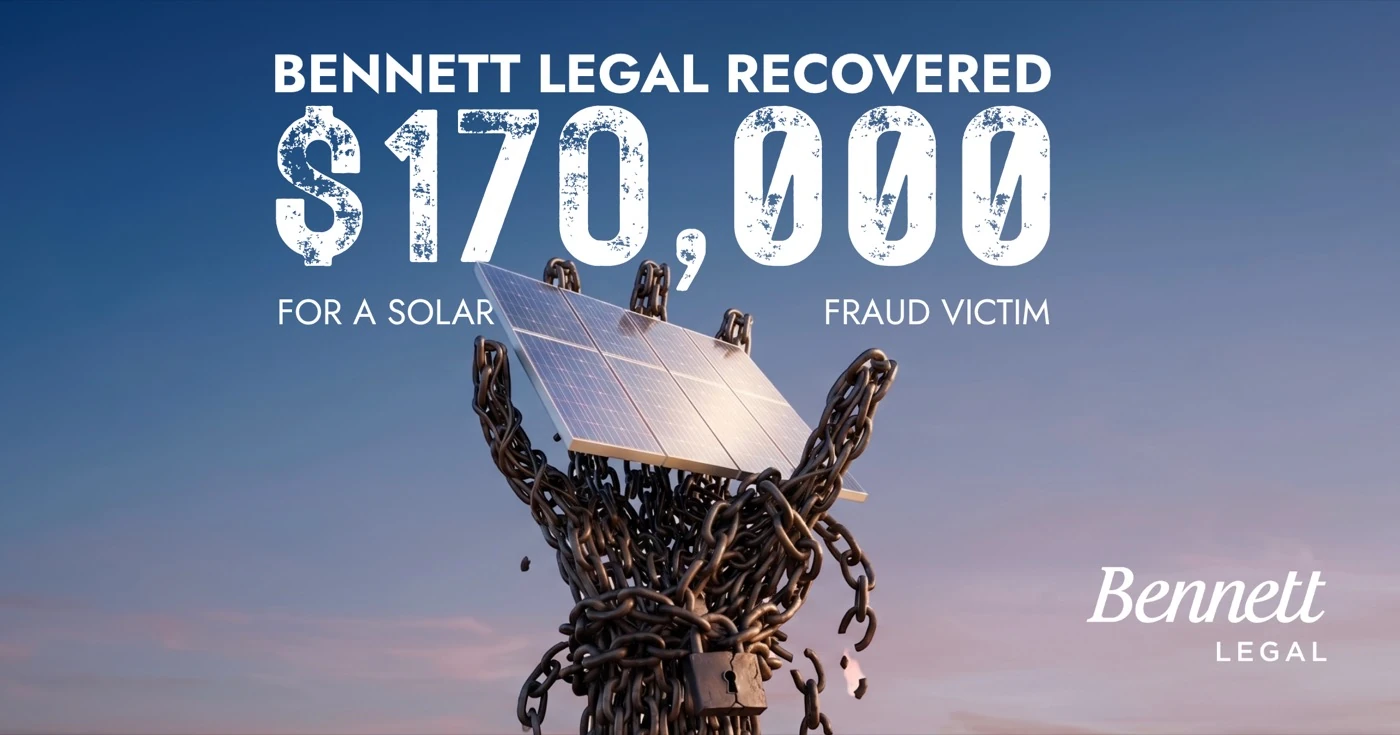
$170,000+ recovery
Against Sunlight Financial · Solar fraud arbitration
- $113,000 loan cancelled
- UCC lien removed
- Credit repaired
- $58,000 cash to client
Past results do not guarantee a similar outcome. Every case is different.
That's what Minnesota's top lawyer says happened to thousands of homeowners — because of GoodLeap hidden fees and the same kind of charges at three other big lenders. Minnesota Attorney General Keith Ellison sued all four: GoodLeap LLC, Sunlight Financial LLC, Solar Mosaic LLC, and Dividend Solar Finance LLC.
If you got a solar loan through any of these companies, keep reading. We'll explain what happened, what to look for in your own loan, and what you can do about it.
What the Minnesota Lawsuit Says About Hidden Solar Loan Dealer Fees
Here's the basic problem the lawsuit describes.
When you signed up for solar, you were probably shown a low monthly payment and a low interest rate. That sounded great. But according to Minnesota's Attorney General, the companies didn't clearly tell you about something called a dealer fee — extra money added to your loan behind the scenes.
Think of it this way. You agreed to finance a $25,000 solar system. But without you knowing, a dealer fee of $4,000 to $7,500 was quietly added. Now you're borrowing $29,000 to $32,000 — for the same system. The monthly payment might look similar, but you're paying far more in total.
Here's what Minnesota says happened:
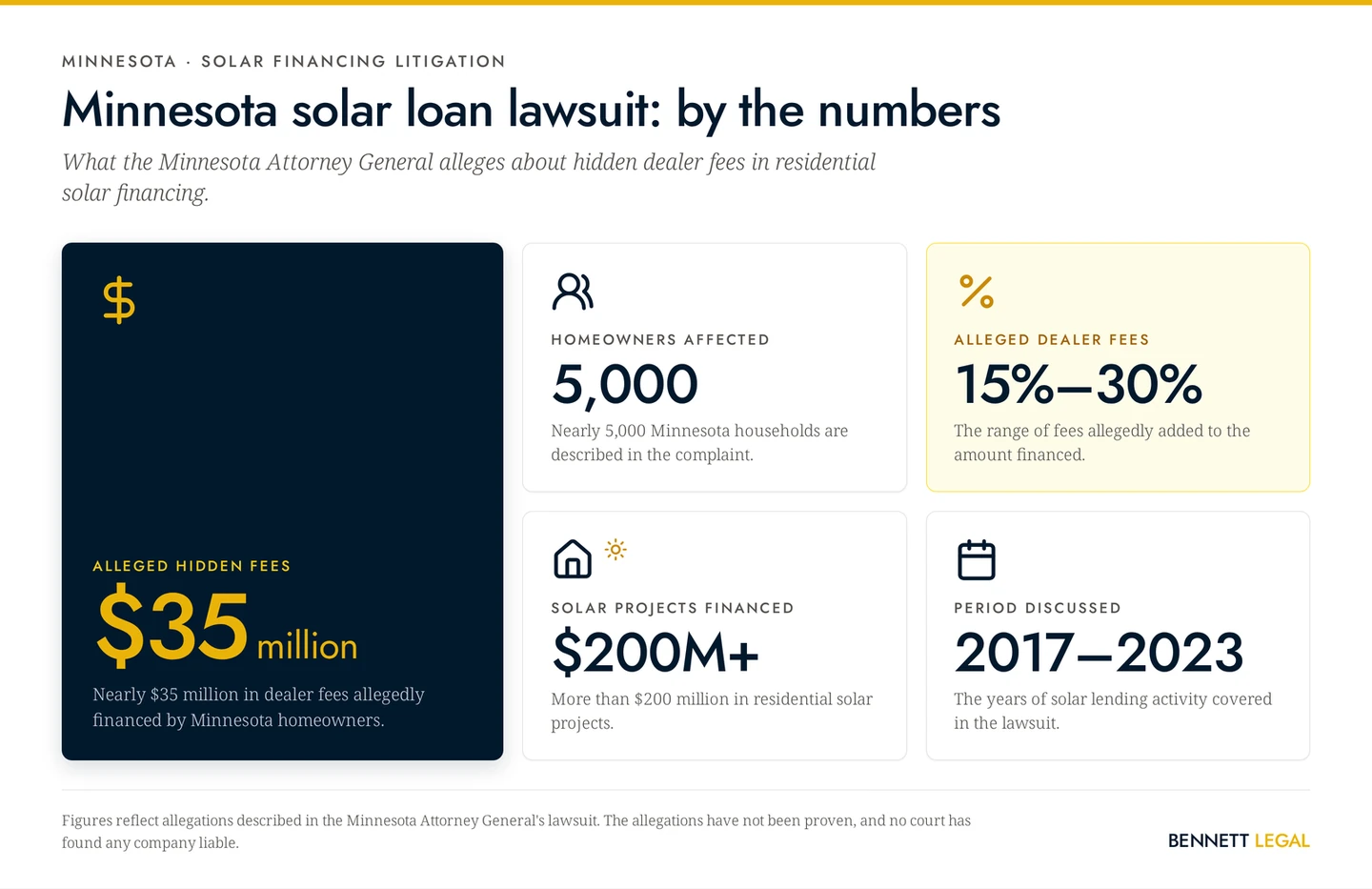 Minnesota solar loan lawsuit by the numbers: $35 million in alleged hidden fees, nearly 5,000 homeowners affected, 15%-30% added dealer fees, $200 million in projects, 2017-2023
- Nearly $35 million in hidden fees were added to solar loans in Minnesota
- Almost 5,000 homeowners in Minnesota were affected
- These fees added 15% to 30% to the actual cost of the solar system
- More than $200 million in solar projects were involved
- This went on from 2017 to 2023
The companies kept your attention on your monthly payment, the interest rate, and how much money solar would supposedly save you. Meanwhile, the real loan amount — already padded with the hidden fee — didn't get much attention. Minnesota says that's not okay under state law.
Here's what that means for you: if you signed a solar loan between 2017 and 2023 through one of these four companies, the amount you're paying back may be thousands of dollars more than what your system was actually worth.
Who Are These Four Companies?
GoodLeap LLC
GoodLeap is one of the biggest solar loan companies in the country. You might know it by its old names — it used to be called Loanpal and, before that, Paramount Equity Mortgage.
Minnesota named GoodLeap as a main defendant in its lawsuit. GoodLeap also shows up in the Sunlight Financial lawsuit and in thousands of complaints from real customers — through the BBB, the CFPB, news investigations, and private lawsuits. You can learn more about your rights on our GoodLeap solar loans page.
Sunlight Financial LLC
Sunlight Financial is sued in the same case. Minnesota says it ran the same playbook: low advertised rates, hidden fees folded into the loan amount. If you have a Sunlight Financial loan, the hidden dealer fee structure is exactly what's at issue in this case — and what Bennett Legal has taken to arbitration on behalf of Texas homeowners.
Solar Mosaic LLC
Solar Mosaic is another national solar lender named in the case. A TIME magazine investigation found that Solar Mosaic had 185 complaints filed with the federal Consumer Financial Protection Bureau (CFPB) — more than GoodLeap's 162 in the same review.
Dividend Solar Finance LLC
Dividend Solar is owned by Fifth Third Bank. In the TIME investigation, Fifth Third had 3,717 CFPB complaints as a parent bank. Dividend Solar is named in the Minnesota lawsuit alongside the other three companies.
5 Problems Homeowners Keep Reporting
Minnesota's lawsuit focuses on hidden fees. But homeowners who financed solar — especially through GoodLeap — keep running into five different problems. Here's what they are and what they mean for you.
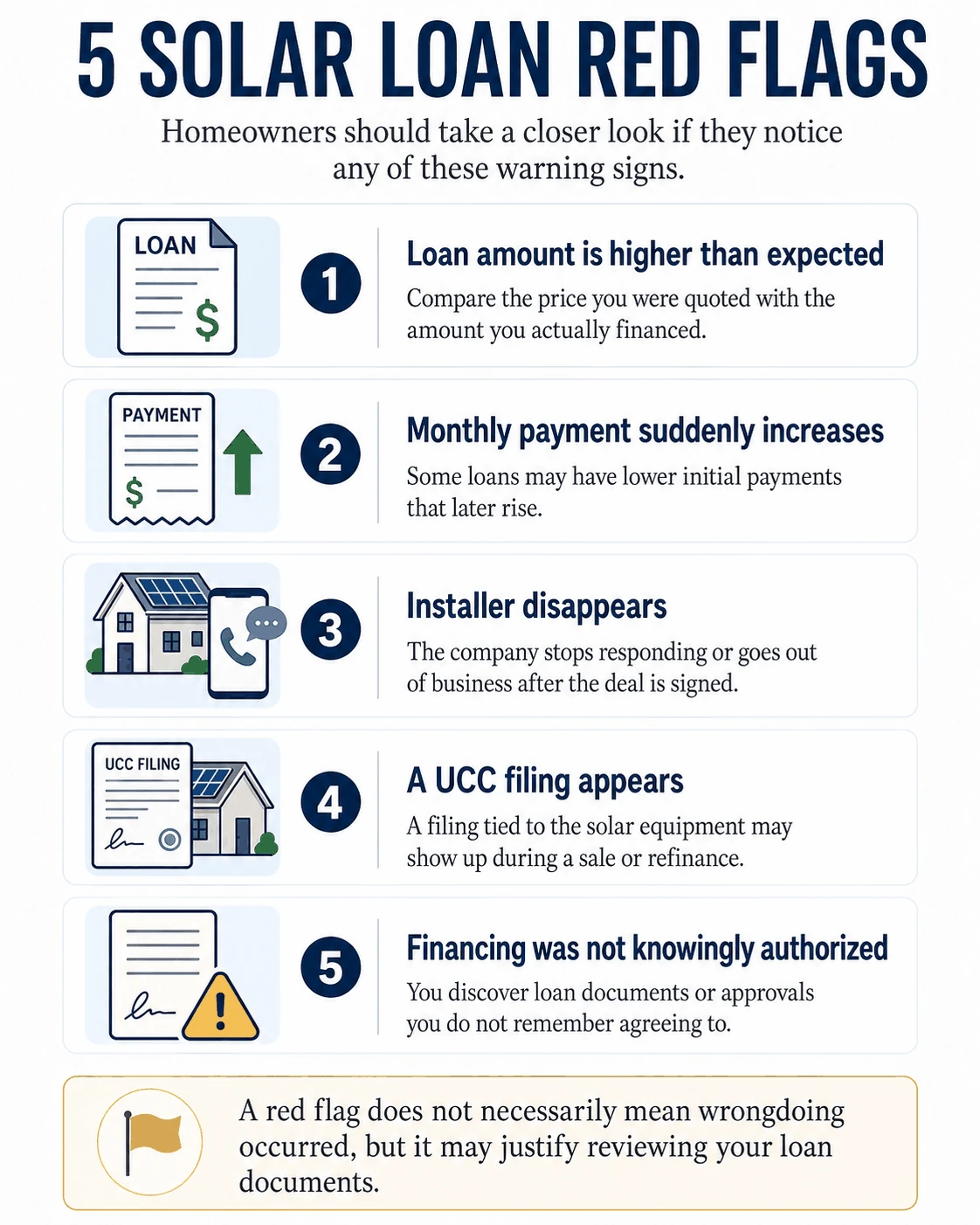 5 solar loan red flags homeowners should watch for
1. Hidden Fees That Made Your Loan Much Bigger
This is the big one — the whole reason Minnesota filed the lawsuit.
You thought you were borrowing enough to pay for your solar system. But a "dealer fee" — money the contractor gets paid back by the lender — got added to your loan. No one circled it in red. No one said, "Hey, your loan is $5,000 more than the system costs."
Minnesota says these fees bumped up the total cost by 15% to 30%. So if your solar system cost $25,000, you may have actually borrowed $29,000 to $32,500 — without clearly knowing it.
If your loan balance looks bigger than what you thought you were paying for your system, this might be why. Our guide on how to spot a predatory solar financing deal walks through exactly what your loan documents should — and shouldn't — say.
2. Your Payment Jumped After Year One
A lot of solar loans have low payments at first. That's because they're built around a tax break — the federal solar tax credit (ITC) — that the company assumed you would get and apply to your loan within the first 12 to 18 months.
But not everyone gets the full credit. Some people don't qualify at all. And many homeowners were never clearly told: if you don't apply that tax credit to your loan, your monthly payment goes up.
If your solar payment suddenly got bigger after the first year, this is most likely why. Our post on solar tax credit timing mistakes explains how this catches homeowners off guard — and what you can do if the lender never told you.
3. Your Solar Company Disappeared — But the Loan Didn't
This is one of the most frustrating situations we see. The company that installed your solar panels went out of business. Or they stopped answering your calls. Or the system was never finished. Or it never worked right.
But the loan is still there.
That's because in many cases, the installer quickly handed your loan over to the lender. Once that happens, the lender says your agreement to pay is separate from any problems with the installer. So even if your system doesn't work, you may still owe the full loan amount to GoodLeap or another lender.
4. There's a Lien on Your Home You Didn't Know About
Many homeowners only find this out when they try to sell their house or refinance.
When you took out a solar loan, the lender may have filed something called a UCC-1 lien — a legal claim against the solar equipment on your property. This shows up in your title records. Most homeowners were never told this was going to happen.
When a title company finds this during a refinance or home sale, it can slow things down or even cause the deal to fall through.
Even after you pay off your solar loan, that lien might stay on record. GoodLeap has gotten complaints about this exact issue — customers who paid off their loan but couldn't get the company to remove the lien. A lien that lingers can destroy your credit and finances long after the installer is gone. See also: how a solar UCC lien kills a home sale or refinance.
5. Loans Taken Out in Someone's Name Without Their Permission
A major TIME magazine investigation found cases where solar loans were taken out using fake names or without the homeowner's knowledge. People found out they had a lien on their home — for a solar system they never ordered.
GoodLeap said fraud made up less than 0.05% of its loans and that it worked with federal investigators. The FBI reportedly looked into some of the cases TIME covered.
If you think a solar loan was opened in your name without your permission, that's serious. It can involve identity theft and other federal crimes on top of whatever civil options you have. Read our breakdown of solar panel identity theft scams to understand how this typically happens and what evidence you'll need.
Free consultation
Solar panel contract problems?
We help homeowners fight back against solar fraud. Free consultation.
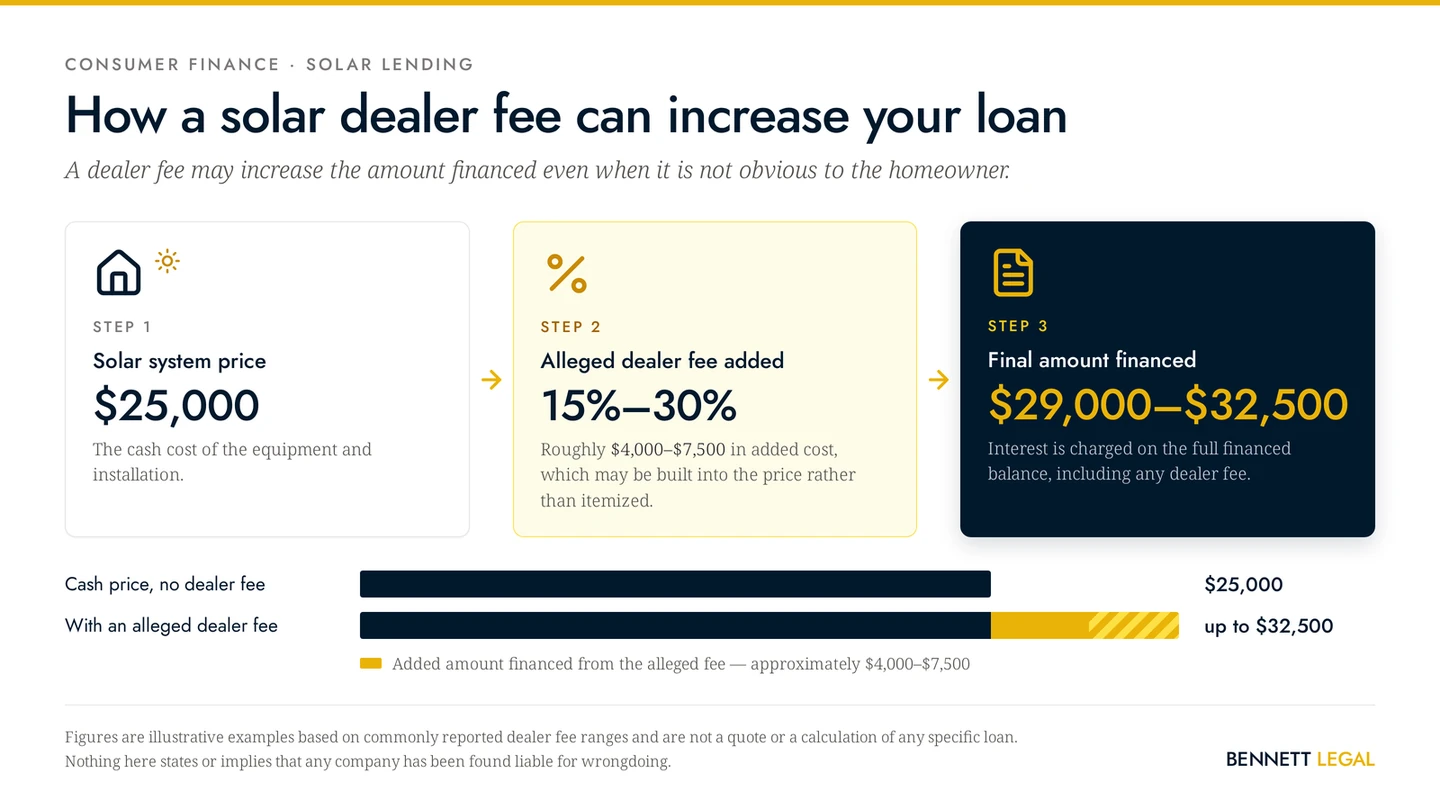 How a solar dealer fee can increase your loan: from a $25,000 system price to $29,000-$32,500 financed
This Isn't Just a Minnesota Problem
The Minnesota lawsuit only covers Minnesota. But GoodLeap, Sunlight Financial, Solar Mosaic, and Dividend Solar work all over the country. They use the same loan products and the same kinds of contracts with homeowners everywhere.
That means the same hidden fee setup Minnesota is fighting could be in your loan — no matter what state you live in.
Watch for these warning signs:
- Your loan balance is higher than what you agreed to pay for the solar system
- Your monthly payment went up after the first year
- Your solar panels don't work as well as promised
- You found out there's a lien on your home that no one told you about
- You've had trouble getting a lien removed after paying off the loan
- Something just doesn't feel right about your financing
If any of these sound familiar, start with our guide on signs you might be a victim of solar panel financing fraud. Our post on how to get out of a solar loan you didn't agree to covers your legal options. And our solar fraud page explains how we help homeowners in exactly these situations.
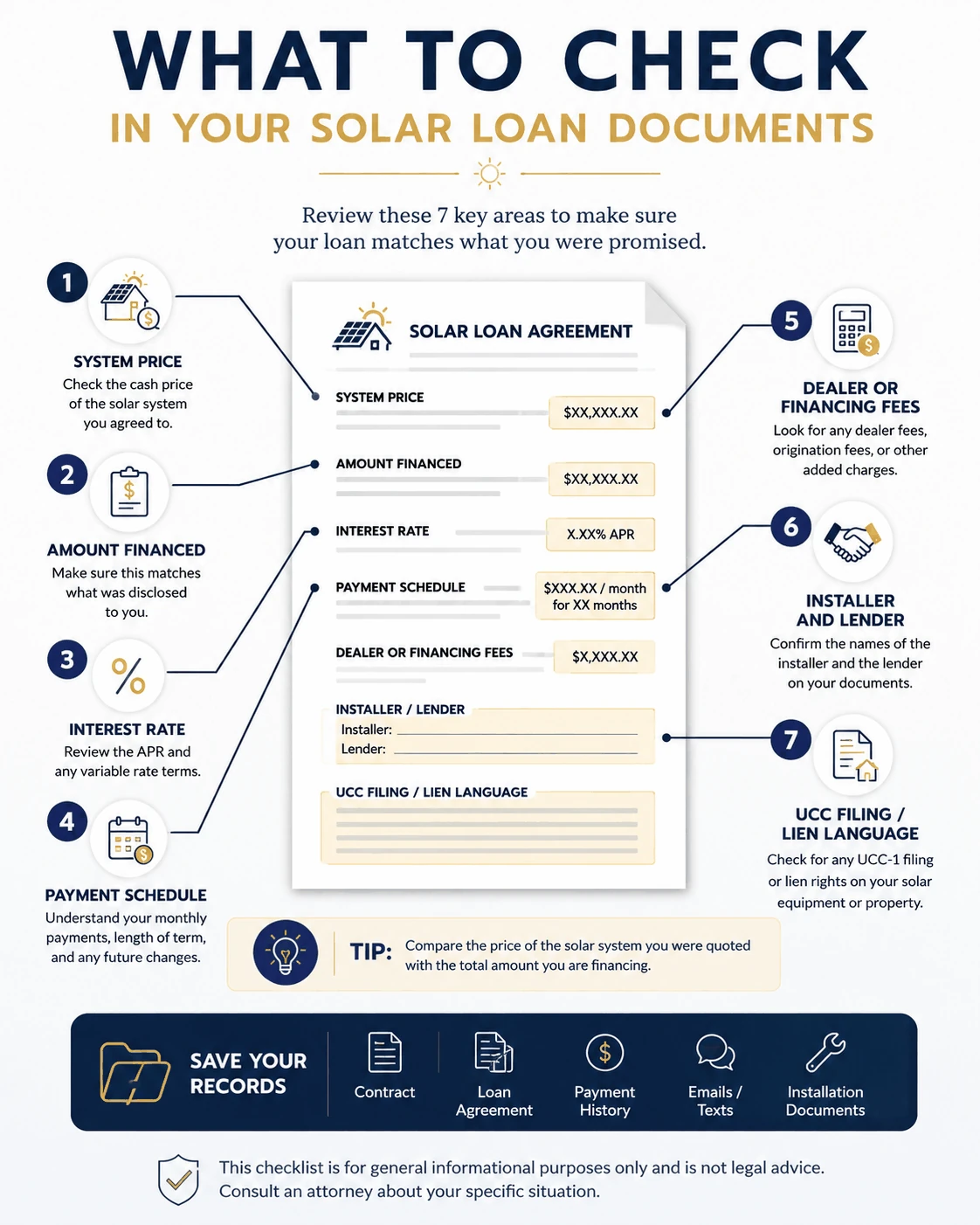 What to check in your solar loan documents: 7 key areas including system price, amount financed, interest rate, and dealer fees
What You Should Do Right Now
Find your loan paperwork. Look for your original loan agreement and any documents that show the total amount you borrowed. Compare that number to the price you were quoted for the solar system. If there's a big gap, that's a red flag.
Ask for your payment history. You can request this from your loan servicer. Look at what your starting loan balance was. If it's a lot higher than the cost of the solar work, that difference could be a hidden dealer fee.
Write down what's wrong. If your system doesn't work right, your bills haven't gone down, or the installer won't call you back — write it all down. Dates, dollar amounts, names.
Talk to a lawyer. The Minnesota case is big news. But what matters for you is your specific loan, your state, and your situation. A free consultation will help you understand what you can actually do.
Bennett Legal Has Already Won for Texas Solar Homeowners
We don't just file cases.
Bennett Legal has taken solar fraud cases all the way through JAMS arbitration and reached settlements on behalf of homeowners against major solar lenders, including Sunlight Financial. Our clients faced the same problems described in the Minnesota lawsuit: inflated loan amounts, hidden fees, and lenders that refused to take responsibility.
In a recent Bennett Legal case, a homeowner trapped in a predatory solar loan walked away with a $170,000 total recovery:
- $113,000 loan cancelled — full remaining balance wiped out
- Lien removed from the home title
- Credit repaired after fraudulent bureau reporting
- $58,000 cash in the client's pocket
If your solar loan was through GoodLeap, Sunlight Financial, Solar Mosaic, or Dividend Solar Finance, you may have the same claims our clients successfully pursued. You don't have to figure this out alone.
We Help Homeowners Fight Back Against Solar Loan Fraud
Bennett Legal is a Dallas-based law firm that helps homeowners who were misled about their solar loans. We've worked on cases involving GoodLeap, Sunlight Financial, and other large solar lenders.
We'll look at your loan documents, explain what you're dealing with, and tell you straight up what your options are.
There's no cost to talk to us. No obligation. If something about your solar loan doesn't add up — the balance, the payments, the system itself — you deserve to know what your rights are.
Sources: Minnesota Attorney General's Office — Attorney General Ellison sues solar lenders over $35M in deceptive hidden fees; TIME magazine investigation into solar loan fraud; CFPB consumer complaint database; BBB records for GoodLeap LLC (formerly Loanpal / Paramount Equity Mortgage).
Free consultation
Solar panel contract problems?
We help homeowners fight back against solar fraud. Free consultation.