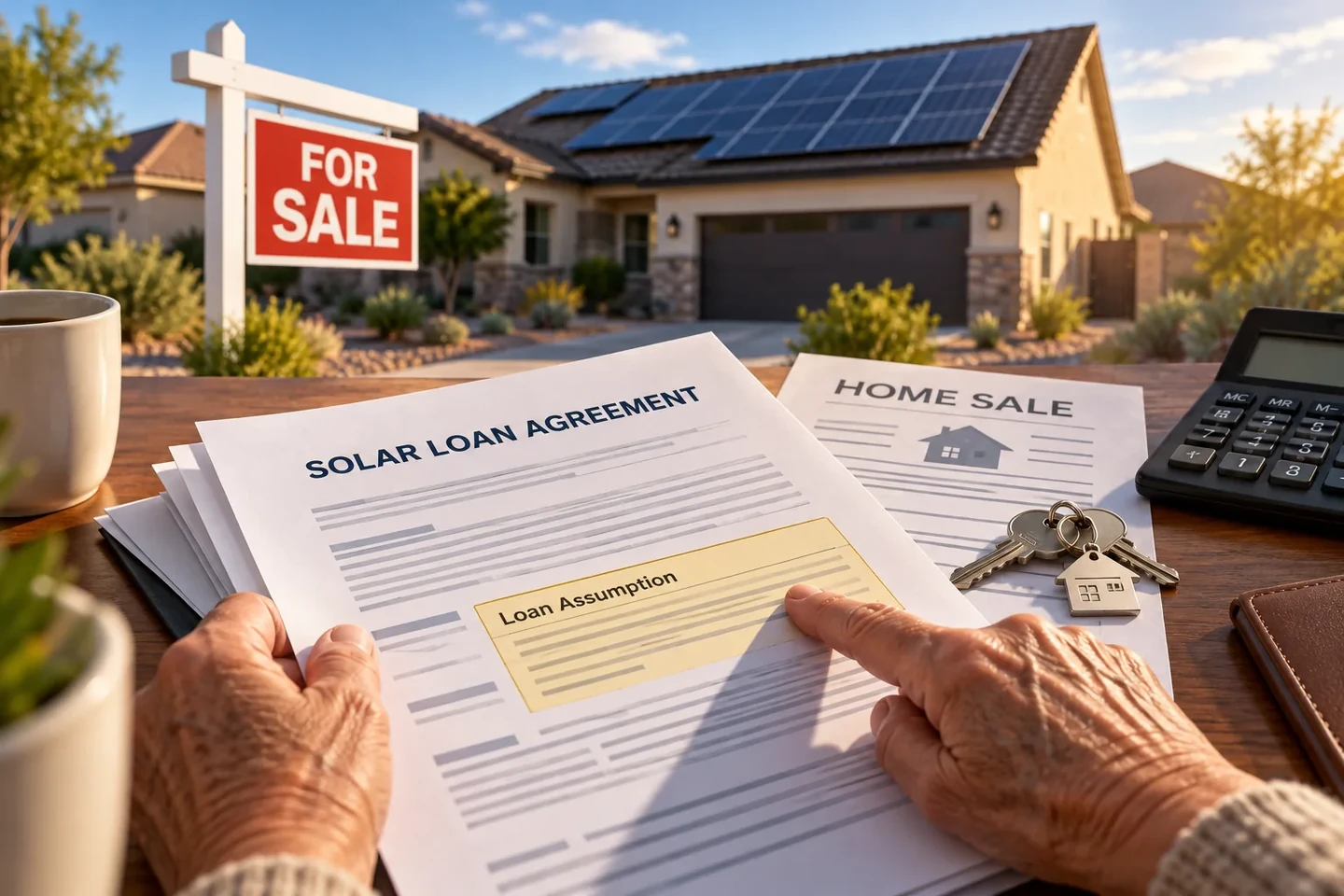
You're trying to sell your home or refinance your mortgage. You call your solar lender to get a payoff quote for your solar loan, and the number they give you is shocking. You've been making payments for years, but your payoff balance is thousands of dollars higher than the original price of the system.
$170,000+ recovery
Against Sunlight Financial · Solar fraud arbitration
- $113,000 loan cancelled
- UCC lien removed
- Credit repaired
- $58,000 cash to client
Past results do not guarantee a similar outcome. Every case is different.
You are not going crazy. This is not a math error.
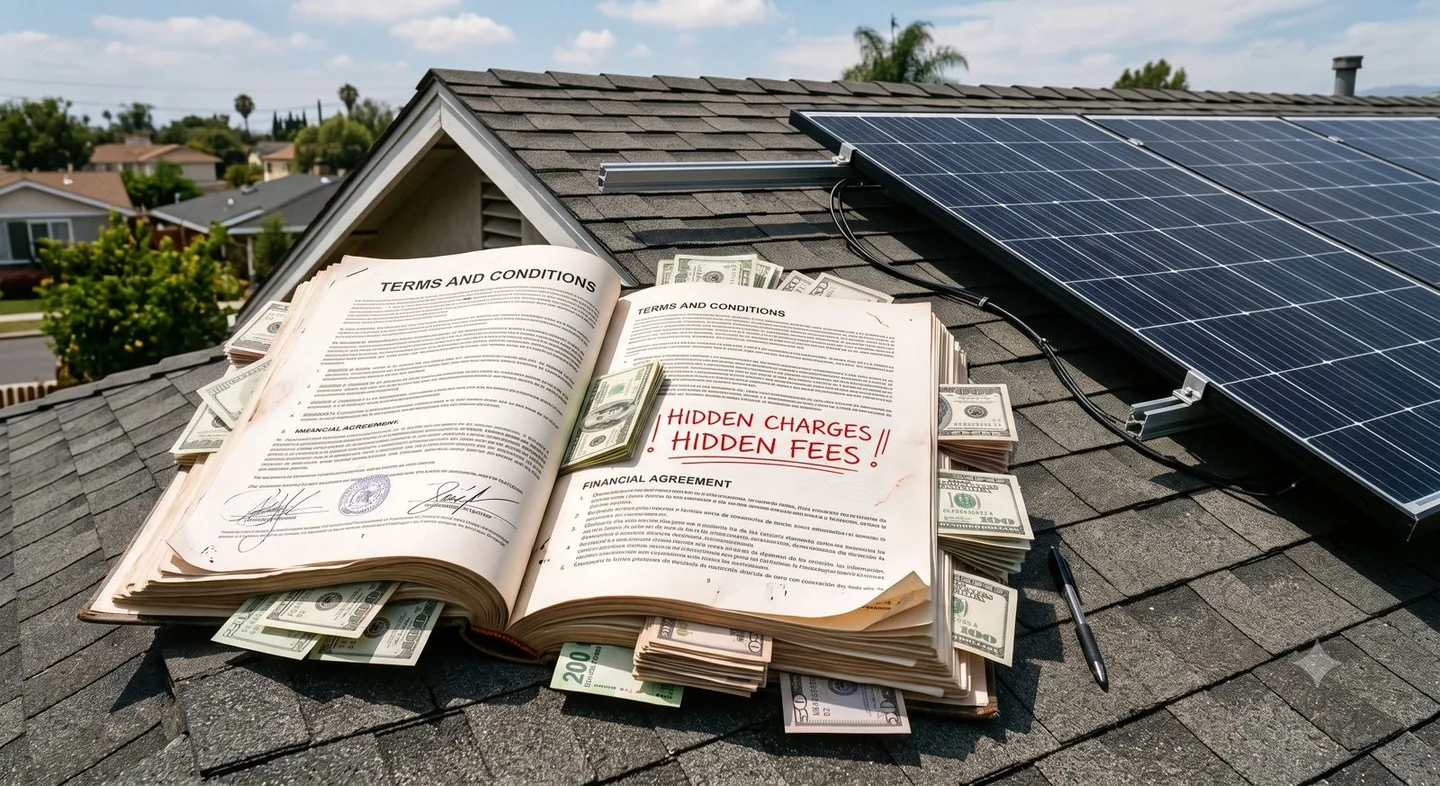
You have just discovered one of the most deceptive and predatory practices in the solar industry: the hidden dealer fee that artificially inflates your loan's principal balance.
This guide will break down exactly how this financial trap works, why your solar loan payoff is so high, and the steps you can take to fight it.
Free consultation
Inflated solar loan payoff?
We help homeowners fight hidden dealer fees and unfair loan balances. Free case evaluation.
The Root of the Problem: Unmasking the Hidden Dealer Fee Behind Your Solar Loan Payoff
To understand why your payoff is so high, you need to understand the deal that happened behind your back between your solar installer and your lender.
Salespeople love to offer you a super-low interest rate, like 1.99%. But banks don't actually lend money for 25 years at 1.99%. To make the deal work, the lender charges the solar installer a massive upfront fee, often called a "dealer fee" or "discount points." This fee can be 20% to 30% of the system's cash price.
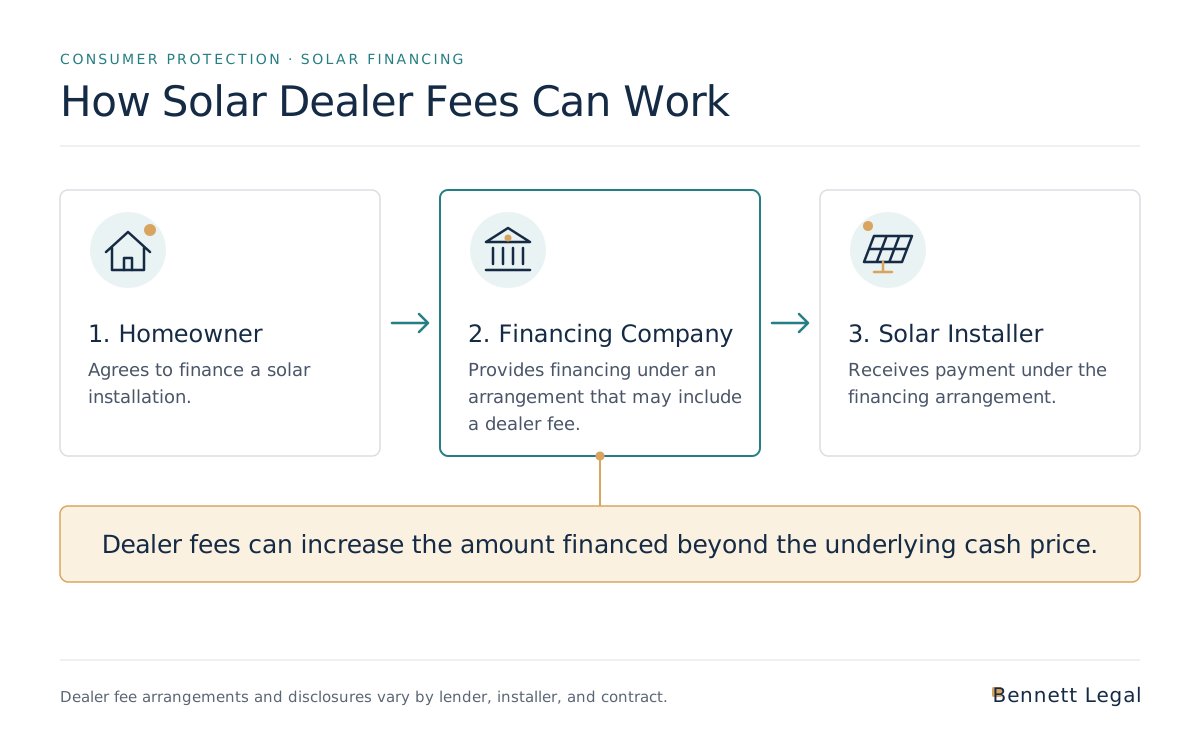
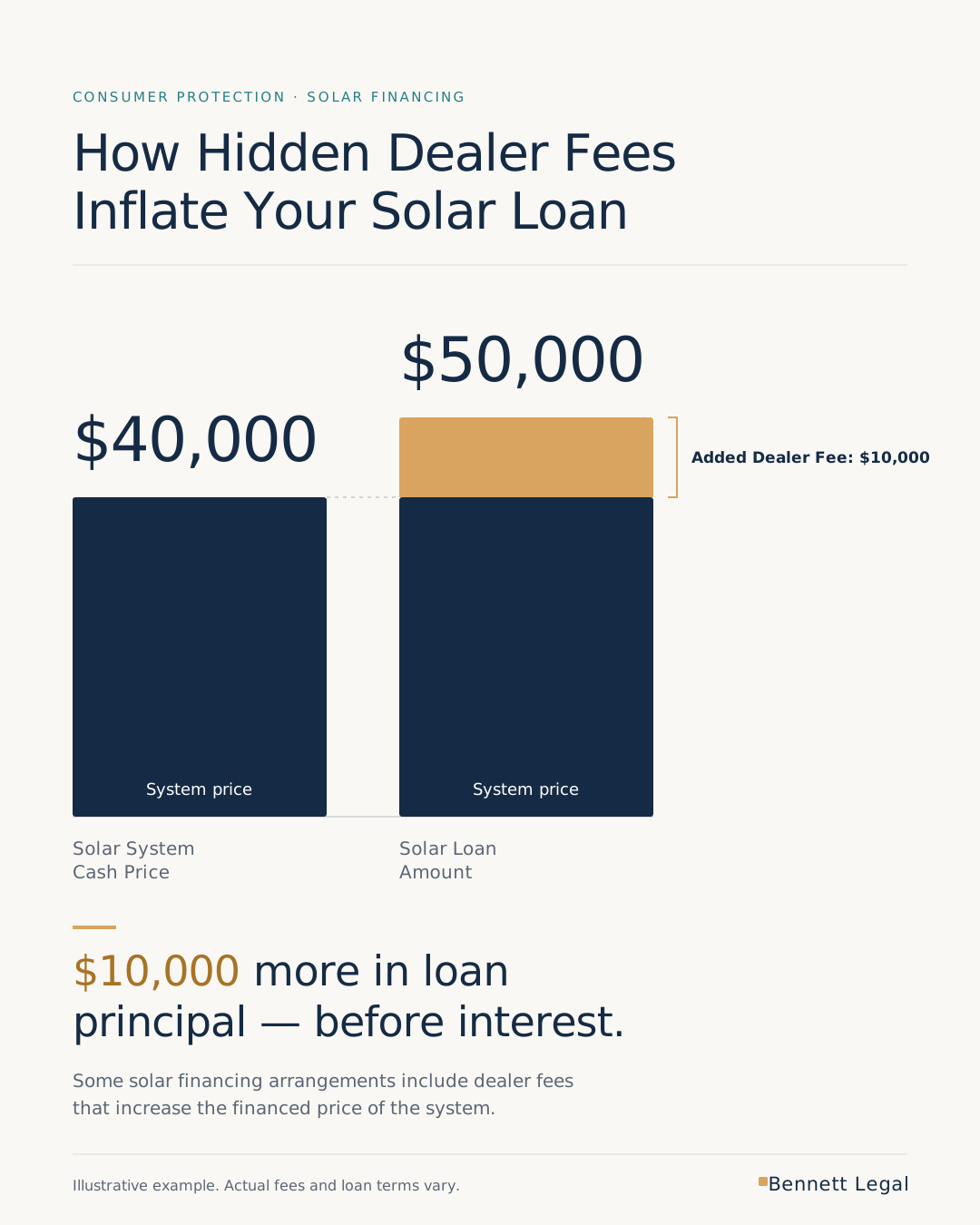
So, for a $40,000 solar system:
- The lender charges the installer a 25% dealer fee ($10,000).
- The installer only gets $30,000.
- To make their profit, the installer doesn't just eat that fee. They secretly bake it into your loan principal.
⚠️ You end up with a $50,000 loan for a $40,000 system.
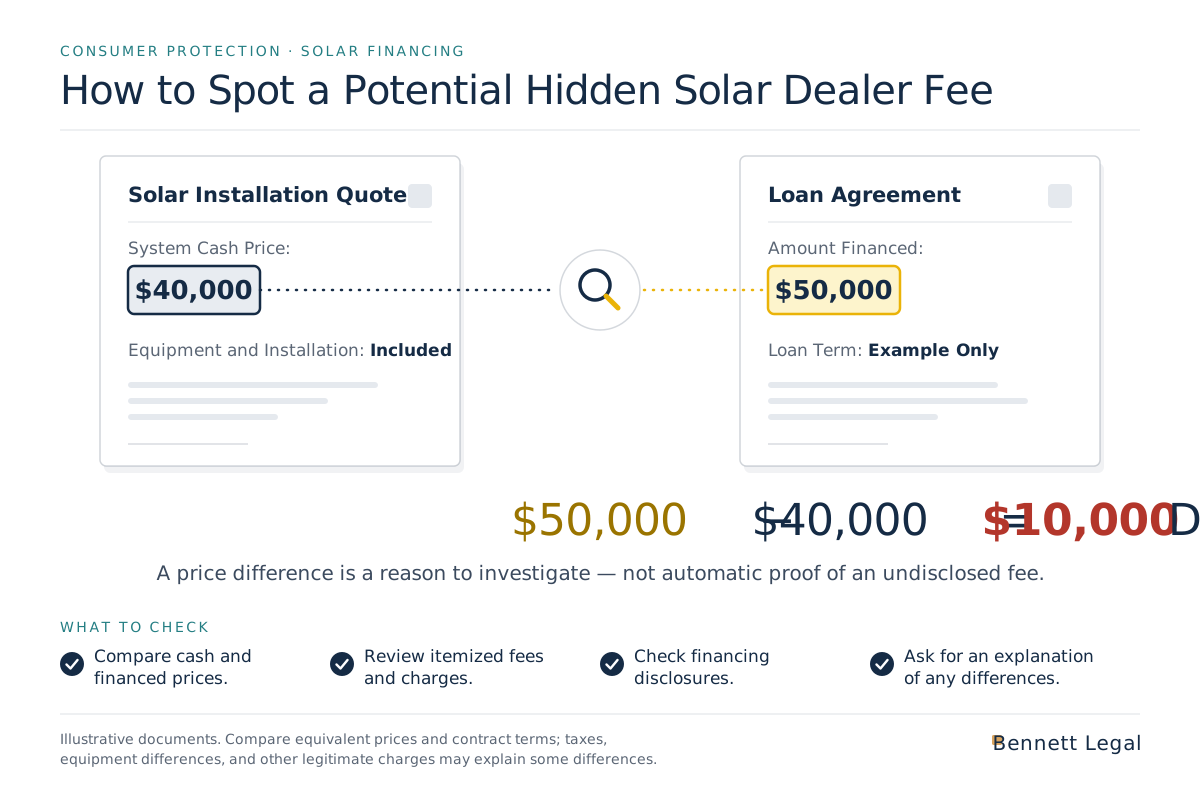
This is why, when you looked at your original Truth in Lending Act (TILA) disclosure, the "Amount Financed" was so much higher than the "Cash Price." The difference is the dealer fee.
The Financial Fallout: How This Trap Springs on You
This inflated principal creates a massive financial problem that often stays hidden for years until you try to exit the loan.
The Payoff Shock
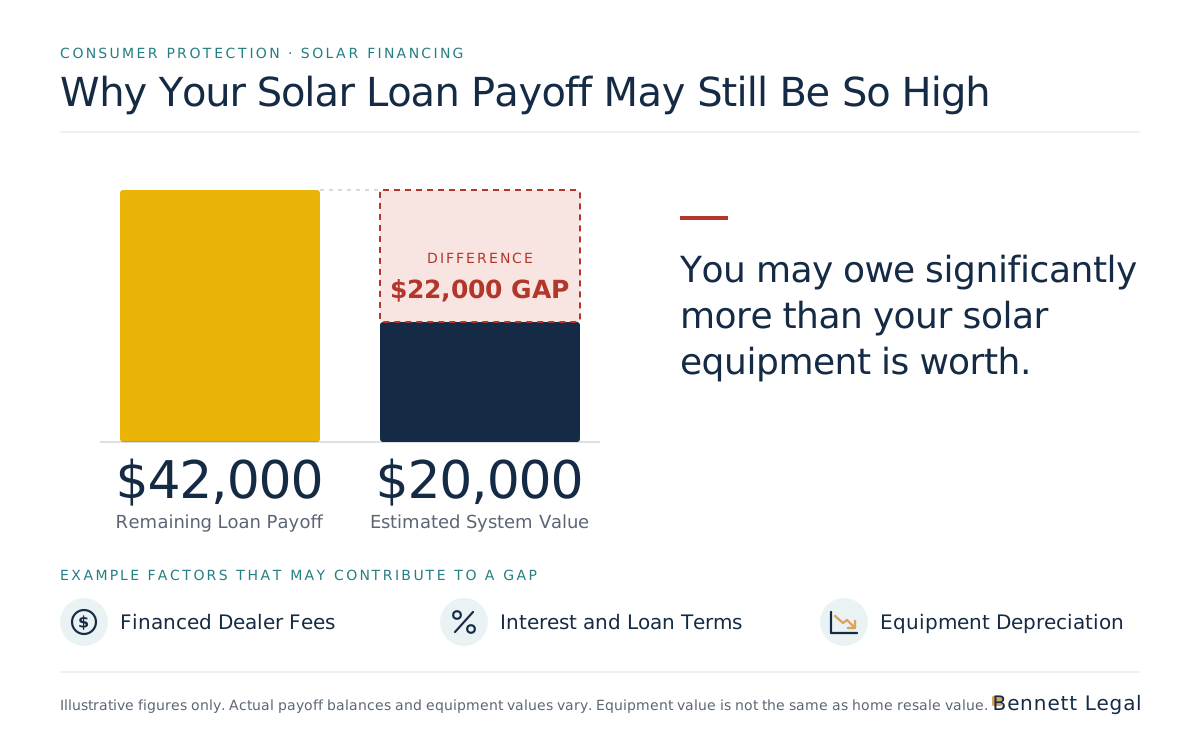
Most of your early loan payments are going toward interest, not principal. Because you started with an artificially inflated principal ($50,000 in our example), you pay down the loan incredibly slowly. When you ask for a payoff quote in Year 5, you are horrified to discover you still owe $42,000 on a system that is only worth $20,000.
The Refinance Block
This "negative equity" is a primary reason why a solar loan can kill your mortgage refinance. You might try to do a "cash-out" refinance to pay off the solar loan, but if your home appraisal doesn't account for the inflated loan balance, the new mortgage won't be large enough to cover it.
The Home Sale Nightmare
When you sell your home, the solar loan must be paid off to clear the UCC-1 lien from your property's title. If your payoff is $42,000, that amount comes directly out of your proceeds from the sale. The hidden dealer fee effectively vaporizes a huge chunk of your home equity.
Is It Legal? The "Fraudulent Inducement" Argument
While lenders argue that the dealer fee is "disclosed" in the TILA box, you can fight back by arguing fraudulent inducement. This legal argument states that you were tricked into signing the contract based on the salesperson's lies.
- The Lie: The salesperson told you, "You are paying $40,000 for this system at 1.99%."
- The Truth: You were actually paying $50,000.
- The Argument: If the salesperson had been honest and said, "To get this interest rate, you have to agree to a $50,000 loan for a $40,000 system," would you have signed? Almost certainly not. Their misrepresentation of the true purchase price is a deceptive trade practice.
This is a powerful argument, especially in states with strong consumer protection laws.
State-by-State Protections Against Deceptive Financing
| State | Key Consumer Law | How It Protects You |
|---|---|---|
| Texas | Deceptive Trade Practices Act (DTPA) | The DTPA is extremely powerful against any "false, misleading, or deceptive act." Misrepresenting the principal of a loan to induce a signature is a core violation. |
| California | Unfair Competition Law (UCL) | The UCL provides a strong basis to sue lenders and installers for fraudulent business practices, including the dealer fee scheme. |
| Florida | Deceptive and Unfair Trade Practices Act (FDUTPA) | FDUTPA can be used to challenge the entire transaction if the true cost was not clearly and honestly disclosed by the salesperson. |
| New Jersey | Consumer Fraud Act (CFA) | The CFA makes it illegal to use "unconscionable commercial practices," which can include burying a 30% fee in the loan principal. Violations can lead to treble damages. |
Your How-To Guide: Fighting an Inflated Payoff
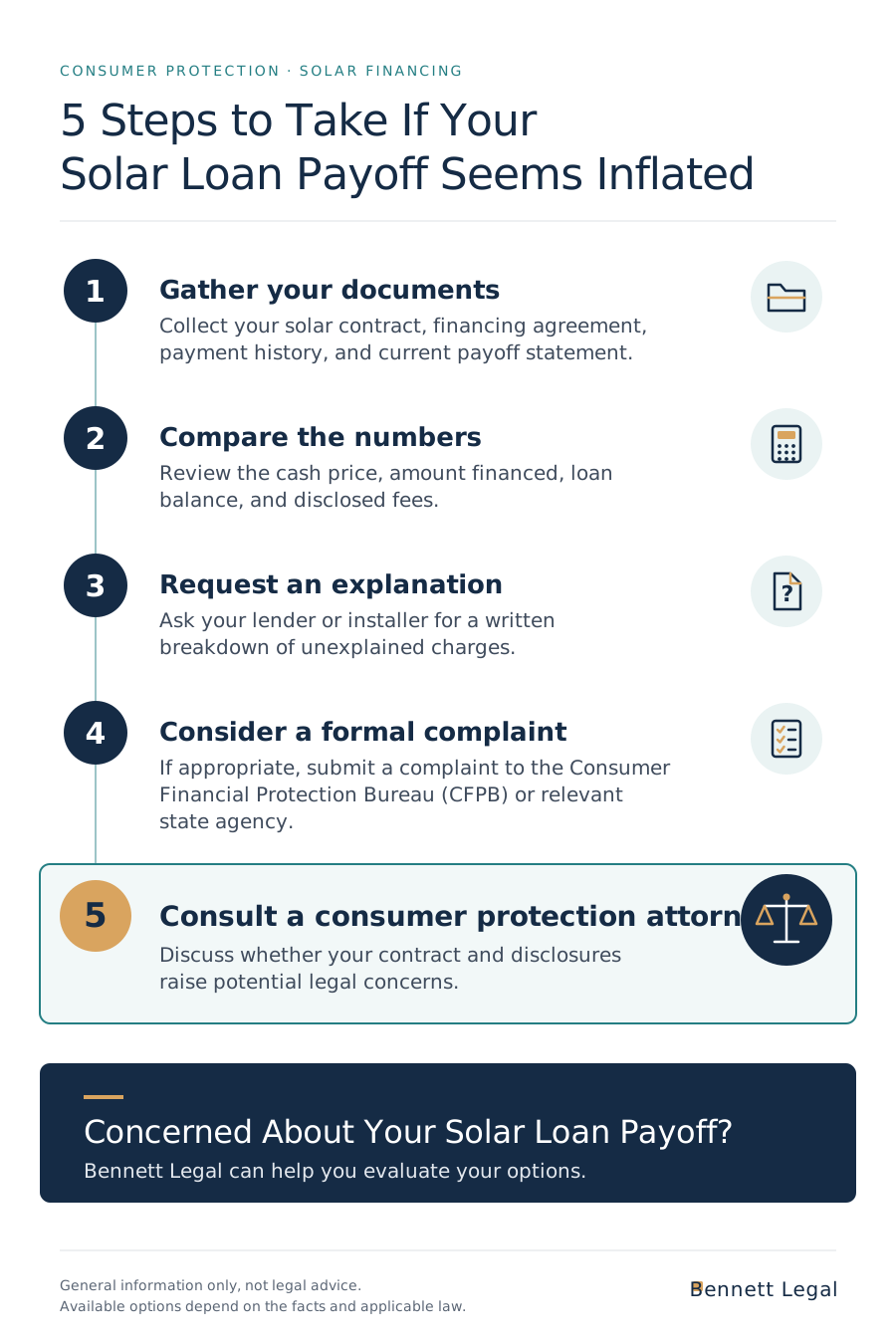
- Get Your Original Documents. You need two key numbers: the "Cash Price" from your installer's sales proposal and the "Amount Financed" from your lender's TILA disclosure. The difference is the hidden dealer fee.
- Calculate Your "True" Balance. Calculate what your loan balance should be if you had financed the cash price at a fair market interest rate (e.g., 8-9%, a typical unsecured loan rate). This helps establish the "actual damages" caused by the dealer fee scheme.
- Send a Formal Dispute Letter. Do not just argue on the phone. Send a letter via certified mail to the lender's legal department.
- State the facts: "I was sold a system for a cash price of $40,000, but my Amount Financed was $50,000. This $10,000 dealer fee was not disclosed as a separate line item and was misrepresented by the seller."
- Use the magic words: "I am disputing the validity of this debt on the grounds of fraudulent inducement and violations of my state's Deceptive Trade Practices Act. The inflated principal balance is an unconscionable contract term."
- File a Complaint with the CFPB. The Consumer Financial Protection Bureau is the federal watchdog for financial products. File a detailed complaint against the lender, explaining the hidden dealer fee. Lenders take CFPB complaints very seriously.
- Consult a Solar Fraud Attorney. Dealer fee cases are complex. An attorney can review your documents, calculate your actual damages, and engage the lender's legal team with the full force of federal and state consumer protection laws. The threat of a lawsuit for fraud is often the only thing that will make a lender agree to renegotiate the payoff balance.
When Your Payoff is a Penalty, We Fight for a Fair Price
You should not be punished with an artificially inflated loan balance when you try to do the responsible thing by paying off your debt. The hidden dealer fee scheme is a predatory practice designed to trap homeowners and extract maximum profit, especially when you are most vulnerable — during a home sale or refinance.
At Bennett Legal, we specialize in exposing and fighting these deceptive financial tactics. We believe you should only have to pay back the money you actually, knowingly borrowed.
We help homeowners by:
- Auditing loan documents to forensically uncover hidden dealer fees and calculate the exact amount your loan was inflated.
- Building powerful cases for fraudulent inducement based on the salesperson's original, misleading pitch.
- Filing complaints with federal and state regulators to put lenders under investigation for their deceptive partnerships with installers.
- Negotiating with lenders from a position of strength to have inflated principal balances, accrued interest, and other fees waived, reducing your payoff by thousands.
You have a right to a fair and honest accounting of your debt. If your solar loan payoff is shockingly high, it is time to fight back. Our team specializes in solar panel fraud litigation and is ready to be your advocate.
Reach out when you're ready. We'll take it from here.
Start your free case evaluation.
Frequently Asked Questions
Why do solar companies charge a dealer fee?
Lenders charge installers a dealer fee to "buy down" the interest rate on a loan. It's the cost of being able to offer an attractive, low-interest rate to the homeowner. The problem is not the fee itself, but the deceptive way it is hidden by inflating the loan's principal.
Is the dealer fee listed in my contract?
No, not as a separate line item. It is hidden in the difference between the "Amount Financed" and the "Cash Price" on your Truth in Lending Act (TILA) disclosure.
Can I avoid the dealer fee?
Yes. You can pay cash for the system. Alternatively, you can secure your own financing through a bank or credit union that does not have a dealer fee structure. This will likely mean a higher interest rate but a lower, honest principal.
How does an inflated principal affect my loan?
An inflated principal means you are paying interest on money you never really received. It dramatically slows down how quickly you build equity and makes it much harder to get out of the loan without being "underwater" (owing more than the system is worth).
Can I sue my solar company for a hidden dealer fee?
Yes. You can sue both the installer for misrepresentation and the lender for participating in a deceptive financing scheme under your state's consumer protection laws.
Free consultation
Inflated solar loan payoff?
We help homeowners fight hidden dealer fees and unfair loan balances. Free case evaluation.