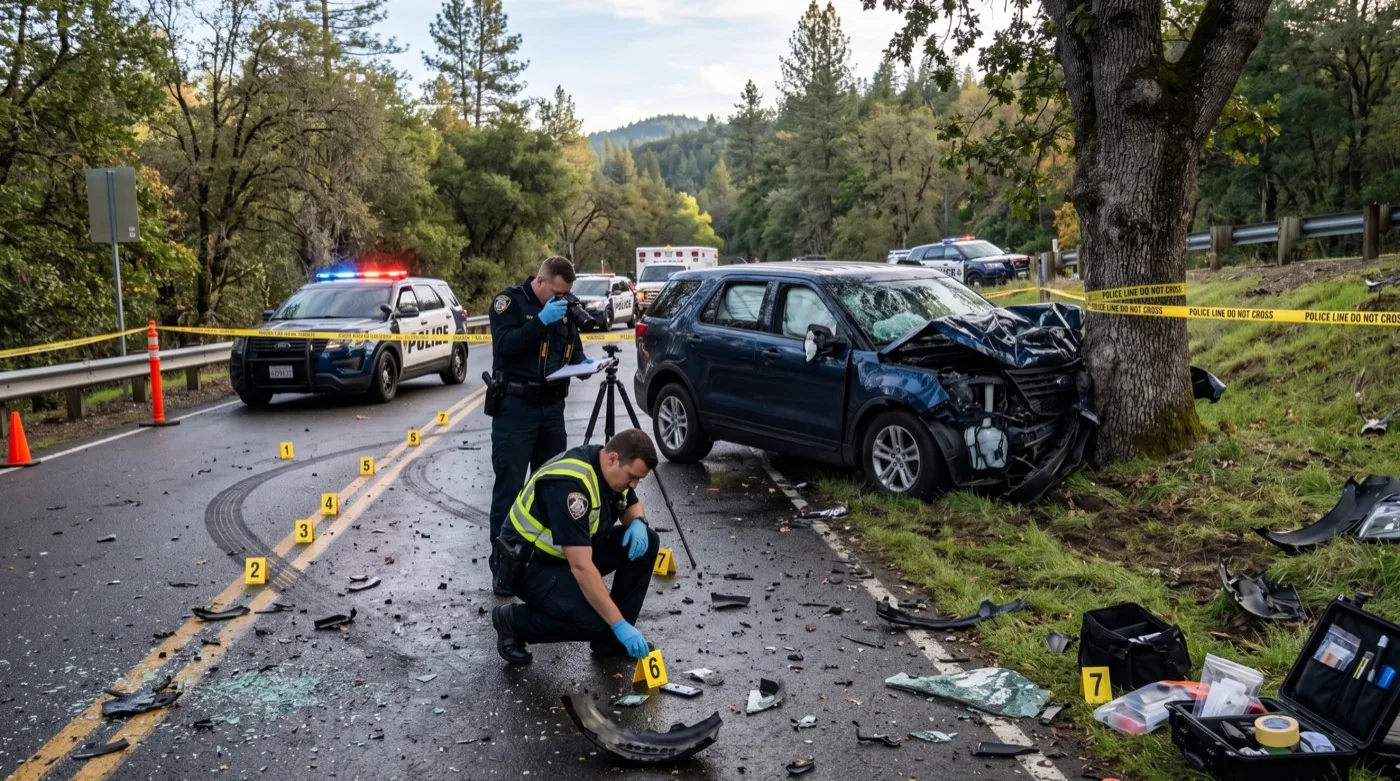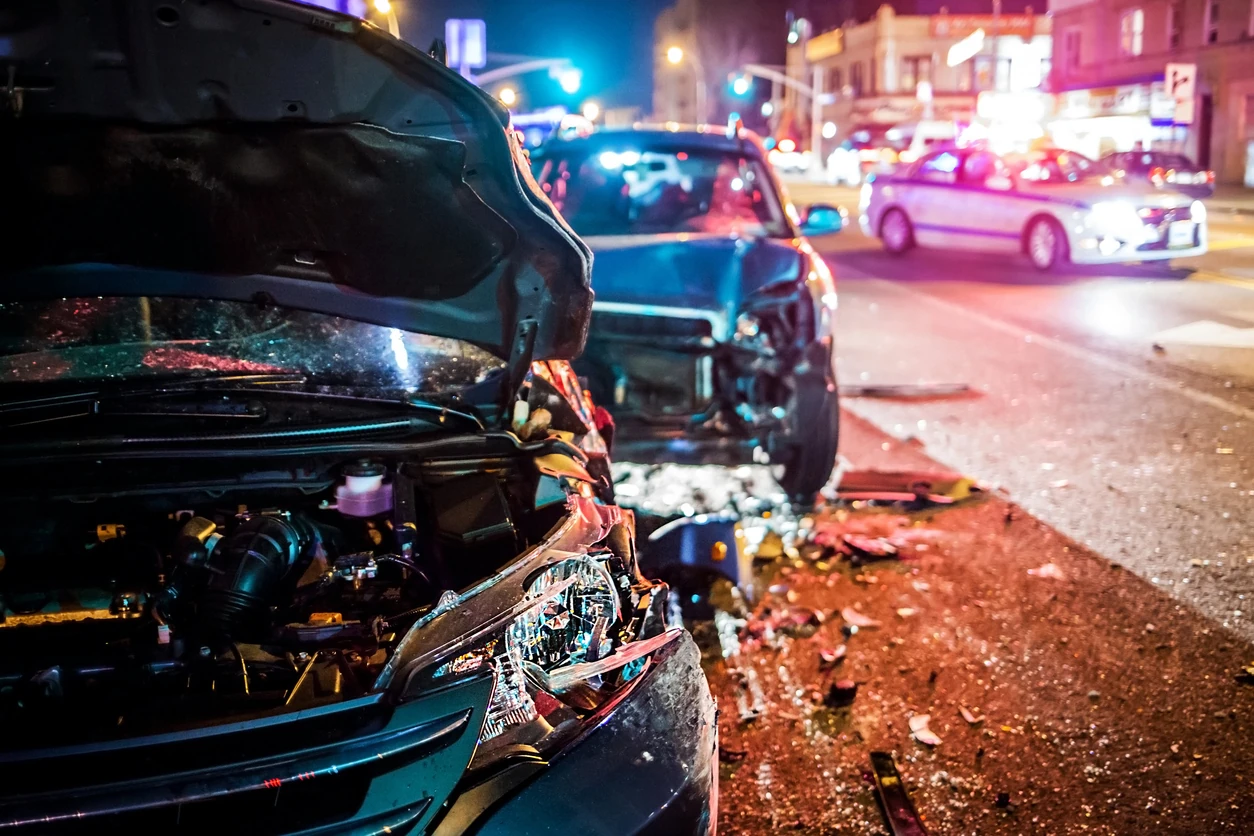
You were driving carefully. The other car wasn't even involved. The road itself failed you — a missing stop sign, a pothole that sent you spinning, a curve with no guardrail, a traffic signal that had been dark for days.
Now you're injured, your car is totaled, and you need to know: can you sue the government for a car wreck caused by a dangerous road? The answer is yes — but the rules are entirely unlike anything in a standard crash case. The responsible party may be a city, county, state agency, or federal entity, and the deadlines are drastically shorter than most people expect.
Free consultation
Injured on a dangerous road?
Government claims have strict deadlines. Get a free consultation with a Dallas car accident attorney today.
What Makes a Road "Defective" in Legal Terms?
Not every bad road creates legal liability. A rough patch of asphalt isn't necessarily negligence. Legal liability for a road condition typically requires showing that the government:
- Knew or should have known about the hazardous condition
- Failed to act within a reasonable time to fix it or warn drivers
- Caused your crash and injuries as a direct result of that failure
Common roadway defects that give rise to legitimate claims include:
| Road Condition | Why It Creates Liability |
|---|---|
| Missing or obscured stop sign | Government has a duty to maintain traffic control devices |
| Faded or missing lane markings | Creates confusion about right-of-way or lane boundaries |
| Potholes or severe road damage | Especially when previously reported and not repaired |
| Inadequate lighting at dangerous intersections | Foreseeable harm from poor visibility |
| Missing or broken guardrails | Failure to protect against known drop-offs or barriers |
| Poorly designed curves without adequate signage | Dangerous geometry known to cause crashes |
| Drainage failures causing standing water or ice | Foreseeable hazard from known design flaw |
| Traffic signals that are malfunctioning or dark | Government has duty to maintain and promptly repair |
| Obstructed sight lines (vegetation, structures) | Duty to maintain clear sightlines at intersections |
💡 The key factor is notice. Government liability almost always hinges on whether the agency knew — or should have known — about the defect, and had enough time to fix it before your crash.
Yes, You Can Sue the Government for a Car Wreck — But It Has Homefield Advantage
For most of U.S. history, governments enjoyed something called sovereign immunity — the principle, inherited from English common law, that "the king can do no wrong." You simply couldn't sue the government without its permission.
That has changed significantly. Every state and the federal government have passed statutes that waive sovereign immunity for certain types of negligence claims, including dangerous road conditions. But that waiver comes with strings attached — and those strings are what catch injured people off guard.
When you sue a private driver, you generally have 2–3 years to file. When you sue a government entity, you may have as little as 60–180 days to file a formal administrative notice before your right to sue expires entirely, regardless of how severe your injuries are.
The Notice Trap: Why People Lose These Cases Before They Begin
This is the part that catches people most off guard.
Before you can file a lawsuit against most government entities, you must first file a formal administrative claim — sometimes called a "government tort claim" or "notice of claim." This is a written document notifying the agency that you were injured, describing the condition and the circumstances.
💡 Miss this deadline, and your case is over. Courts have dismissed legitimate injury claims — people with serious, documented injuries caused by clearly defective roads — because they filed the notice one week late. Not one year late. One week.
How short are these deadlines?
They vary by state and entity, but the ranges are stark:
| Jurisdiction | Typical Notice Deadline |
|---|---|
| California | 6 months from the date of injury |
| Texas | 6 months for most government entities |
| Florida | 3 years (longer than most states) |
| New York | 90 days for municipal claims |
| Georgia | 12 months for state; 6 months for municipalities |
| Illinois | 1 year for most government entities |
| Federal government (FTCA claims) | 2 years, but administrative claim first |
And critically, the notice deadline is separate from and shorter than the regular statute of limitations. In many states, missing the notice deadline ends the case even if the statute of limitations hasn't run.
What the notice must include
Requirements vary by state, but a proper government tort claim typically needs:
- Your name, address, and contact information
- The date, time, and precise location of the incident
- A description of the road condition or defect
- A description of your injuries
- The identity of the government entity you're notifying
- In some states, an estimate of the damages you're claiming
Errors or omissions in the notice can also be used to challenge the claim later. This is not a form you want to fill out without legal guidance.
Which Government Entity Is Actually Responsible?
One of the more complex aspects of road defect cases is figuring out who owns and maintains the road where you were hurt. Roads are maintained by different levels of government depending on their classification:
- Federal highways and interstates → Federal Highway Administration, plus state DOTs under federal contracts
- State routes and highways → State Department of Transportation
- County roads → County government
- City and municipal streets → City public works or transportation department
- Private roads in subdivisions → Possibly a homeowners' association or private entity
Getting this wrong — filing a claim against the city for a state highway — can void your claim even if the underlying facts are strong. In some cases, responsibility is genuinely shared between multiple entities, and claims need to be filed with each.
Your attorney can run title searches and review agency records to identify the responsible party. Don't guess.
5 Things That Can Kill a Government Road Defect Case
1. Missing the notice deadline
As discussed above, this is the single most common reason valid claims are lost. If you suspect a road defect contributed to your crash, contact an attorney that same week. Staying on top of every deadline is critical — see 11 Costly Mistakes People Make in Car Wreck Lawsuits for a full breakdown of what trips people up most.
2. Failing to document the condition immediately
Road conditions get fixed. The pothole that caused your crash may be patched within days, especially once the government learns a claim may be coming. Photograph the defect, measure it if possible, and document the surrounding area before any repairs happen.
Your attorney can also send a preservation demand to the relevant agency requesting that the condition not be altered and that all maintenance records related to that location be preserved. For a full breakdown of the evidence types that matter most in any car crash: How to Prove Injuries After a Car Wreck: 11 Key Types of Evidence
3. Not establishing prior notice to the government
Government liability usually requires showing the agency knew or should have known about the defect. Evidence of prior notice includes:
- Prior crash reports at the same location
- Maintenance request logs showing the defect was reported but not fixed
- Prior complaints filed with the agency
- News reports about the dangerous condition
- Internal agency communications about the location
These records exist — they just require formal requests (public records requests, discovery in litigation) to obtain.
4. Comparative fault issues
In many states, if you are found partially at fault for a crash — even one caused primarily by a road defect — your recovery may be reduced or, in some states, eliminated if your share of fault exceeds a threshold. Speed, distraction, or failure to observe posted warnings can all be used to assign partial fault to the injured driver.
Document that you were driving appropriately for conditions, note any warnings that were absent or obscured, and preserve evidence of what a reasonable driver in your situation could have seen and done.
5. Damage caps on government claims
Many states impose caps on damages recoverable against government entities — limits that don't apply to claims against private parties. In Texas, for example, government liability is limited to $250,000 per person and $500,000 per occurrence for most claims. Some states have even lower caps; a few have none. These limits are important to understand when evaluating the realistic value of a government road defect claim.
💡 Texas cap: $250,000/person, $500,000/occurrence. This is why identifying every potentially liable party — including private contractors — is critical to maximizing your total recovery.
⚖️ Missed the notice window or unsure who to sue? Government road cases are among the most time-sensitive in personal injury law. Get a free case evaluation from Bennett Legal.
When Multiple Parties Share Responsibility
When multiple parties share responsibility, claims against each must be handled in parallel, with different deadlines, different notice requirements, and different legal standards depending on whether the defendant is a government entity or a private party.
In many cases, multiple parties may share liability:
- A contractor that recently resurfaced the road and left it in a hazardous condition
- A utility company that cut the road and failed to properly restore it
- A property owner whose vegetation obscures a stop sign or sightline
- Another driver whose negligence compounded the harm caused by the road condition
This is one reason dangerous road cases are among the more complex car wreck claims to handle. The legal landscape requires identifying all potentially responsible parties, filing appropriate notices with each on their respective timelines, and building a liability case that addresses both the road condition and any other contributing factors.
How Bennett Legal Handles Dangerous Road Cases
Government road defect cases require a different kind of urgency than most car wreck claims. The notice deadlines alone mean that waiting even a few weeks to consult an attorney can cost you the case — not the settlement, the entire case.
At Bennett Legal, when we take a dangerous road case, the first hours matter. We move immediately to:
- Identify every government entity that may share responsibility for the roadway
- Preserve photographic evidence of the road condition before it's repaired
- File formal preservation demands with the responsible agency
- Research prior incident and maintenance records at that location
- Prepare and file government tort claim notices within the required deadlines
We also understand that crashes caused by dangerous roads frequently result in severe injuries — because they often involve high-speed impacts with no braking, rollovers, or collisions with fixed objects. When those injuries include traumatic brain injuries or catastrophic harm, the stakes of building the liability case correctly are even higher. Damage caps on government claims make it essential that every potentially liable party — including private contractors or adjacent property owners — is identified and pursued. For a full picture of how car wreck cases move from investigation to resolution: From Crash Scene to Courtroom: A Car Wreck Lawyer's 6-Phase Roadmap
💼 We work on contingency — you owe us nothing unless we recover for you.
You Can Hold Government Entities Accountable
Dangerous roads, missing signs, and defective highway design cause real crashes and real injuries — and the government entities responsible for those roads can be held accountable. But the rules for doing so are unforgiving. Short notice deadlines, strict claim requirements, the challenge of identifying the right defendant, and damage caps all make these cases harder to win without experienced legal help.
If a road condition played any role in your crash, treat the legal clock as running from the moment of impact — because in most states, it is.
⚖️ In government road cases, the clock starts the day of the crash. Don't wait. Contact Bennett Legal today for a free case evaluation.
Frequently Asked Questions
How do I know if a road defect caused my crash versus driver error?
Sometimes both contribute. A crash caused by a pothole, missing sign, or dangerous curve doesn't require that the road defect be the only cause — only that it was a contributing cause. Evidence like the absence of skid marks, the location of impact, witness accounts, and crash reconstruction analysis can establish the road's role even when other factors were present.
What if the road condition was fixed after my crash?
This actually happens frequently — and it's not necessarily bad for your case. Evidence that a government agency repaired the condition after your crash can, in some circumstances, be used to show they were aware of the problem. Photograph the condition immediately after the crash if possible. Your attorney can also request maintenance and work order records showing what was done and when.
Can I sue the federal government for a highway defect?
Yes, under the Federal Tort Claims Act (FTCA), but the process is distinct from state claims. You must first file an administrative claim with the appropriate federal agency (such as the Federal Highway Administration), wait for a response or denial, and then file suit in federal court. The FTCA has a two-year deadline for filing the administrative claim, but the process is complex enough that early legal counsel is strongly advised.
What if the dangerous condition was caused by a private contractor, not the government?
Private contractors who perform road work under government contracts can be independently liable for conditions their work created or left behind. Claims against private contractors are not subject to government immunity or the shortened notice deadlines — they follow standard tort timelines. Identifying whether a contractor was involved requires reviewing agency records, which your attorney can obtain through public records requests.
Does it matter if I wasn't wearing a seatbelt?
Potentially, yes. In most states, failure to wear a seatbelt can be introduced as evidence of comparative fault, which may reduce your recovery. The extent to which it affects your claim depends on your state's seatbelt laws and comparative fault rules. In some states, the seatbelt defense is limited to reducing damages rather than barring the claim entirely. An attorney familiar with your state's rules can give you an accurate picture.
This article provides general legal information and is not legal advice. Laws vary by state. Please consult a qualified attorney about your specific situation.
Related Articles
- 11 Costly Mistakes People Make in Car Wreck Lawsuits — including why missing the government notice deadline tops the list
- How to Prove Injuries After a Car Wreck: 11 Key Types of Evidence — the evidence that makes or breaks your claim
- From Crash Scene to Courtroom: A Car Wreck Lawyer's 6-Phase Roadmap — what the full case process looks like
Free consultation
Injured on a dangerous road?
Government claims have strict deadlines. Get a free consultation with a Dallas car accident attorney today.