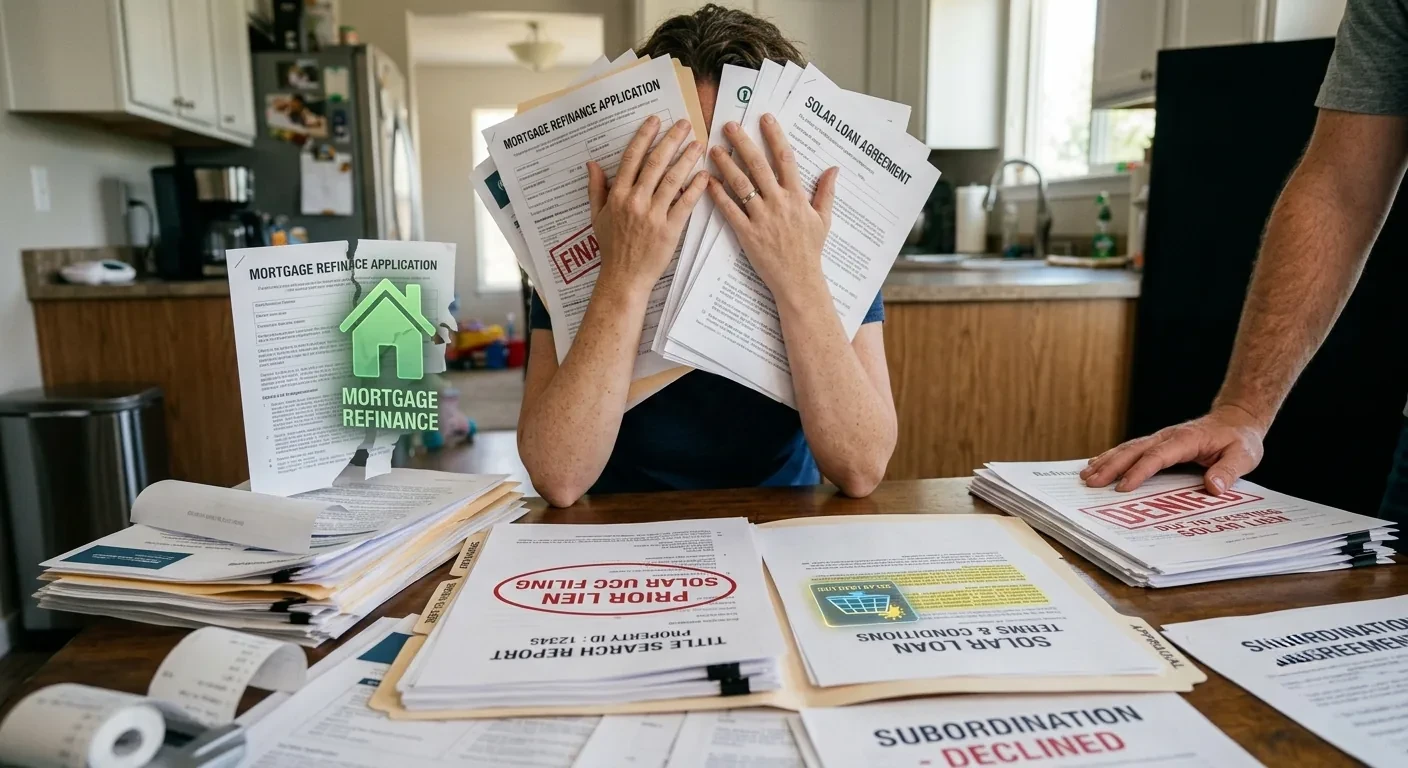
You did it. You found a mortgage lender offering a rate you couldn't pass up. The application is in, your credit is great, and you're days away from closing. Then you get the call from your loan officer: "We can't approve the refinance. There's a lien on your property from your solar company, and we can't move forward."
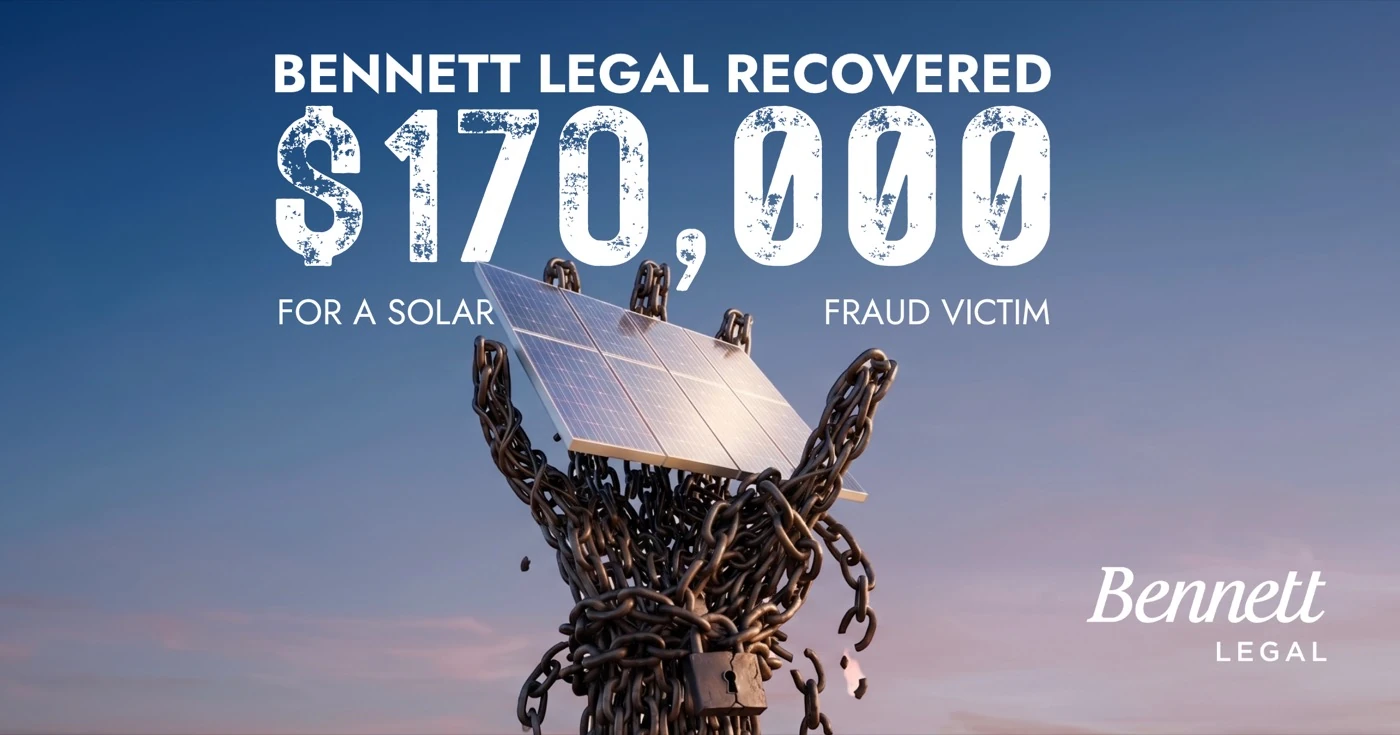
$170,000+ recovery
Against Sunlight Financial · Solar fraud arbitration
- $113,000 loan cancelled
- UCC lien removed
- Credit repaired
- $58,000 cash to client
Past results do not guarantee a similar outcome. Every case is different.
Tall Chuck hears this story constantly. Homeowners who did everything right — good credit, solid equity, rate locked in — completely blindsided by a solar lien they barely remember signing. This is a manufactured crisis created by solar lenders who use your mortgage refinance as leverage to protect their own financial interests.
But you are not powerless.
When a rate lock or closing deadline is running, request a deadline-aware attorney review of the solar filing, payoff, contract, and lender requirement.
The Villain of the Story: What Is a Solar UCC-1 Lien?
When you financed your system, the solar lender filed a UCC-1 Fixture Filing — a lien placed on the solar panels as a permanent fixture of your home. Because the panels are now physically attached to your house, this lien effectively acts as a lien on your property. The solar lender has a security interest in your home, and they get paid back before anyone else if you sell or default.
Most homeowners have no idea this lien exists until it shows up in a title search during a refinance — or a home sale.
The 7 Traps That Derail Your Refinance
1. The First Position Problem
Your new mortgage lender will not approve your refinance because the solar company's UCC-1 lien puts them in "second position." No mortgage lender will ever agree to be second in line behind a solar company. Period. It doesn't matter how good your credit is or how much equity you have.
2. The Subordination Agreement Nightmare
The only solution to the first position problem is getting the solar lender to sign a subordination agreement — a document where they agree to move their lien behind your new mortgage. Simple in theory. A complete nightmare in practice.
Solar lenders are notorious for delaying, "losing," or outright refusing to sign. They have every incentive to stall: while you're waiting, your rate lock expires, your closing gets pushed, and eventually you're so frustrated you either abandon the refinance or agree to terms that benefit them.
Tall Chuck calls this the solar stall. They don't say no. They just make yes impossible.
3. The Inflated Payoff Demand
When you request a payoff quote, you discover you owe thousands more than you thought — because of hidden dealer fees baked into your loan principal. You may owe $45,000 on a system that only adds $20,000 to your home's value. And before you pay it off to clear the lien, understand that you may also be facing an early termination fee on top of the balance — a fee that may itself be illegal.
4. The PPA & Lease Transfer Trap
If you have a Power Purchase Agreement (PPA) or lease, there's no loan to pay off — but there's a 25-year contract that must be "transferred" to your new lender's satisfaction. Mortgage lenders are increasingly refusing to approve refinances on homes with these encumbrances, and some won't even start the application once they see it.
5. The "Ghost Company" Problem
Your loan officer needs a subordination agreement, but the solar company you signed with has disappeared. The lien still exists on your title — but the company that filed it is a ghost.
Tall Chuck calls this the phantom lien. The company vanished. But their claim on your house? Still very much alive. If this is your situation, the financing company behind the loan — usually a lender like GoodLeap or Sunlight Financial — is still very much operating and is the party you actually need to deal with. Here's what to do when your solar installer disappears but the loan keeps going →
6. The Appraisal Problem
The bank's appraiser assigns only $15,000 of value to your $40,000 solar system, leaving you thousands short for a cash-out refinance. Solar appraisals are notoriously inconsistent. If your system was installed but never properly turned on, the appraisal problem gets even worse — you're paying for something that has never generated a dollar of electricity, and lenders know it.
7. The PACE Loan Landmine
If you financed your system with a PACE (Property Assessed Clean Energy) loan, you're not dealing with a standard lien — you're dealing with a tax assessment, a high-priority government lien that is even more toxic to a refinance than a solar loan. Many mortgage lenders simply will not lend on a property with a PACE assessment, full stop.
Tall Chuck puts it bluntly: PACE loans are marketed as the easy, no-credit-check option. They're actually the hardest to unwind when you need to move or refinance.
Your Action Plan: How to Fight Back
- Don't Panic. The solar lender is counting on you getting frustrated and abandoning the refinance. That's exactly what benefits them — and exactly why you shouldn't.
- Identify Your Financing. Is it a loan, lease, PPA, or PACE? This determines your path forward. Check your solar loan agreement if you're not sure what you signed.
- Formally Request a Subordination Agreement in Writing. Send it by email and certified mail. Start the clock ticking and create a paper trail from day one.
- Simultaneously Request a Payoff Quote. Get a written, itemized payoff quote valid for at least 30 days. If the number seems inflated, it probably is.
- File a Complaint with the CFPB. If the solar lender is stalling or refusing to cooperate, a formal complaint creates a regulatory record — and often speeds up their response dramatically.
- Get a Solar Fraud Attorney in Your Corner. Lenders like GoodLeap and Sunlight Financial have in-house legal teams whose job is protecting their lien — not helping you close. A rate lock runs out in weeks. An attorney who knows how to send a formal legal demand, escalate to title action, and threaten litigation changes the dynamic immediately. Every day you wait is a day closer to losing your rate. Start your free case evaluation before your lock expires →
When Your Solar Loan Holds Your Mortgage Hostage, We Break the Lien
Solar lenders count on you not knowing your options. The subordination stall, the inflated payoff, the ghost company — these are tactics. And there are legal counters to every single one of them.
At Bennett Legal, we:
- Send formal legal demands for subordination agreements — with hard deadlines
- Challenge fraudulent loan balances and hidden dealer fees
- File emergency actions to clear title when companies go dark
- Hold lenders accountable for delays that cost you your rate lock
Frequently Asked Questions
What is a solar subordination agreement?
A document where your solar lender agrees to move their lien position behind your new mortgage lender. Required for almost all mortgage refinances on homes with solar loans. The problem: solar lenders have no legal deadline to respond, which is why getting an attorney to send a formal demand — with consequences for delay — often makes the difference between closing and losing your rate.
Can I roll my solar loan into my mortgage?
Yes. A cash-out refinance allows you to get a new, larger mortgage that pays off both your old mortgage and your solar loan, leaving you with one monthly payment. This only works if the solar loan balance is supported by your home's appraised value — which is often the sticking point when lenders have inflated your balance with dealer fees.
Why is my solar lender refusing to sign the subordination agreement?
Sometimes it is genuine incompetence. More often, it is a deliberate delay tactic — designed to pressure you into paying off the loan, agreeing to extended terms, or abandoning the refinance entirely. A formal legal demand letter from an attorney changes the dynamic. It signals that there are consequences for continued delay.
How long does it take to get a subordination agreement?
A responsive lender can produce one in 7–14 business days. Many problematic solar lenders drag the process out for 30 to 60 days or more — by which point your rate lock has expired and you're starting over at a higher rate.
What happens if the solar company that filed my UCC lien has gone out of business?
The lien doesn't disappear with the company. It stays on your title until it is formally released or discharged. The financing company that funded the original loan — typically GoodLeap, Sunlight Financial, or another solar lender — is usually still operating and is the party you need to contact. Learn more about your options when your solar installer has disappeared →
Can I sue my solar lender if their refusal to cooperate cost me a mortgage refinance?
Potentially, yes. If a solar lender's unreasonable stalling caused you to lose a rate lock, incur fees, or miss a refinance window entirely, you may have claims for breach of contract, tortious interference, or violations of your state's consumer protection statutes. Every situation is different — and this is exactly the kind of scenario we analyze in a free consultation. Tell us what happened →
Free consultation
Solar loan blocking your refinance?
We help homeowners break the lien and protect their rate lock. Free consultation.