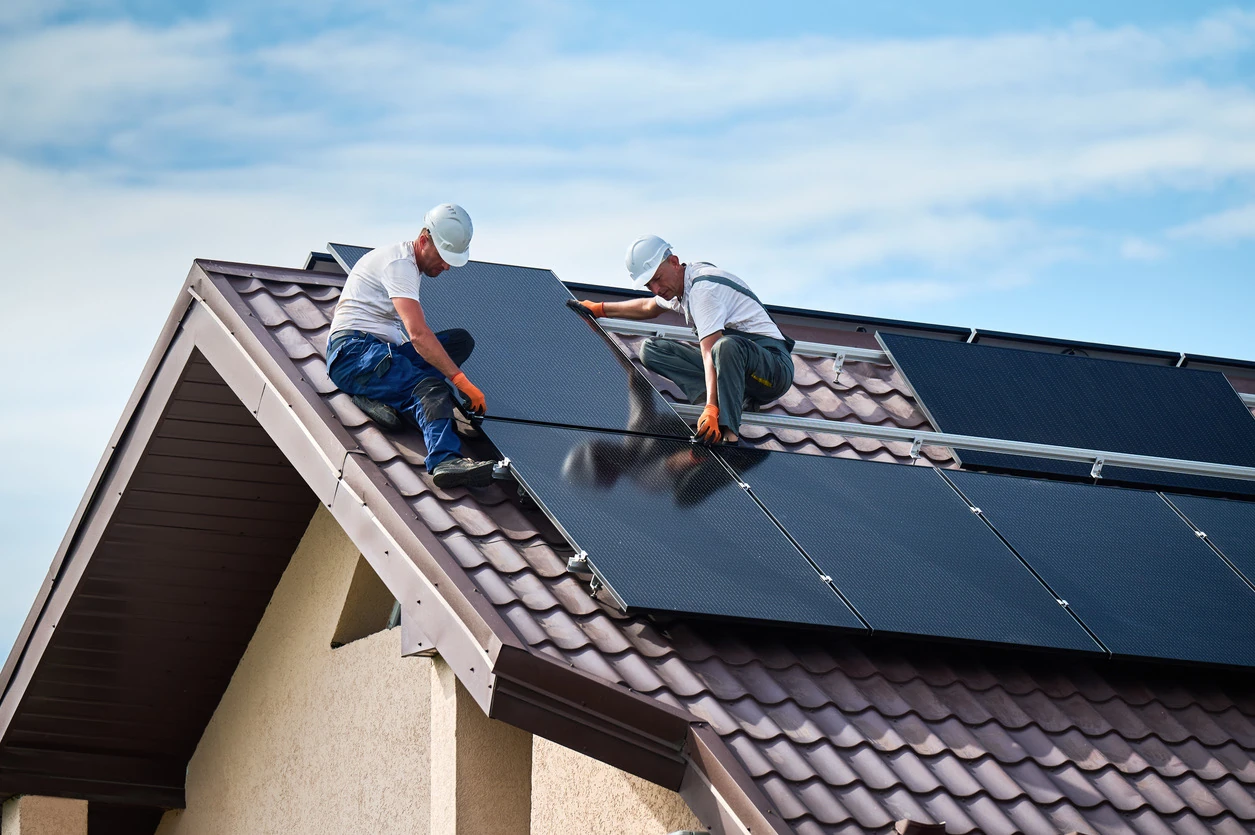
"Why did my solar company just install panels on my roof without getting a permit?"
$170,000+ recovery
Against Sunlight Financial · Solar fraud arbitration
- $113,000 loan cancelled
- UCC lien removed
- Credit repaired
- $58,000 cash to client
Past results do not guarantee a similar outcome. Every case is different.
If you are asking this question right now, you are not imagining things, and your concern is completely valid. Discovering an unpermitted installation happening on your property can immediately trigger fears about massive city fines, failed home inspections, severe roof damage, and even threats to a future home sale or refinance. This unsettling situation is happening more than solar companies want you to know.
Here is exactly what this means for your home, what the financial risks are, and what you can do about it right now.
Worried about an unpermitted solar installation on your home? You don't have to figure this out alone. Start your free case review →
Direct Answer: Is This Normal or a Red Flag?
Installing solar panels without a permit is almost always a major red flag.
Building and electrical permits are legally required in nearly all U.S. jurisdictions before a solar installation can begin. While there are a few rare, highly specific exceptions (such as off-grid properties in heavily rural counties or extremely minor electrical upgrades), the vast majority of homeowners should treat an unpermitted solar installation as a high-risk legal and safety issue.
If panels are going on your roof and the company cannot produce an approved city or county permit, you have a serious problem.
Legitimate Explanations (Rare but Possible)
Sometimes, a missing permit isn't outright fraud. There are a few scenarios where innocent, though frustrating, mistakes happen:
Paperwork Delays by the City or County
Some local municipalities have notoriously slow processing times. Solar companies will sometimes tell you the paperwork is "pending approval." While true in some cases, a pending application does not give them the legal right to start bolting hardware to your roof.
Miscommunication Between Installer and Sales Rep
The sales representative who knocked on your door might have promised you that all paperwork was filed. Meanwhile, the back-end administrative staff never actually submitted the application to the city.
Permits Not Required for Preliminary Work
Certain jurisdictions allow companies to do preliminary electrical assessments or structural measurements before a formal permit is issued. However, this exception never applies to the full installation of panels or inverters.
You Signed an Incomplete Application
Some installers rush homeowners into signing blank or incomplete permit application forms, but then they fail to actually submit those documents to the permitting office.
If you're trying to unwind a bad solar deal entirely, our most comprehensive guide can help: How Do I Get Out of My Solar Panel Contract?
5 Red Flags You Shouldn't Ignore
If your situation doesn't fit into the rare explanations above, you are likely looking at a breach of contract or fraud. Here are the concrete warning signs. For an even deeper dive into contract-specific red flags, see our full guide: 7 Red Flags That Could Mean Your Solar Panel Contract Is a Scam.
The Solar Crew Shows Up Unannounced
If the installation crew arrives on a surprise date, employs high-pressure tactics to get on your roof immediately, and never emailed you a copy of the approved permit, they are likely rushing the job to bypass regulations.
The Company Refuses to Provide Permit Numbers
A legitimate company will gladly hand over the permit number. If they tell you, "We submit everything at the end," or claim, "Your county doesn't require one," they are almost certainly lying.
Installation Occurred but No Inspection Was Scheduled
Building code compliance strictly requires a post-installation inspection by city officials. If no inspection is on the books, your system cannot legally be turned on.
You Fail Your Home Inspection Later
Homeowners often discover the fraud months or years later when trying to sell or refinance their property. A home inspector flags the unpermitted work, bringing your real estate transaction to a dead halt.
The System Isn't Approved for Utility Interconnection
Without a final, permitted inspection, your utility company will not issue a "Permission to Operate" (PTO). Your system will sit useless on your roof, rejected or blocked from activation by the power grid.
Recognize any of these red flags? Don't wait for the problem to get worse. Talk to a solar fraud attorney today →
5 Common Solar Scams Involving Missing Permits
Dishonest contractors use missing permits as a deliberate tactic to cut corners and maximize their payout at your expense.
The "We'll Pull the Permit Later" Scam
Installers rush panels onto your roof before gaining approval, hoping city inspectors will just "grandfather" the system in after the fact.
How to avoid: Demand the permit number before a single ladder touches your house.
Forged Permit Documents
Some bad actors go as far as creating fake PDFs with altered city logos and incorrect project numbers to pacify anxious homeowners.
How to avoid: Take the permit number they give you and verify it directly on your city or county's online building portal.
Subcontractor-Driven Shortcuts
Shady installation companies often hire low-cost, third-party subcontractors who skip the permitting process entirely to save a few days of waiting.
How to avoid: Request a complete list of subcontractors and their state license numbers.
Unlicensed or Suspended Contractors
Companies operating with expired or suspended licenses actively avoid permitting agencies because applying for a permit would immediately expose their illegal status.
How to avoid: Always check your state's contractor license database (like the CSLB in California) before signing.
The PACE or Loan Fraud Tie-In
Fraudulent installers rush to bolt panels on your roof before your mandatory 3-day cancellation period expires. A fast, unpermitted install means fewer cancellations, allowing them to force the financing payout from the lender.
How to avoid: If you signed within the last 3 days, exercise your right to cancel immediately. Don't let the installer pressure you into waiting.
Why Permits Matter: Legal & Financial Consequences
The fallout from an unpermitted installation isn't just a paperwork headache. It is a severe financial liability that falls squarely on your shoulders.
City or County Fines ($500–$5,000+)
Many jurisdictions impose aggressive, per-day fines for ongoing unpermitted work violations. You, as the property owner, are usually the one on the hook for these penalties.
Forced Removal or Reinstallation
If the system violates local building codes, the city can force you to remove the panels, repair your roof out of pocket, and completely reinstall the system legally, costing you thousands of dollars.
System Shut-Down Orders
Your local utility company has the authority to issue stop-work or permanent disconnect orders for unpermitted grid connections.
Failed Home Inspections During Sale
An unpermitted solar system can cost you buyers, delay your closing date, force massive purchase price reductions, or compel you to pay for expensive corrections before the title can transfer.
Roof Warranty Voided
Roofing manufacturers commonly void your roof warranty immediately if heavy equipment is installed without permits or contrary to local building codes.
Insurance Denials
If an electrical fire or severe roof leak stems from unpermitted work, your homeowner's insurance will almost certainly deny your claim.
Loan or PPA Contract Violations
Many solar loans and Power Purchase Agreements (PPAs) explicitly require proof of permits as a condition for financing. Without them, you could be in default.
If your solar company has changed names or been acquired since your installation, that adds another layer of complexity. Learn more: My Solar Company Is Now Under a Different Name — Do My Warranty and Contract Still Apply?
Facing fines, failed inspections, or a stalled home sale because of unpermitted solar work? Bennett Legal fights for homeowners stuck with the fallout. Get your free case evaluation →
Homeowner Legal Rights and Protections
You are not powerless if a company bypassed the law on your property.
Contractual Rights
Your solar installer has a contractual duty to obtain all required permits. If your contract explicitly says "turnkey" or "full service," their failure to pull a permit is a direct misrepresentation and a breach of contract.
Cooling-Off Rules
You have rights under the Federal 3-Day Cooling-Off Rule for door-to-door sales, alongside state-specific versions in states like California, Texas, and Florida.
Consumer Protection Statutes
Depending on where you live, you have powerful state laws backing you up:
- California: The Unfair Competition Law, the Solar Bill of Rights, and strict enforcement by the Contractors State License Board (CSLB).
- Texas: The Deceptive Trade Practices Act (DTPA), which can potentially award treble (triple) damages for knowing violations.
- Florida: Home solicitation laws and rigorous contractor licensing requirements.
- New Jersey: The Consumer Fraud Act (CFA), one of the strongest in the country, allowing for treble damages and the recovery of attorney fees.
Relevant Federal Laws
You are protected by the FTC Act for deceptive business practices, and the Magnuson-Moss Warranty Act if your system or roof warranties are wrongfully voided due to the installer's negligence.
For situations involving estate transfers with fraudulent solar liens, see: How Fraudulent Solar Liens Complicate Probate and Property Transfer
State-by-State Permit Requirements
Here is a quick look at how enforcement typically breaks down across key states:
| State | Permit Required? | Common Issues | Enforcement Strength |
|---|---|---|---|
| California | Yes, strict | Failed inspections, CSLB complaints | High |
| Texas | Usually yes (varies by county) | Rural exceptions, fast-talk sales | Medium |
| Florida | Yes | HOA disputes, unlicensed contractors | Medium |
| New Jersey | Yes | Consumer fraud violations | High |
| Arizona | Yes | Utility PTO delays, delayed paperwork | Medium |
Action Steps if Your Solar Company Installed Panels Without a Permit
Time matters. The longer unpermitted work sits on your property, the more exposure you have to fines, warranty voidance, and inspection failures. Act now.
If you suspect your system was installed illegally, do not wait for the city to knock on your door. Take these steps immediately.
- Document everything. This is always step one. Take photos of the installation, gather your contract, save all emails, collect your bills, and write down the dates of every phone call and visit.
- Request all permit documents. Contact your installer directly and ask for the permit number, the exact date of submission, and the name of the city contact person they are working with.
- Verify the permit status with your city. Call your local building department or check their online database to see if a permit matching that number actually exists for your address.
- Demand a stop-work order (if needed). If they are still installing, tell them to stop immediately until they can produce an approved permit. This protects your roof and electrical system from further unauthorized work.
- Check your contract. Look for the specific clauses outlining who is responsible for permitting.
- File formal complaints. Report the company to your local city building department, your state's contractor licensing board, your utility company, and your State Attorney General.
- Consult a solar fraud attorney. A lawyer can help you unwind predatory contracts, recover your costs, force the company into compliance, or sue for damages if they ruined your roof or credit.
When Installers Skip Permits, We Step In. Your Home Shouldn't Bear the Cost of Their Shortcuts
At Bennett Legal, we've seen what happens when solar installers gamble with your home's legal standing. A single skipped permit can lead to daily city fines, failed real estate transactions, and thousands in out-of-pocket removal costs, and homeowners are often told by the installer to "just wait for the paperwork."
We don't let that slide. Our team understands the financial, legal, and emotional complexity of untangling unauthorized installations, and we take the pressure off of you so you can focus on protecting your home.
We help homeowners by:
- Demanding proof and tracing the paperwork: We cut through the installer's excuses and deal directly with city building departments to uncover exactly what was (or wasn't) filed.
- Stopping the bleeding: We help initiate stop-work orders to protect your roof and electrical systems from further unauthorized tampering.
- Enforcing contractual rights: We hold solar companies accountable for misrepresentation and breach of contract when they fail to deliver a legal, turnkey system.
- Forcing corrections or removal: We leverage the law to compel companies to either legalize the system at their expense or completely remove the panels and repair your roof.
- Protecting you from city fines: We work to shield homeowners from the legal fallout of code violations they didn't commit.
- Pursuing maximum compensation: We aggressively pursue claims under consumer protection statutes, including the Texas DTPA and New Jersey CFA, seeking damages for ruined credit, voided warranties, and fraudulent practices.
Our mission is to protect homeowners from the unfair tactics, hidden liabilities, and predatory strategies designed to maximize solar company profits at your expense.
You Are Not Powerless
Whether you are staring down a stop-work order, a failed home inspection, or a solar company that has completely stopped returning your calls, this situation is overwhelming. Every fear you have about fines and roof damage is understandable. You are just trying to protect your biggest asset.
What you're doing right now — learning your rights, documenting the missing paperwork, and asking hard questions — is one of the strongest steps you can take.
If you need clarity, protection, or a legal team to fight the solar company and the city bureaucracy for you, Bennett Legal is here. Our team specializes in solar panel financing fraud and consumer protection.
Reach out when you're ready. We'll take it from here.
Start your free case review now →
Frequently Asked Questions
Do solar companies need a permit to install panels?
Yes. With very few exceptions for remote, off-grid locations, your local city or county requires building and electrical permits before any solar installation can take place.
What happens if my solar panels were installed without a permit?
You could face severe consequences, including daily fines from your city, forced removal of the panels at your own expense, voided roof warranties, and the inability to legally turn the system on.
Can I sue my solar installer for not getting a permit?
Yes. If your contract states they would handle all permitting (which most do), their failure to do so is a breach of contract and potentially a violation of state consumer fraud laws.
Will my home fail inspection if solar was installed without a permit?
Yes. Home inspectors specifically look for permitted improvements. Unpermitted solar panels will be flagged and can easily stall or kill the sale or refinance of your home.
Can unpermitted solar panels be legalized after the fact?
Sometimes, but it is expensive and risky. You usually have to hire a new, licensed contractor or engineer to draw up plans, pay retroactive penalty fees to the city, and hope the existing installation meets current building codes.
Free consultation
Solar panels installed without a permit?
Request a confidential solar loan case review. Ask about attorney fees and case expenses before deciding whether to move forward.